4 minPolitics
Senate Democrats Face GOP Attacks Over Voter ID Opposition Ahead of Midterms
Senate Democrats' rejection of a federal voter ID measure is giving Republicans a midterm campaign issue, as the practice remains popular and is already law in 36 states. GOP senators accuse Democrats of blocking the bill for political reasons, while Democrats say states should decide.
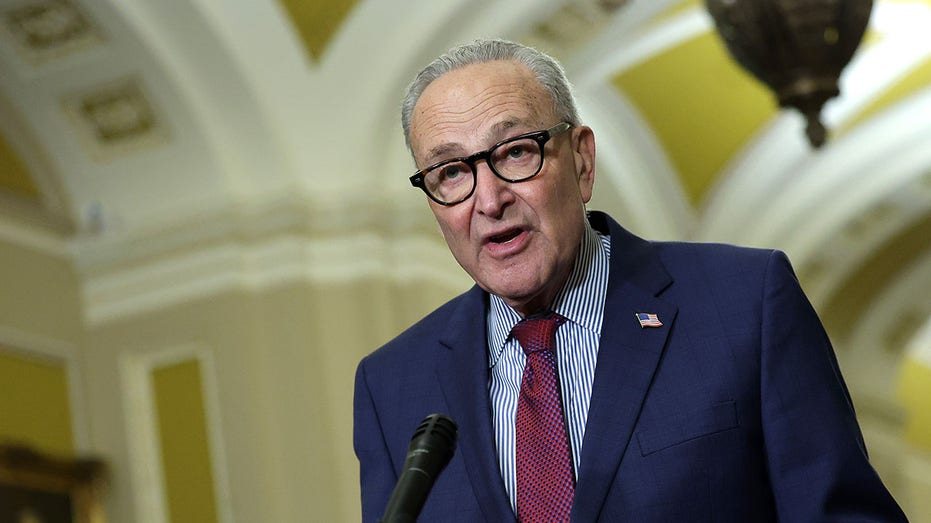
Senate Democrats' rejection of a federal voter ID requirement is handing Republicans a potent midterm election issue, putting the party at odds with a practice that is already law in most states and polls show is broadly popular with voters of both parties.
The dispute centers on Republicans' latest attempt to pass a federal voter ID law, which was paired with a ban on insider trading in Congress. The push comes months after Republicans launched their effort to pass the SAVE America Act, a priority for President Donald Trump that Senate Minority Leader Chuck Schumer, D-N.Y., and his caucus have repeatedly rejected.
Republicans argue that Democratic opposition is driven by electoral calculations rather than principle. Sen. Jim Banks, R-Ind., told Fox News Digital that Democrats are voting against the measure because they do not want to give the president or Republicans a win before the midterms. Senate Majority Whip John Barrasso, R-Wyo., went further, saying Democrats want to make it easier to cheat and calling them hypocrites because identification is required to board a plane, buy a beer, or attend some Democratic campaign rallies.
Democrats have offered a different rationale. Earlier this year, Schumer said his party supports voter ID in principle and noted that it was included in the Freedom to Vote legislation several years ago. He labeled the SAVE America Act «Jim Crow 2.0» and argued it would disenfranchise Black and Brown voters. Other Democratic senators have said the issue should be left to the states, pointing out that Virginia and many other states already have voter ID laws that residents support.
«We already have it,» Sen. Tim Kaine, D-Va., told Fox News Digital. «I mean, Virginia has a voter ID law that our citizens really like.» He questioned the need for a one-size-fits-all federal mandate when states are already acting.
The political terrain is uncomfortable for Democrats. Requiring identification to vote is already a practice in 36 states. Of those, 23 require photo ID, while 13 accept another form of identification, such as a bank statement. Nine of those states have Democratic senators, meaning the party's opposition to a federal standard sits awkwardly alongside laws their own constituents live under.
Republicans believe the issue resonates beyond their base. Barrasso described voter ID as an «80/20 issue or not even more,» suggesting overwhelming public support. The GOP's confidence reflects a broader midterm strategy that also includes focusing on the border, fraudulent use of taxpayer dollars, the economy, and public safety, according to a memo obtained by Fox News Digital.
The voter ID fight is unfolding as Trump has returned to the campaign trail, telling a rally in Dayton, Ohio, that polls fail to account for his personal campaigning. A recent Fox News poll found Democrats have a wider path to victory in the House, projected to win 215 seats compared to 201 for the GOP. Republicans would need to win at least 17 of 19 toss-up races to keep their majority.
For Republicans, the Democratic blockade of a popular measure offers a chance to frame the midterms as a choice between common-sense election security and partisan obstruction. For Democrats, the challenge is explaining why they oppose a federal mandate for a practice many of their own states already require — without alienating voters who see identification as a reasonable safeguard.
With the midterms approaching, the issue is likely to remain a central line of attack. Republicans say they will continue to press for a vote, while Democrats insist the matter belongs to the states. The stalemate leaves voters to weigh competing claims about election integrity and access as they head to the polls.
11