5 minPolitics
Report Ties New York Politician Zohran Mamdani to Muslim Brotherhood Ideology
A stabbing attack on Manhattan's Upper West Side has drawn renewed attention to a report linking New York politician Zohran Mamdani's political views to the ideology of the Muslim Brotherhood, as critics argue his rhetoric creates a permission structure for antisemitic violence.
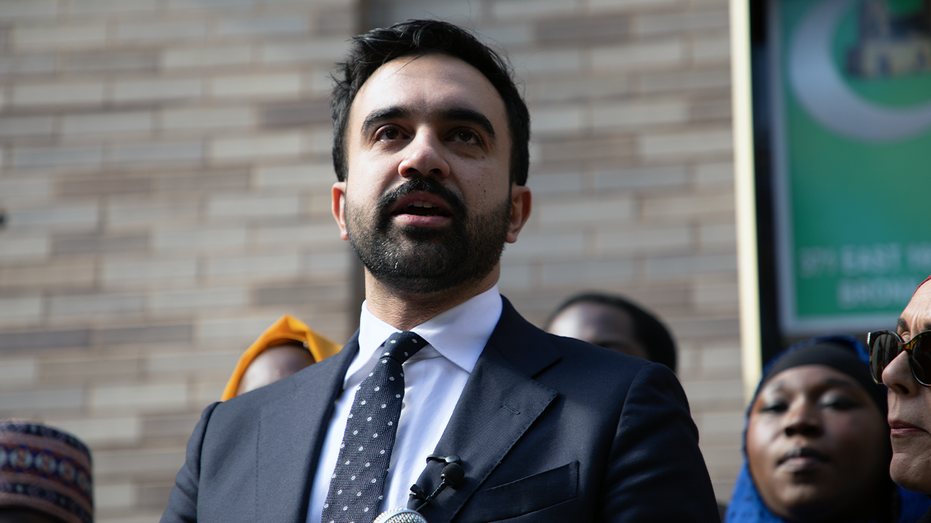
A stabbing attack on Manhattan's Upper West Side that occurred on Tisha B'Av, the most solemn day in the Jewish calendar, has reignited scrutiny of a report that connects the political worldview of New York politician Zohran Mamdani to the Muslim Brotherhood ideology. The assault left two men wounded, one of whom was wearing a yarmulke, and witnesses reported the suspect shouting «Allahu Akbar.» The victims, ages 50 and 57, survived and a suspect is in custody as police investigate a possible hate crime.
The incident took place just a day after Mamdani released a video accusing Israel of war crimes and calling for the arrest of Israeli Prime Minister Benjamin Netanyahu. Jewish organizations had warned that the climate in New York was becoming increasingly dangerous, and the stabbing underscored those fears. The Institute for the Study of Global Antisemitism & Policy, or ISGAP, published a report in 2025 that details how Mamdani's actions and statements reflect a pattern consistent with the Muslim Brotherhood's long-term strategy.
According to the ISGAP report, Mamdani's trajectory includes co-founding a chapter of Students for Justice in Palestine while at Bowdoin College. In the aftermath of the October 7, 2023 attacks — the deadliest single-day massacre of Jews since the Holocaust — the report says Mamdani downplayed the atrocity while characterizing Israel's military response as genocide. He has also repeatedly declined to condemn the slogan «globalize the intifada,» instead saying he would merely «discourage» its use, framing a call for anti-Jewish violence as a matter of etiquette.
As a public official, Mamdani introduced legislation to penalize New York charities that support Israel. One of his first acts in office was to remove the International Holocaust Remembrance Alliance definition of antisemitism from the city's official lexicon. He also accepted a $100,000 donation from the Council on American-Islamic Relations, an organization that federal prosecutors have identified as an unindicted co-conspirator in a terrorism-financing case. The report further notes his association with Imam Siraj Wahhaj, who served as a character witness for the man convicted of masterminding the 1993 World Trade Center bombing.
The ISGAP research places these actions within the Muslim Brotherhood's century-long campaign of strategic entryism into North America. The report cites the Brotherhood's internal documents, such as «The Project» of 1982 and the «Explanatory Memorandum» of 1991, which were entered as evidence in federal court. These documents describe a strategy of «civilization jihad» aimed at exploiting the freedoms of Western democracies to hollow them out from within over generations. The report argues that front organizations, including Students for Justice in Palestine and American Muslims for Palestine, are part of this ecosystem, and that Hamas — which calls itself the Palestinian branch of the Muslim Brotherhood — is a direct product of this ideology.
Critics point to Mamdani's close associates as further evidence of a dangerous worldview. His friend, influencer Hasan Piker, has stated that the United States deserved the September 11, 2001 attacks, and Mamdani has endorsed candidates who express similar views. The ISGAP report concludes that Mamdani's politics cannot be dismissed as mere progressive dissent but rather represent a translation of the Muslim Brotherhood's ideology into the sympathetic idiom of Western progressivism, where it can do its most effective work. While the report does not claim Mamdani directly incited the stabbing, it asserts that his words and the public culture he fosters normalize violence against Jews by treating Israel as a genocidal state and «resistance» as a virtue. The attack on the Upper West Side, say the authors, is a tragic illustration of how such rhetoric can create a permission structure in which antisemitic violence becomes thinkable.
84