4 minPolitics
Permanent daylight saving time clears House but still needs Senate
H.R. 139 passed the House 308–117 on July 14 and was referred to the Senate Commerce Committee the following day.
The House of Representatives has approved legislation to make daylight saving time permanent across most of the United States, reviving a long-running debate over whether Americans should continue changing their clocks twice each year.
H.R. 139, the Sunshine Protection Act of 2025, passed the House on July 14 by a vote of 308 to 117. The measure was received in the Senate on July 15, read twice and referred to the Committee on Commerce, Science, and Transportation.
As of August 10, the official record shows no Senate passage. The legislation therefore has not become law, and the existing schedule of seasonal time changes remains in effect for most states.
The House-passed bill would do more than simply order Americans to stop moving their clocks. Its text repeals the federal provision that defines daylight saving time as a temporary period and advances federal standard time in each zone by one hour. The result would make the clock now used during daylight saving time the year-round standard for most of the country.
Federal law currently allows states to exempt themselves from daylight saving time. The Department of Transportation says states cannot, however, choose permanent daylight saving time on their own. The House bill includes provisions for states and areas that are exempt from DST before enactment, allowing them to retain a standard-time option.
The proposal has bipartisan support. President Donald Trump has backed ending the twice-yearly clock change and supported the Sunshine Protection Act approach. House supporters argue that permanent daylight saving time would give families more evening light and could support recreation, commerce and public safety.
Opposition cuts across the simple question of whether the clock change is annoying. Some lawmakers and medical groups also want to end the seasonal switch but favor permanent standard time instead.
The American Academy of Sleep Medicine says permanent standard time aligns more closely with human circadian biology. The American Medical Association has likewise endorsed year-round standard time. Their concern is that permanent daylight saving time shifts light later into the evening and leaves darker mornings, especially in winter.
Rep. Mary Gay Scanlon, a Pennsylvania Democrat who opposed H.R. 139, has promoted an alternative bill that would make standard time the national default while giving states a mechanism to choose differently. She has emphasized the effect of later winter sunrises on children and morning commuters.
Congress has confronted the same trade-off before. The United States used year-round daylight saving time during the 1970s energy crisis, but lawmakers changed the policy in 1974 after public resistance, much of it focused on dark winter mornings.
That experience is part of the present debate, but the country is not identical to what it was five decades ago. Work schedules, commuting, retail activity and patterns of leisure have changed. So has the scientific literature on sleep and circadian rhythms.
For now, the policy question is in the Senate. The House has supplied a clear bipartisan vote, but the upper chamber would need to pass the same legislation before it could proceed to the president.
The practical advice for Americans remains unchanged: no federal law has yet eliminated the next scheduled clock change.
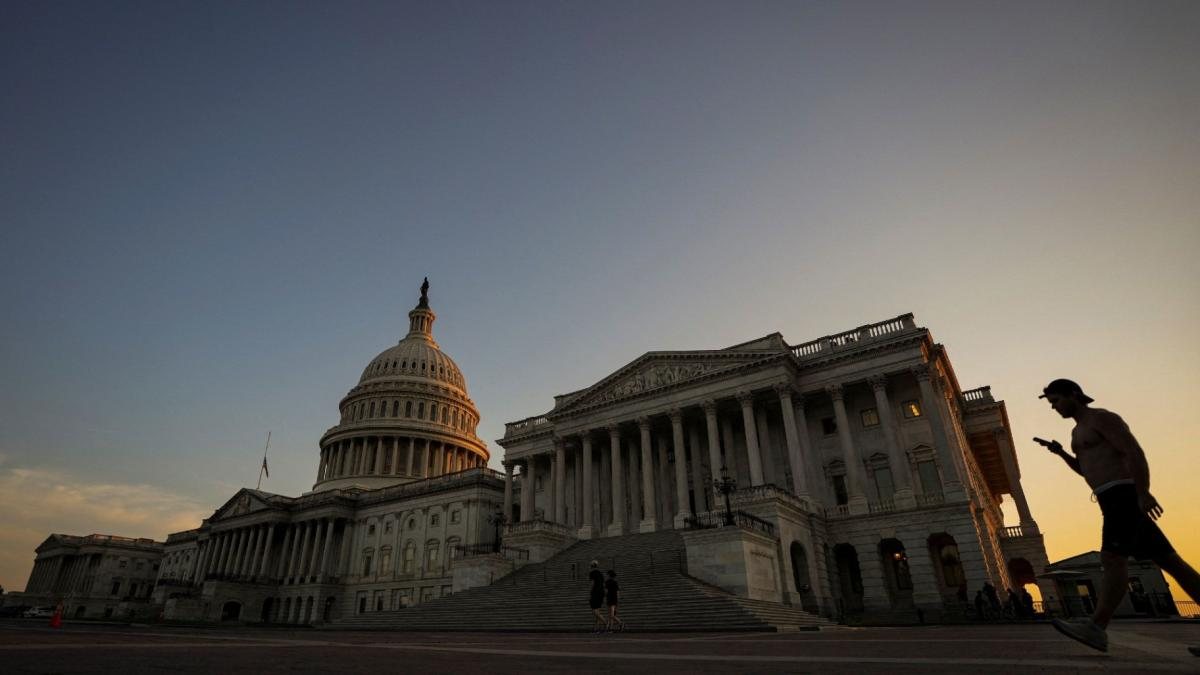
Image: The U.S. Capitol in evening light on July 13, 2026. Image credit: Al Drago / Reuters via CNN Newsource.
57