5 minPolitics
OutKick Commentary Accuses Stephen A. Smith of Politically Convenient Stances
A new commentary argues that Stephen A. Smith's apology to Kyrie Irving and criticism of Dr. Anthony Fauci came only after the political tide turned, and questions whether his shift represents real courage.
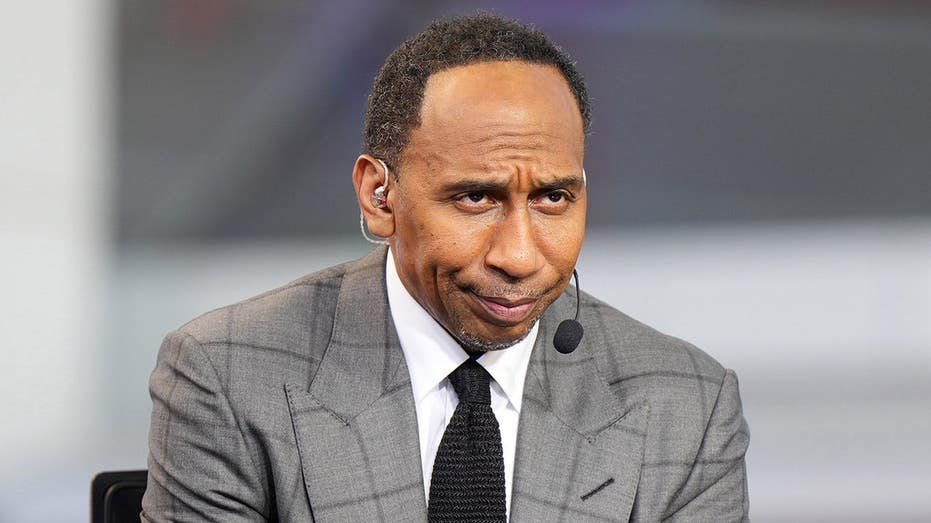
A sharply worded commentary published by OutKick accuses ESPN personality Stephen A. Smith of saving his most daring public statements for moments when they are politically convenient, citing his recent attack on Dr. Anthony Fauci and his apology to Kyrie Irving as examples.
The column argues that Smith, who has drawn speculation about a possible presidential campaign and has appeared regularly on political news programs, has become «a politician as much as a sports media personality.» It says his latest remarks are less about courage and conviction and more about scoring political points.
Smith took up both subjects on Thursday's episode of «The Stephen A. Smith Show,» titled «Did Fauci Lie to Us All?» He criticized Fauci after the former government scientist invoked his Fifth Amendment right against self-incrimination more than 100 times before Congress. He then offered a public apology to Irving, an NBA player Smith had once labeled «selfish» for refusing to take a COVID-19 vaccine.
Irving lost millions in salary after local vaccine rules in New York kept him out of home games during the pandemic. Reflecting on that period, Smith said, «In my opinion, particularly hindsight-wise, it didn't make him stubborn or selfish. It made him brave.»
«I watched Dr. Fauci on Capitol Hill yesterday, and the person I thought about most was Kyrie Irving,» Smith said. He added that «there's several people that we all owe apologies to... but none more so than the apology that I owe to Kyrie Irving.» Smith continued: «It turns out that, no matter what the truth is behind all of this, Kyrie Irving did nobody wrong. We did him wrong. I did him wrong. And for that, I'm sincerely sorry.»
The commentary does not dispute the content of the apology but questions why it took so long. «Due to his inaction, and what I believe to be cowardice when faced with opportunities to take a real stand for the truth, and push against the mainstream prescribed narrative over the years, I'm not going to waste my time praising Smith for saying this in 2026,» the column states.
The piece also revisits Smith's recent statements about transgender athletes competing in women's sports, an issue his critics say he addressed only after the political tide shifted. It notes that Smith interviewed former college swimmer Riley Gaines in 2025 and praised Sophie Cunningham for «saying what others are afraid to say.» According to the commentary, Smith was silent when ESPN celebrated Lia Thomas during Women's History Month, and he did not publicly defend former ESPN host Sam Ponder when she was «vilified and reprimanded» for her stance on the issue. Ponder is no longer with the network.
The column argues that Smith's timing contrasts with the experience of others who took unpopular positions during the pandemic. It names Kyrie Irving, Novak Djokovic, Aaron Rodgers, Cole Beasley, Tyler Bertuzzi, and anonymous everyday Americans as people who were «relentlessly vilified» for not taking a coronavirus vaccine that the piece describes as experimental. They were, the commentary says, «gaslit by people like Stephen A. and others in mainstream sports media.»
Some, according to the column, paid a professional price. It says Allison Williams, who refused the vaccine while pregnant, was among those who lost her job during that period.
The commentary reserves some of its sharpest language for Smith's shift in approach. «He sounds like a politician, in my opinion,» the author writes. «He's the king of playing both sides.» The column also refers to Smith's «liberal overlords at ESPN,» a phrase central to its charge that Smith chose caution over conviction while working within mainstream media constraints.
Still, the piece acknowledges that Smith's statements may have real influence. It notes the importance of his apology and his recent willingness to raise contested issues, and says such acknowledgments are welcome from sports media figures, politicians, and the public. «That is something we should be hoping for from many sports media members, family, friends, politicians, co-workers, and more,» the commentary says.
Ultimately, the column's complaint is about timing, not the substance of Smith's words. It argues that meaningful statements require personal risk, and that Smith is receiving scrutiny because he stayed silent while others lost jobs and reputations for taking the same positions years earlier.