5 minPolitics
Obama Accuses Vance of Promoting 'Blood and Soil' Vision of America
Former President Barack Obama criticized Vice President JD Vance for pushing a 'blood and soil' interpretation of 'We the People,' arguing it echoes exclusionary ideas about citizenship and belonging.
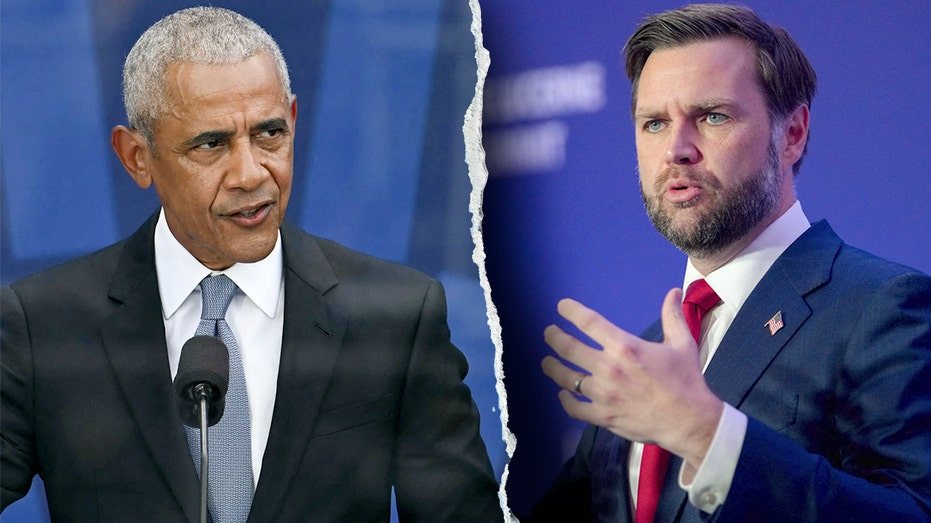
Former President Barack Obama has sharply criticized Vice President JD Vance, accusing him of promoting a «blood and soil» version of the nation's founding mantra «We the People.» During a discussion with author Malcolm Gladwell about the Reconstruction era, Obama argued that Vance's rhetoric reflects a narrow, exclusionary vision of American identity that contradicts the country's inclusive ideals.
Obama made the remarks while reflecting on how historical debates over citizenship and belonging persist today. He pointed to Vance's political party as being captured by a faction that is «not that subtle about suggesting that 'We the people' means a certain kind of people.» The former president specifically cited a speech by Vance that he described as a «blood and soil version of 'We the people,'» adding that it «matters who your parents were and how long they've been here.»
The phrase «blood and soil» has deep historical roots, having been popularized by Nazi Germany and later associated with white nationalist movements. Obama's use of the term drew a direct line between Vance's rhetoric and a troubling chapter in world history, suggesting that such ideas undermine the principle that all Americans, regardless of ancestry, are entitled to equal citizenship and participation in democracy.
Obama noted the irony in Vance's position, pointing out that the vice president is married to Usha Vance, the daughter of Indian immigrants. «Despite him being married to a daughter of an immigrant himself,» Obama said, Vance's message echoes «ideas about who can be a citizen, who belongs, who gets to make decisions.» Gladwell echoed this sentiment, accusing Vance of «hypocrisy» for making a «nativist argument» while his own family background contradicts it.
Obama acknowledged that such hypocrisy could be seen as a form of progress. «That is progress. Listen, hypocrisy is progress. It is, because it means that you feel guilty enough to either lie to yourself or others. And that is better than not even thinking about the idea that maybe you're doing something wrong,» he said. This nuanced view suggests that even flawed acknowledgment of diversity is preferable to outright denial of its importance.
The former president's comments come amid ongoing national debates over voting rights, immigration, and the meaning of citizenship. Obama linked Vance's rhetoric to broader political battles, including the Supreme Court's ruling on race-based congressional gerrymandering and ongoing disputes over who qualifies as a full member of the American polity. He argued that these issues are «still being debated, sometimes not as bluntly and explicitly as they have in the past, but they're still there.»
Vance, for his part, has not directly responded to Obama's criticism. In a recent speech marking America's 250th birthday, the vice president urged Americans to reject a «two-dimensional view» of the country that focuses only on its failings. He called for unity, saying, «Reject the view of your nation that sees only its sins, but not its grace and its greatness. Everything that we have done, we have all done together, not as citizens divided against each other, but as a common people working towards a common future.»
Obama has largely avoided direct public criticism of Vance since the 2024 election, though he previously took a subtle swipe during the campaign. When then-Vice President Kamala Harris chose Minnesota Governor Tim Walz as her running mate, Obama questioned whether the opposing party's pick was «inexperienced and polarizing» and would «deepen our divisions.» The former president's latest remarks represent a more pointed critique of Vance's ideological stance.
The exchange highlights the deep ideological divide in American politics over national identity and the legacy of Reconstruction. Obama's invocation of history serves as a reminder that contemporary debates about citizenship and belonging are not new, but rather echo unresolved tensions from the post-Civil War era. As the nation continues to grapple with these issues, the clash between inclusive and exclusionary visions of «We the People» remains at the forefront of political discourse.
66