4 minPolitics
NY Times reporter says Trump's political obituary has been written prematurely by 'delusional' critics
New York Times reporter Jonathan Swan told '60 Minutes Australia' that President Donald Trump's political obituary has been mistakenly written many times, urging journalists to show humility. He described Trump as having 'Napoleonic' ambition and noted his survival capacities.
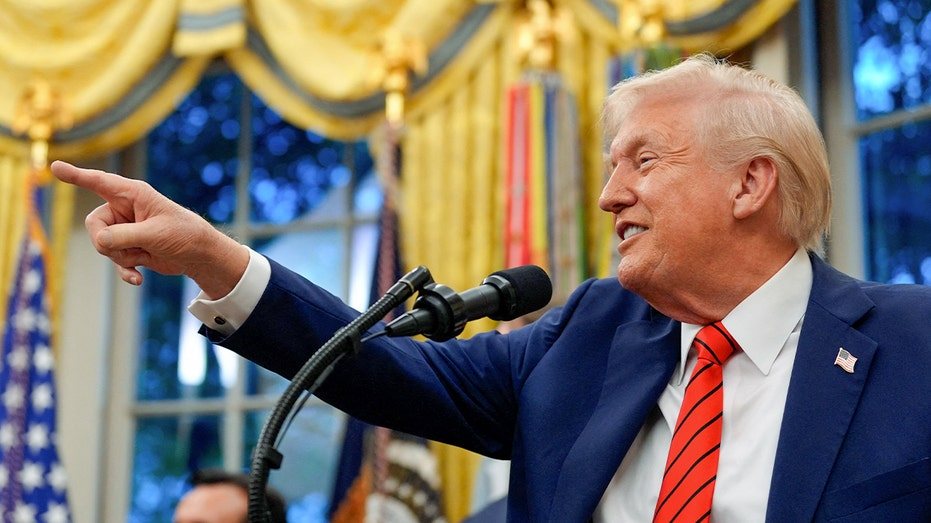
New York Times reporter Jonathan Swan suggested during an interview with60 Minutes Australiareleased last week that President Donald Trump possesses a political survivability that should humble journalists who have repeatedly written off his career. Swan, along with fellow Times reporter Maggie Haberman, discussed their new bookRegime Change: Inside the Imperial Presidency of Donald Trumpand offered cautionary remarks about covering the president.
«I think Donald Trump's obituary has been written so many times — his political obituary — by so many people,» Swan said. «And by this point, if you don't have some humility around that, I think, you know, you're operating in a fairly delusional way. This is someone who has incredible survival capacities, who's able to regenerate himself, and he's still got two and a half years left as the most powerful man on the planet, with no intention of receding at all.»
Swan went on to describe Trump's mindset and policies, recounting an encounter at the White House where the president showed him and Haberman a document he claimed was written by a historian. According to Swan, the document opened by asserting that Trump is «the most powerful man who's ever existed, ever lived on the planet, by far,» and then compared him to historical figures including Stalin, Mao, Hitler, Napoleon, Attila the Hun, Genghis Khan, the Caesars, Alexander the Great, and Tamerlane. «It had nothing to do with morality,» Swan said. «The document didn't mention morality. It was about power and raw power.»
Swan interpreted the premise as Trump wanting to be a «Napoleonic» figure — «the person who only needs to be known by one name, who is the defining figure of our age.» He noted that Trump likely does not compare himself to other U.S. presidents like Bill Clinton or Eisenhower but instead to figures such as Napoleon. «I think it is to figures like Napoleon and that he wants to be the defining global figure of our age,» Swan added.
In the interview, Swan also speculated on the remainder of Trump's term, noting that even if Democrats take the House, they «really can't touch him.» He pointed to Trump's increased wealth, immunity conferred by the Supreme Court, and the lack of prospect for conviction even if impeachment were pursued. Swan mentioned potential foreign policy moves, such as exploring regime change in Cuba, though he cautioned against prognosticating.
In response to Swan's comments, White House spokeswoman Olivia Wales told Fox News Digital that «President Trump is fighting every day to deliver the strong, safe, and prosperous country that we all deserve. The only legacy President Trump is concerned with is making America greater than ever before.»
Swan's remarks reflect a growing recognition among some journalists that Trump has repeatedly defied predictions of political demise, surviving controversies, legal challenges, and two assassination attempts. His ability to maintain support among a significant portion of the electorate, despite ongoing investigations and media scrutiny, has led to calls for more measured coverage. The New York Times reporters' book,Regime Change, delves into what they describe as Trump's imperial presidency and his unconventional exercise of power.
The interview has sparked debate about media coverage of Trump, with some commentators arguing that journalists have been too quick to declare his political end. Swan's admonition to «have some humility» resonates with critics who say the press has repeatedly misjudged Trump's resilience. As the 2026 midterm elections approach and Trump continues to dominate Republican politics, his political longevity remains a central question for analysts and voters alike.
71