4 minPolitics
Medicare for All would require a massive tax increase, critics warn
An opinion piece argues that single-payer health coverage would eliminate premiums and deductibles but shift the cost to taxpayers through payroll or income taxes that could reach tens of trillions of dollars over a decade.
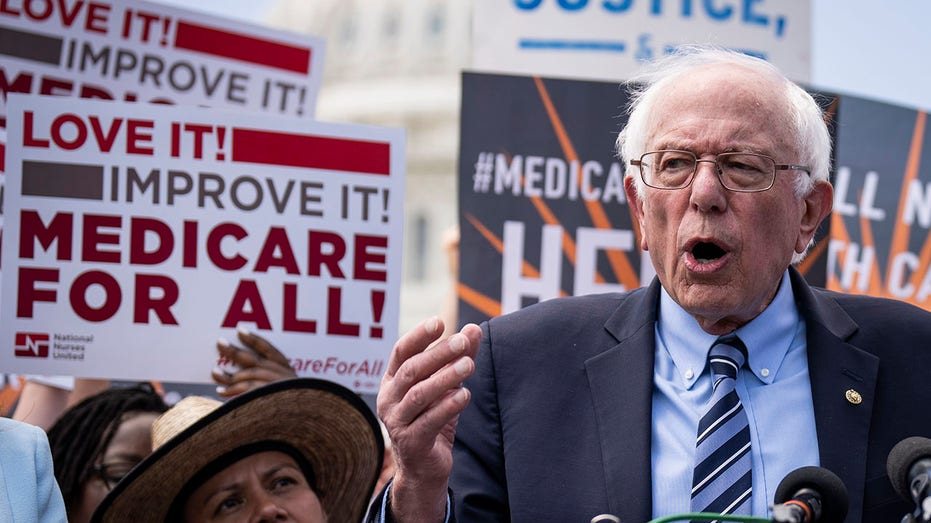
A proposal to provide government-funded health coverage to every American may appear to offer free care, but an opinion column published by Fox News argues that the cost would simply reappear in taxes. The writer contends that eliminating premiums, deductibles and copayments does not eliminate the underlying medical bills, and that someone must ultimately pay for them, most likely through higher payroll or income taxes.
The column cites estimates from the Congressional Budget Office, which has modeled single-payer systems that would raise federal health spending by roughly $1.5 trillion to $3 trillion a year by 2030. At the upper end of that range, the total could reach about $30 trillion over a decade. The author compares that figure with the roughly $5.4 trillion the federal government collected in revenue in fiscal 2026, and notes that federal debt already exceeds $40 trillion.
To illustrate the scale of taxation that might be required, the column refers to an analysis by the Committee for a Responsible Federal Budget examining how about $30 trillion in additional federal spending over ten years could be financed. One example it cites is a 32 percent payroll tax; another is a 25 percent income surtax. The writer stresses that these are not official Medicare for All proposals, but rather illustrations of what a single tax would have to reach if used alone.
The author argues that the financial effect would vary widely across households. A family could save thousands of dollars in premiums and deductibles yet pay substantially more in taxes, while another could come out ahead. In the column's view, the outcome depends on income, health care needs and how the system is financed, and voters cannot know whether it would save them money until those details are specified.
The piece also raises questions about capacity. Broader coverage could increase demand for care, which the writer says could benefit people who currently go without treatment. However, the column points to existing shortages of health care professionals in many communities and warns that expanding coverage without expanding the supply of doctors and hospitals could lengthen waits for some services. It adds that efforts to control spending through lower reimbursements could create further strain for hospitals and physicians.
The column notes that nearly half of Americans are expected to receive employer-sponsored coverage in 2026, and that a comprehensive single-payer plan would fundamentally replace that arrangement. Some people might welcome the change, while others could lose coverage they currently prefer, provider networks or benefits. Employers would also face major adjustments. The writer points out that traditional Medicare is not free either, since beneficiaries commonly pay Part B premiums, deductibles and often purchase supplemental coverage.
The United States spent approximately $5.3 trillion on health care in 2024, and the author acknowledges that prices, administrative costs, prescription drug expenses and access all need attention. A single-payer system might reduce some of those costs, the column says, but the savings are not guaranteed and the transition would not be painless. The central question, the writer concludes, is not whether Americans deserve health care, but whether the federal government can finance and administer a greatly expanded system without creating a different set of financial problems.
Source: foxnews.com
30