5 minPolitics
Massachusetts lawmakers fast-track bill to expand late-term abortion access
Massachusetts is moving to pass a bill before the legislative session ends Friday that would allow physicians to authorize abortions after 24 weeks based on medical judgment, replacing the state's narrow list of legal exceptions.
Massachusetts is poised to significantly expand access to abortion before the legislative session ends Friday, as Democratic lawmakers fast-track a measure that would allow abortions after 24 weeks whenever a licensed physician deems the procedure medically appropriate.
The Prioritizing Patients' Access to Care Act passed the House last week by a vote of 119 to 33 and is now being pushed through the Senate on an expedited timeline. If enacted, it would replace the state's current list of four exceptions — threats to the patient's life, physical health, mental health, lethal fetal anomaly, or grave fetal diagnosis — with a broader standard based on a doctor's clinical judgment. The bill would also bar third-party medical reviewers from overruling decisions made by a patient and their physician.
Supporters say the current restrictions are too rigid to account for the complexity of serious pregnancy complications. The proposal mirrors a law Maine adopted in 2023 that permits late-term abortions based on physician judgment. «The goal of passing this legislation is simple. Medical decisions should be made by a patient and their doctor,» said Democratic state Rep. Lindsay N. Sabadosa, the bill's sponsor. «Massachusetts has one of the best health care systems in the country, and patients should be able to rely on their providers to deliver medically appropriate care without restrictions that can fail to account for the complexity of individual medical circumstances.»
Advocates for expanding access point to cases in which patients have had to leave the state to obtain care. Claire Teylouni, interim co-executive director of Reproductive Equity Now, cited a 2021 case involving a woman whose fetus suffered a stroke at 33 weeks and who had to travel outside Massachusetts for an abortion because providers did not believe the case fit within existing legal exceptions. «She was shocked that she had to leave Massachusetts to get this care,» Teylouni said. «Providers say they want to be able to use their professional expertise to make decisions — that's how we treat almost every other area of health care.»
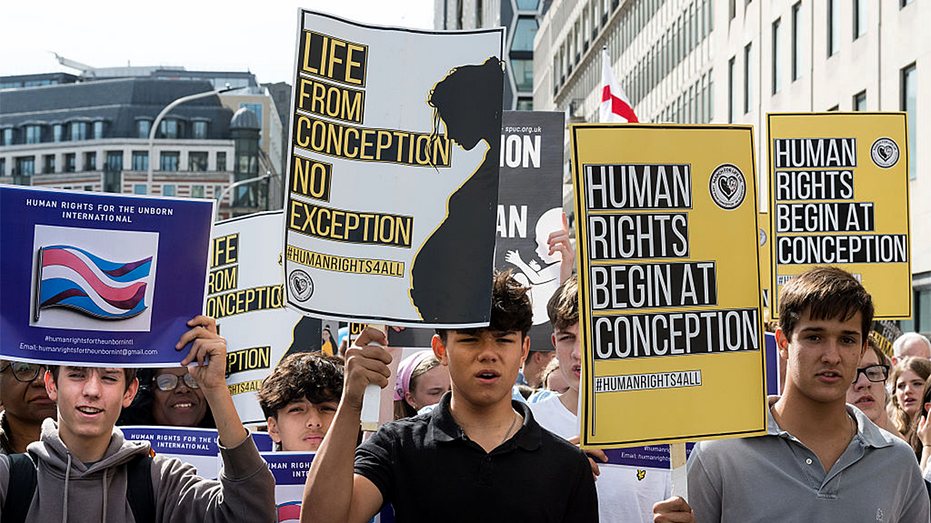
Opponents argue that the existing law already includes broad exceptions and that the new bill would remove meaningful limits. «The current law that exists in Massachusetts allows abortion up until 24 weeks, and it already has exceptions,» said Kelsey Pritchard, communications director for Susan B. Anthony Pro-Life America. «It has health and life exceptions for the mother, but it even has exceptions that allow for so-called fetal anomaly abortion, so if the baby has a life-limiting diagnosis, if the baby has a disability diagnosis, already in Massachusetts you can abort those babies seemingly at any point.» Pritchard said the measure would «allow abortion throughout the second and third trimesters if you have an abortionist who has a medical degree who can sign off on that for you, so essentially they're opening the door to elective abortion at any point in pregnancy.»
Republicans in the legislature also criticized how quickly the bill has advanced. GOP state Rep. Kelly Pease said he was caught off guard by the proposal, which bypassed the full Senate committee process. «I think most of our caucus was. It's like, where did this come from?» Pease said. «I don't see how I'm going to be in favor of a bill that allows babies over six months to be terminated when they're probably viable outside the womb, unless there's extenuating circumstances, and this kind of just takes away some of the safeguards that were in place before.»
Democratic Gov. Maura Healey has made abortion access a defining issue of her administration. Since taking office in 2023, she has described Massachusetts as a «beacon of reproductive freedom» in the post-Dobbs era. She has directed state agencies to shield abortion providers and patients from out-of-state legal action and ordered the state to stockpile mifepristone after a federal court challenged the FDA's approval of the abortion pill. Healey has not publicly commented on the current bill, and her office did not respond to a request for comment.
The bill is expected to clear the Democratic-controlled Senate in the coming days. The legislative session ends Friday, when lawmakers are scheduled to adjourn until January.