6 minPolitics
Jordan Report Accuses Jack Smith of Trying to Sway 2024 Election
House Judiciary Chairman Jim Jordan released a 57-page report alleging former special counsel Jack Smith and the Biden administration weaponized the Justice Department to influence the 2024 election, including through subpoenas for lawmakers' phone records.
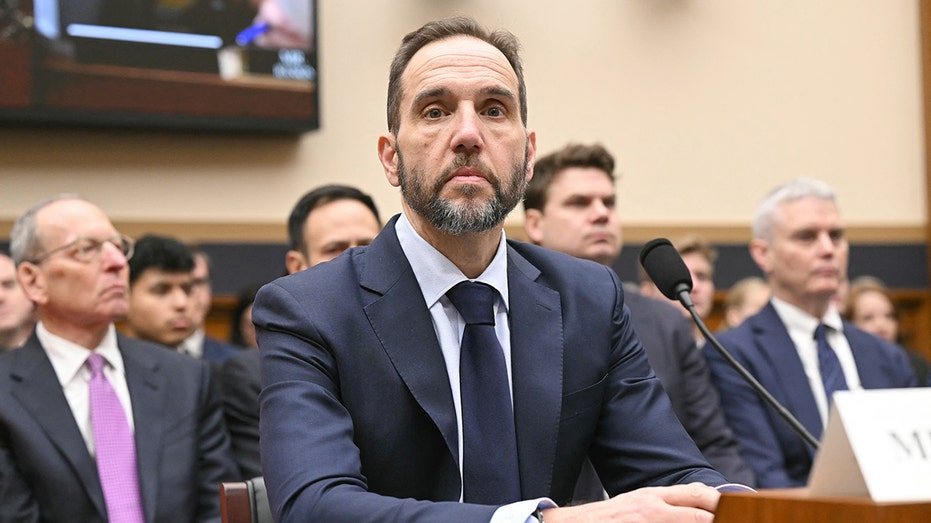
House Judiciary Committee Chairman Jim Jordan, R-Ohio, is accusing former special counsel Jack Smith and the Biden administration of using the Justice Department to try to sway the 2024 presidential election, according to a new 57-page report released by his committee.
The report argues that Smith and his team «ran roughshod over key constitutional protections» and that the former Democratic White House used «the DOJ as a weapon against its political opponents.» It alleges that prosecutors tried to silence President Donald Trump with unlawful gag orders, threatened defense attorneys, mishandled key documents, and broke protocol by releasing a trove of evidence just weeks before the election to sway public opinion.
At the center of the report is the disclosure that as many as 44 members of Congress in both the House and Senate had the contents of their text messages gathered by Smith's team. Republicans have characterized the surveillance as an abuse of power, and the report accuses prosecutors of willfully skirting legal processes to obtain that information while hiding their intelligence gathering.
The report points to internal documents showing that investigators in the probe known as «Arctic Frost,» and later Smith's team, had only limited discussions with subject-matter experts in the DOJ's Public Integrity Section about the constitutionality of the seizures. Although PIN cautioned that the subpoenas could be unconstitutional, the report says the section approved them anyway, asserting there was little «litigation risk» because gag orders accompanying the subpoenas would prevent members from ever discovering the seizures. As a result, members of Congress were unaware of the surveillance for more than two years, according to the report.
The report states that investigators sought Jordan's own phone records from the period between August 2020 and January 2021 in connection with the federal probe into Rep. Scott Perry, R-Pa. PIN concluded that lawmakers' constitutional protections under the Speech or Debate Clause did not apply because the subpoena targeted Jordan's personal cell phone accounts and was served to a third party — his phone carrier — rather than to Jordan himself.
An email excerpt cited in the report shows PIN Deputy Chief Jennifer Clarke noted there was a «litigation risk» with that argument but «approved the subpoenas nonetheless.» Another email excerpt shows PIN official John Keller also acknowledged a «litigation risk» in obtaining members' toll records but described it as «minimal» due to the low likelihood of those lawmakers facing federal charges. Keller also noted the government had a «potentially meritorious argument» that calls over the relevant period, especially unsolicited incoming calls, would not constitute protected legislative acts.
The report further alleges that the DOJ violated its own rules by improperly using an independent watchdog office to serve Jordan's phone carrier when it significantly expanded the information it sought about him. On May 1, the DOJ issued a subpoena for Jordan's phone records from January 1, 2020, to April 25, 2022 — every incoming and outgoing call for more than two years. A special agent from the DOJ Office of the Inspector General, an entity that should be independent and maintain a reporting relationship with Congress, served the subpoena to Jordan's carrier, according to the report.
OIG Special Agent Brian Burnett testified to the committee that the investigation was «unique» within his three decades of law enforcement experience because he was following orders from an assistant U.S. attorney rather than investigating himself. «A normal investigation would be, I would do the investigation, become familiar with everything, you know, do grand jury subpoenas, do the normal investigative process, follow the normal investigative steps. But, in this case, those steps were given to us by the prosecution team,» an excerpt from Burnett's testimony states.
The report also notes that Smith's team backed down from grand jury subpoenas sent to AT&T for two other lawmakers' phone records after the carrier questioned their legal basis. In May 2023, Smith sent AT&T a grand jury subpoena requesting records associated with accounts for two other members of Congress. When AT&T raised questions about the legal basis for seeking records of members of Congress, Smith did not pursue the subpoena further, and no records were produced, according to a letter highlighted in the report. Smith testified to congressional investigators that he did not «have any recollection of that,» the report says.
The report goes on to say Smith «admitted privately» to then-Attorney General Merrick Garland that lawmakers «likely have a valid Speech or Debate privilege immunizing them from compelled testimony,» but that Garland still gave his «blessing» to Smith for subpoenas compelling the production of members' protected legislative records.
5