5 minPolitics
House Advances Budget Bill to Bypass Senate Hurdles on Election Integrity Act
The House voted largely along party lines to advance a $95 billion budget bill that includes provisions from the SAVE America Act, allowing Republicans to bypass Democratic opposition in the Senate through reconciliation.
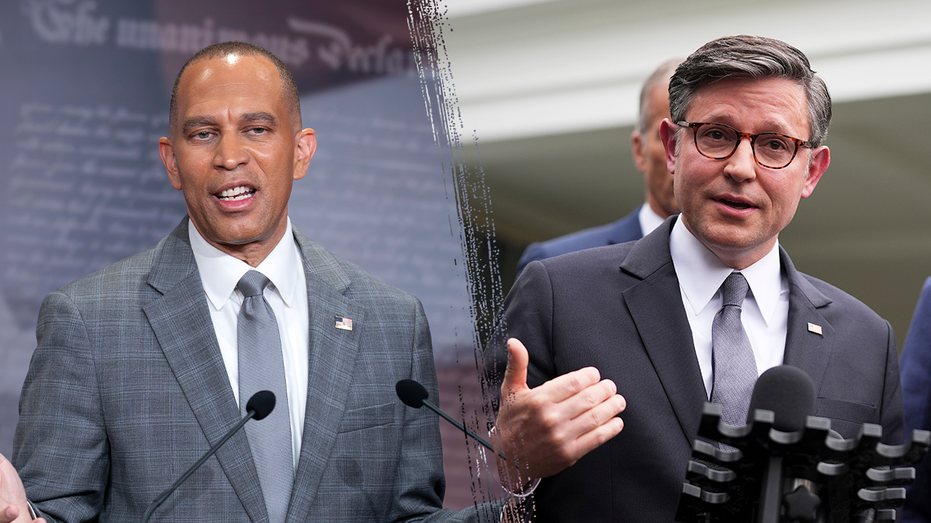
Speaker Mike Johnson secured a significant procedural victory on Tuesday as the House voted to advance a $95 billion budget bill that includes key provisions of the Safeguarding American Voter Eligibility (SAVE) America Act, a move designed to circumvent Democratic opposition in the Senate. The vote, which fell largely along party lines, allows the chamber to begin debate on a reconciliation package that would allocate approximately $10 billion to states for implementing voter ID laws and proof-of-citizenship requirements for voter registration. These measures are central to the SAVE Act, which President Donald Trump has strongly endorsed but which has stalled in the Senate due to Democratic filibuster threats.
The reconciliation process, which permits the majority party to pass fiscal legislation with a simple majority in the Senate, is being used by Republicans to advance the election integrity provisions without needing Democratic votes. Under this procedure, the House must first approve a budget framework that directs relevant committees to craft detailed spending allocations. That framework is scheduled for a vote on Wednesday, though its passage remains uncertain amid opposition from both Democrats and some fiscal conservatives within the GOP. The broader budget package includes $73 billion for military operations against Iran and $12 billion in aid for American farmers, in addition to the election-related funding.
Johnson’s strategy faced a critical test on Tuesday when the House voted to allow debate on the budget bill, overcoming procedural hurdles that Democrats had raised. The SAVE Act, which passed the House in February, has been a priority for Trump and Republican leaders, who argue that it will enhance public confidence in the electoral process by requiring proof of citizenship for voter registration and strengthening voter ID laws. Democrats have countered that the legislation is a form of voter suppression that would disenfranchise eligible voters, particularly minorities and low-income individuals.
To address concerns from fiscal hawks within the GOP, Office of Management and Budget Director Russell Vought met with House Republicans behind closed doors on Tuesday. Vought assured lawmakers that spending cuts could be pursued in a separate budget bill after the current legislation is completed, according to multiple sources. Some fiscal conservatives had expressed unease about the lack of offsetting cuts in the $95 billion package, but Vought’s pledge appeared to ease some of those worries. He also emphasized that the reconciliation process would not dilute the SAVE Act’s provisions, a key concern for lawmakers who view the bill as essential to election security.
The reconciliation process has been used by Republicans before, including to pass Trump’s tax overhaul and additional funding for immigration enforcement. However, the strict rules governing reconciliation require that all provisions directly affect federal spending or revenues, which has limited the scope of what can be included. Johnson’s team has argued that the voter ID and citizenship verification requirements qualify because they involve federal funding to states. Democrats have disputed this interpretation, but the House parliamentarian has not yet ruled on the matter.
The SAVE Act’s journey through Congress has been fraught with partisan conflict. While it cleared the House with Republican support, it has languished in the Senate, where Democrats have used procedural tactics to block it. The reconciliation approach offers a path around that blockade, but it also risks alienating moderate Republicans who are wary of the budgetary implications. The $95 billion price tag has drawn criticism from deficit hawks in both parties, though Trump has urged Republicans to rally behind the measure.
If the budget framework passes on Wednesday, committees will begin drafting detailed spending bills that must be consolidated into a single package for final approval in both chambers. The timeline for completion remains unclear, but Republican leaders are aiming to send the bill to Trump’s desk before the end of the year. The outcome will depend on whether Johnson can maintain party unity while navigating opposition from Democrats and internal GOP dissent.
78