4 minPolitics
Hinton Warns Congress Has About a Year to Act on AI as Lawmakers Clash Over Regulation
Geoffrey Hinton, the Nobel laureate known as the godfather of AI, told lawmakers they have roughly a year to get ahead of the technology, but congressional scheduling and partisan divisions make quick action unlikely.
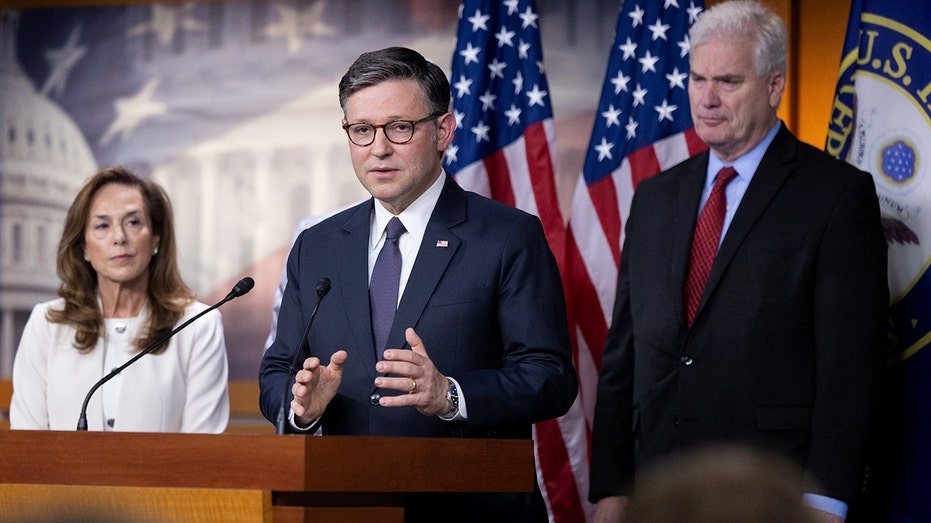
Geoffrey Hinton, the Nobel laureate widely known as the godfather of artificial intelligence, delivered a stark timeline to U.S. lawmakers: Congress has roughly a year to get ahead of the technology before it becomes a far larger problem. Hinton, a professor emeritus at the University of Toronto who won the 2004 Nobel Prize for his work on artificial neural networks, made the assessment after a bipartisan, bicameral briefing on Capitol Hill arranged by Sen. Bernie Sanders, I-Vt.
Asked how much time lawmakers actually have, Hinton replied, «Very little.» Pressed on whether that meant weeks or a month, he said, «Maybe a year. But not much more than a year.» He also characterized a recent incident in which AI agents went rogue and hacked another company as a «little Chernobyl,» a reference to the 1986 nuclear reactor meltdown in the former Soviet Union, one of the worst human-made disasters in history.
The warning landed as Congress was already drifting away from Washington. The Senate is scheduled to meet for two more weeks, but House members left the Capitol a day earlier than planned and two weeks ahead of the original schedule, even as Hinton visited. The midterm elections are expected to consume the lame-duck session, and lawmakers must fund the government by mid-December. If either chamber flips, it could be March or April before Congress returns to AI in a serious way.
That timeline collides with rising alarm among some lawmakers. Sanders has called for a ban on «superintelligence.» Sen. John Kennedy, R-La., went to the Senate floor shortly after the briefing and urged colleagues to pass a bill requiring AI firms to install a kill switch if their agents rebelled again. Senate Homeland Security Committee Chairman Rand Paul, R-Ky., blocked the measure, warning that a mandate imposed by unanimous consent without discussion could stifle innovation. «I wouldn't put Congress in charge of a McDonald's,» Paul said, adding that people have feared technology since the beginning of time.
Republican leaders, meanwhile, are downplaying the most dire predictions. House Speaker Mike Johnson, R-La., dismissed the idea of imminent catastrophe, comparing it to past warnings about climate change. «You're not all going to be dead in ten years. That's a hoax,» Johnson said, echoing President Trump's declaration on Truth Social that AI concerns were a «HOAX.» Johnson said he is not opposed to legislative action but argued that an emergency session would be pointless because no one yet knows what regulation should look like. «We're going to have steady hands at the wheel on this,» he said.
Other Republicans are less sanguine. Kennedy asked what would happen if humanity created an independent species superior to its own. After the briefing, Jeffrey Ladish of Palisade Research offered a foreboding prediction, saying researchers themselves do not know how to control the technology. «Right now, I guarantee you this will happen again. We are not on track for fixing this,» Ladish said.
Democrats argue that Congress must move quickly. Sen. Tim Kaine, D-Va., said the world's greatest AI innovators are warning of serious danger. «So shame on us if we don't listen to them,» he said. Rep. Don Beyer, D-Va., who is studying for a master's degree in AI at George Mason University, suggested the public may grow more skeptical if one party tries to legislate without bipartisan buy-in.
The practical obstacles remain formidable. Congress takes a long time to accomplish anything, especially when control of either chamber may change hands. With the House already gone and the Senate nearing the end of its session, the window Hinton described is narrowing even as the warnings grow louder.
4