5 minPolitics
Hegseth's Department of War Backdrop Draws Nazi Imagery Comparisons
A redesigned Department of War logo displayed behind Defense Secretary Pete Hegseth at an Air Force Academy address has drawn social media comparisons to Nazi Germany's eagle symbol, prompting a Pentagon spokesman to dismiss the criticism.
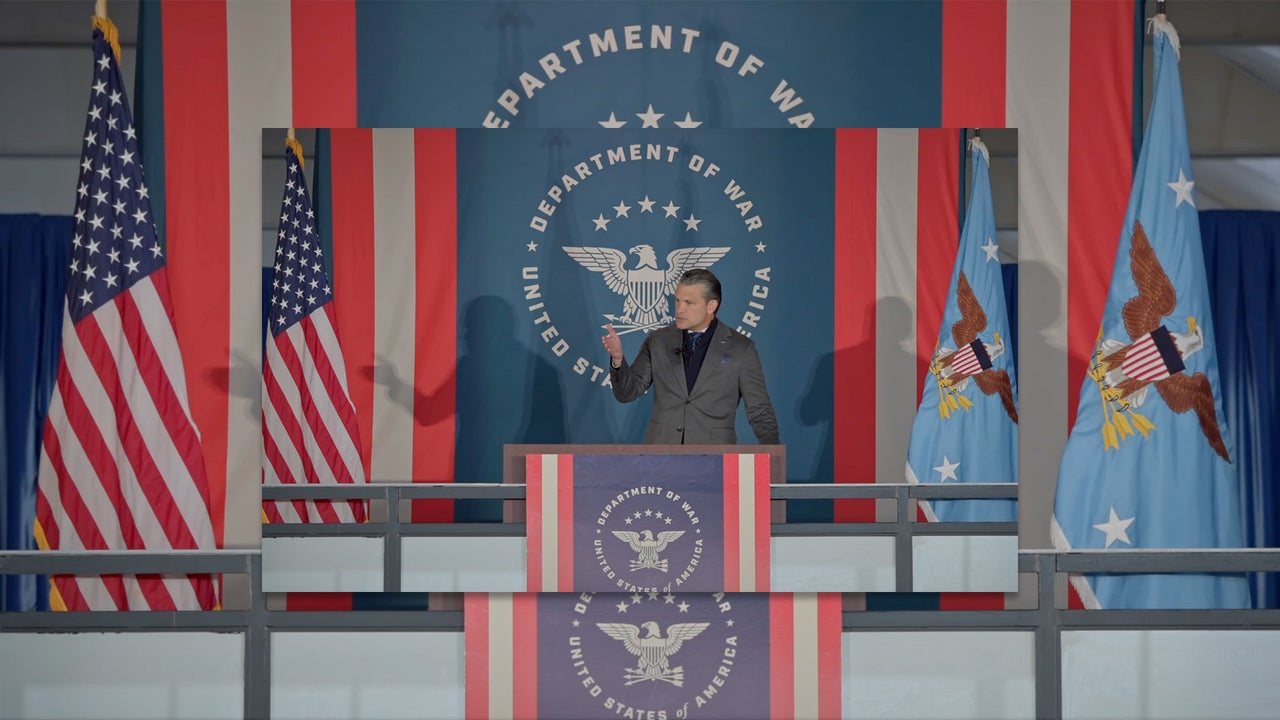
A redesigned Department of War logo displayed behind Defense Secretary Pete Hegseth during an address to military cadets has drawn widespread social media comparisons to imagery from Nazi Germany, prompting a sharp dismissal from the Pentagon.
Hegseth spoke on October 3 at the United States Air Force Academy, standing before a crowd of cadets against a monochromatic backdrop featuring the new logo for the Department of War, a secondary title for the Department of Defense. The image, a simplified version of the department's traditional seal, places the eagle's wings in a horizontal position — a posture that users on social media likened to the Nazi eagle symbol.
The comparison gained traction because other federal seals, including the presidential seal, typically show the bald eagle's wings opened in a V shape. The Department of Defense seal, however, has featured the eagle in a horizontal position since 1949, when the department was first created. An approval last year changed the seal's title to reflect the proposed Department of War name, and the design is officially outlined in Appendix VI Joint Army and Air Force Bulletin No. 23.
Beyond the eagle's posture, the redesigned logo omits several features from the official Department of Defense seal, including the contrasting encircling band around the eagle and a wreath of laurel and olives beneath it. The number of stars surrounding the eagle was also reduced from 13 to five. Those changes appear to conflict with the department's own brand guide, which specifies the seal's required elements.
For some users, the entire monochromatic presentation contributed to the perceived fascist inspiration. One user on X wrote, «There's no such thing as 'accidental Nazi.'»
The redesign appears to be part of a broader effort to create a more comprehensive visual identity across the federal government, whether or not the changes align with individual departments' guidelines. Shortly after President Trump took office last year, the administration introduced a new White House logo. In recent months, the administration has rolled out a series of websites and platforms with modernized design identities, and last week Secretary of State Marco Rubio unveiled a new passport design featuring a more prominent seal that is «more gold.»
It remains unclear whether the Department of War redesign is permanent. Representatives have pushed back on the Nazi comparisons. «The American bald eagle is an icon of our country and used on many state and federal seals, including the seal of the Department of War,» Deputy Pentagon Press Secretary Joel Valdez said when asked whether the new logo was part of a new brand identity or an oversight given the guide's clear specifications. Valdez added, «If for some reason you see imagery of a bald eagle and begin having delusions about Nazi Germany, then you may need to get your head checked for serious brain damage.»
The episode has renewed attention on how federal agencies present themselves visually at a time when the administration is actively reshaping government branding. The Department of War name itself remains a proposed change, and the seal's title was updated last year to reflect that proposal. The logo's appearance at a high-profile military address, however, placed the design squarely in public view and turned a bureaucratic redesign into a subject of national debate.
Critics on social media focused on the combination of the horizontal eagle, the reduced star count, and the stark monochromatic staging, arguing the overall effect evoked imagery from the Third Reich. Supporters of the redesign, including Pentagon officials, countered that the bald eagle is a longstanding American symbol used across state and federal seals, and that the horizontal wing position has been part of the Department of Defense seal for more than seven decades.
The dispute highlights the sensitivity surrounding official iconography and the speed with which design choices can become political flashpoints online. With the administration continuing to roll out new visual identities across federal platforms, the Department of War logo is likely to remain a subject of scrutiny as the proposed name change and its branding move forward.
4