6 minPolitics
Hawaii Supreme Court Justice Accuses US Supreme Court of Abandoning Constitutional Principles
Hawaii Supreme Court Justice Todd Eddins, in a 91-page opinion overturning a 1990 conviction, issued a sharp critique of the U.S. Supreme Court's conservative majority, arguing that state constitutions must protect rights the federal court has weakened and that Hawaii will not follow the Roberts Court's interpretation of constitutional protections.
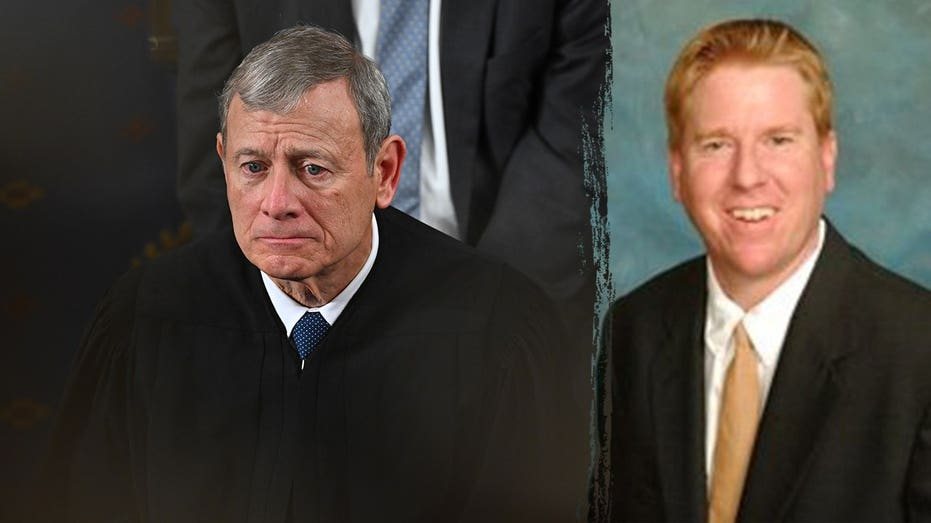
A Hawaii Supreme Court justice has issued an unusually sharp critique of the United States Supreme Court, accusing its conservative majority of weakening constitutional rights, damaging democratic institutions, and advancing a political agenda. Justice Todd Eddins, writing for the majority in a 91-page opinion released Wednesday, argued that Hawaii's courts should not look to the Roberts Court when interpreting the state constitution, declaring that state constitutions must hold the line when the federal court fails to protect individual liberties.
The case, State v. Granillo, involved a man convicted in 1990 of kidnapping and sexually assaulting a woman on Maui. The Hawaii Supreme Court ordered a new trial after concluding that hair and fiber evidence presented by an FBI expert relied on forensic science that has since been discredited. However, roughly eight pages of the opinion were devoted to a blistering attack on the U.S. Supreme Court, with Eddins writing that the nation's highest court has abandoned landmark civil rights principles established in the 1954 Brown v. Board of Education decision that ended racial segregation in public schools.
Eddins compared the Roberts Court's originalist approach to constitutional interpretation to the discredited reasoning in Dred Scott v. Sandford, the 1857 decision denying citizenship to Black Americans, and Plessy v. Ferguson, the 1896 ruling that upheld racial segregation. “When six justices walk away from those they are supposed to protect, state constitutions hold the line,” Eddins wrote. “That is not defiance. That is the design.” He argued that the court “revives the work of 1857” and “the work of 1896,” suggesting that the conservative majority's methodology mirrors the flawed logic of those infamous rulings.
Throughout the opinion, Eddins pointed to several of the Roberts Court's most consequential decisions as evidence that constitutional protections have been systematically dismantled. He cited Dobbs v. Jackson Women's Health Organization, which overturned the federal constitutional right to abortion; Citizens United v. FEC, which expanded campaign finance rights; Rucho v. Common Cause, which allowed partisan gerrymandering; Trump v. United States, which granted presidential immunity; and New York State Rifle & Pistol Association v. Bruen, which expanded Second Amendment protections. Eddins accused the court of adopting a “colorblind” approach to the Equal Protection Clause that ignores its original purpose of protecting formerly enslaved Black Americans, writing that “the Roberts Court sees only white.”
“A court that systematically dismantles democratic safeguards, steamrolls constitutional liberties, and tramples human dignity does not chart the course for the Hawaiʻi Constitution,” Eddins wrote. He further argued that the court has repeatedly expanded the power of government officials and wealthy interests while reducing protections for individual rights, overriding what Congress passed and what the people chose through democratic processes. “What this Court has done to constitutional rights, democratic institutions, and the rule of law explains why Hawaiʻi’s Constitution takes no instruction from it,” he added.
The opinion quickly drew criticism from legal observers who described it as highly unusual for a state supreme court opinion to devote so much space to attacking the U.S. Supreme Court. Iowa Solicitor General Eric Wessan wrote on social media that the opinion was “an unhinged attack on the legitimacy of the Supreme Court” and that he had never seen anything like it. George Washington University law professor Jonathan Turley similarly described the opinion as “devoid of judicial restraint and decorum,” accusing the Hawaii court of unleashing “a torrent of rage and recrimination against the majority of the United States Supreme Court, including suggesting that they are de facto racists.”
The ruling comes just weeks after the U.S. Supreme Court handed Hawaii a major loss in Wolford v. Lopez, striking down the state's so-called “vampire rule” that required gun owners to obtain a property owner's permission before carrying a firearm into businesses and other private property open to the public. That 6-3 decision, authored by the conservative majority, directly conflicted with Hawaii's gun control policies. Eddins, who was appointed to the Hawaii Supreme Court in 2020 by then-Democratic Governor David Ige, has served on the bench for four years and has emerged as a vocal critic of the federal judiciary's conservative shift.
Legal experts noted that the opinion reflects a growing tension between state courts and the U.S. Supreme Court, particularly on issues of individual rights and federalism. While state supreme courts routinely interpret their own constitutions to provide broader protections than the federal Constitution, the explicit and detailed condemnation of the Roberts Court's jurisprudence is rare. The opinion signals that Hawaii's highest court intends to chart an independent course, rejecting the federal court's authority on matters of state constitutional law. Eddins concluded that Hawaii's constitution provides stronger protections than the federal Constitution as currently interpreted, and that the state will not defer to a court he believes has abandoned its duty to protect fundamental rights.
73