5 minPolitics
Federal Records Expose China's Influence Campaign in the United States
Federal records show Chinese government entities and state media spent millions on influence operations in the US, including $66.8 million for CGTN, amid renewed attention after Trump's election interference allegations.
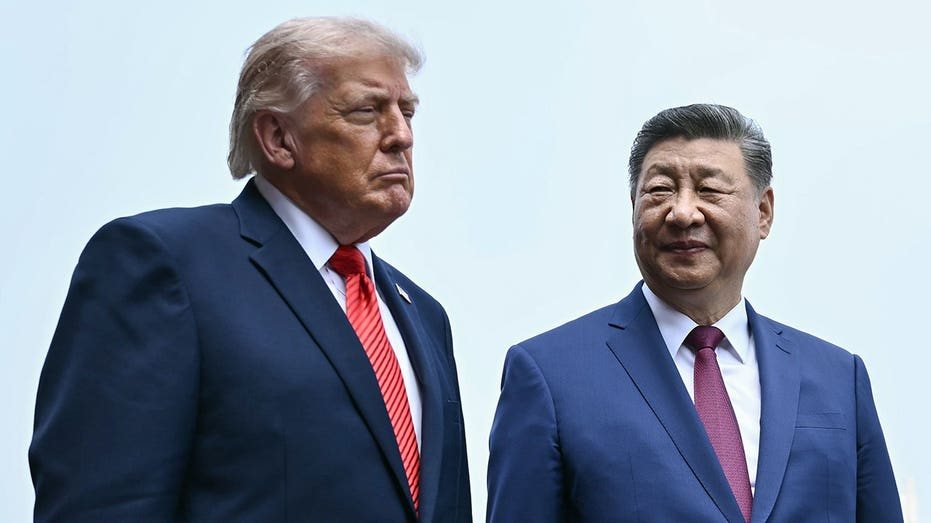
President Donald Trump’s renewed allegation that China interfered in American elections has focused fresh attention on Beijing’s extensive influence operations in the United States. Federal records filed under the Foreign Agents Registration Act (FARA) and the Lobbying Disclosure Act provide a partial but detailed public accounting of how Chinese government entities, state-controlled media, and companies with ties to the Chinese Communist Party (CCP) work to shape U.S. policy, public opinion, and commercial decisions.
According to Department of Justice records, private entities based in China and Hong Kong spent over $20 million on FARA-covered activities in 2025. Chinese government sources allocated nearly $80 million in the same period. However, many influence activities remain hidden. Campus groups linked to Beijing, such as the Chinese Students and Scholars Association (CSSA), which the State Department has identified as having connections to the Chinese government, do not file FARA paperwork. The CCP’s United Front Work Department operates a global network of loyalists who advance Beijing’s interests clandestinely, without any public disclosure. Some China hawks have also argued that powerful domestic nonprofits with significant CCP links provide yet another mechanism for influence, though these groups also avoid registration.
State-run media constitute one of China’s most visible influence levers, often described by academic sources and the federal government as propaganda operations. The State Department estimated in 2023 that China spends billions of dollars annually on foreign information manipulation worldwide. Five Chinese media organizations are currently registered as foreign agents: CCTV, Xinhua News, China Daily, and the privately owned but consistently pro-Beijing Sing Tao News Corporation. CCTV operates CGTN America, the flagship English-language channel, which received $66.8 million in funding from its parent between February and November 2025, according to DOJ filings reviewed by Fox News Digital. CGTN has amplified left-of-center rhetoric on climate change, racial tensions, immigration, and the war in Gaza, while criticizing Trump’s tariffs and his law enforcement policies in Washington, D.C., including National Guard deployments. The network has also prominently praised California Governor Gavin Newsom, a potential political rival to Trump.
A 2022 academic paper from King’s College London argued that CGTN’s primary aim is not to influence voter behavior but to present the United States as poorly governed, plutocratic, racist, and a destabilizing international influence, while portraying China as well-governed, benign, stable, and a rising superpower. All five Chinese media agents publish similar content supportive of Beijing’s narrative. An appendix in Xinhua’s FARA filing reveals that the federal government required its registration because the DOJ believes Xinhua intends to influence the American public or policy makers on topics such as U.S. policy and foreign relations.
In addition to media, Chinese companies pursuing commercial interests file lobbying disclosures with Congress. These filings, while described as purely commercial, often involve entities with significant ties to the CCP. The records show millions of dollars in lobbying expenditures, covering trade, technology, and other policy areas.
The Chinese embassy in Washington rejected the characterization of these activities as influence operations. A spokesperson told Fox News Digital that China is committed to promoting mutual understanding and friendship between the Chinese and American peoples. «Portraying China’s normal international exchanges and cooperation as so-called ‘influence operations’ distorts facts and stigmatizes legitimate engagement,» the spokesperson said. The spokesperson added that Chinese media outlets conduct news reporting in accordance with the law, and labeling them propaganda tools reflects ideological bias and a Cold War mentality.
The true extent of China’s influence in the United States remains unknown, but the evidence available in public filings paints a picture of a broad, multi-billion-dollar effort that extends from media propaganda to covert networks and campus activism. The federal records, while incomplete, reveal a sustained push by Beijing to shape American perceptions and policy decisions across multiple fronts.
68