5 minPolitics
Expert calls Trump's Venezuela oil arrangement a 'mafia state' move
A former trade official argues the U.S. partnership with a private firm to tap Venezuela's oil reserves is an illegal seizure, not a legitimate deal.
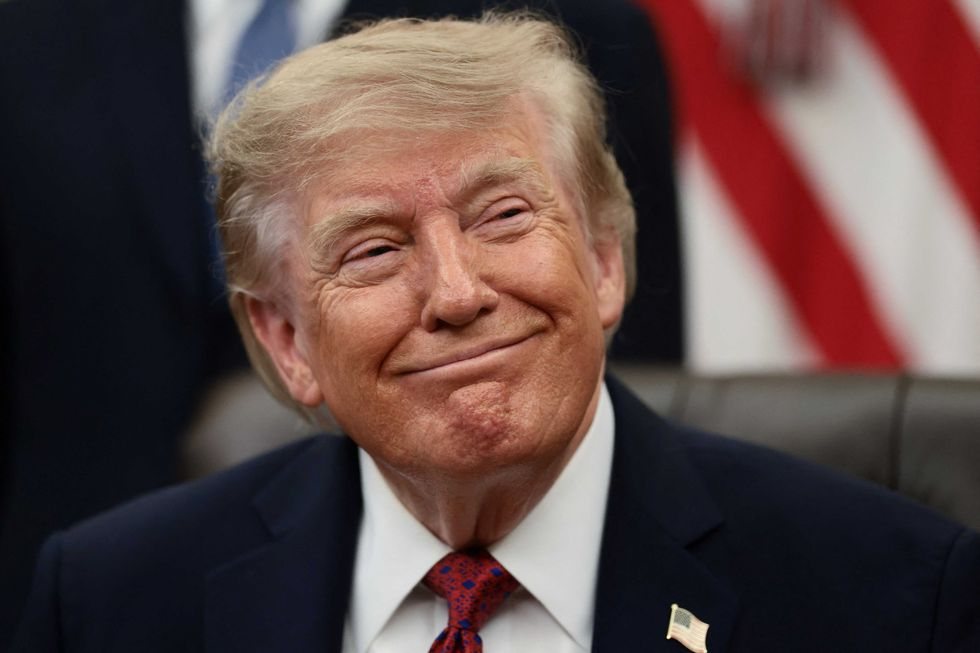
President Donald Trump's recent announcement of a partnership to develop Venezuela's vast oil reserves is being characterized by one former trade official as an illegal power play rather than a legitimate business agreement. David Rothkopf, a global affairs columnist and former international trade official in the Clinton administration, described the move as a "mafia state" tactic that exposes the arrangement's fundamental flaws.
Trump announced that the U.S. and North American Blue Energy Partners, a private company led by Venezuelan businessman Alejandro Betancourt, entered into a partnership to tap Venezuela's 65 billion barrel oil reserves. The deal is estimated to be worth tens of billions of dollars. Betancourt was previously under investigation on corruption charges until Rudy Giuliani, Trump's former attorney, persuaded the first Trump Department of Justice to drop its probe.
Rothkopf argued during an episode of "The Daily Beast Podcast" that the arrangement is not a deal at all. "The United States is getting this all because we attacked Venezuela and at gunpoint are saying, 'Hand over the oil!' That's illegal under international law," he said. He also noted that the arrangement likely violates Venezuelan law, which has a constitution prohibiting the handover of reserves to a foreign government, and may be illegal under U.S. law because it involves cash flowing into the U.S. government, which requires congressional approval.
Rothkopf drew a comparison between the Trump administration's approach to Venezuela's oil and the way Russia's government operates, arguing that the administration is willing to break laws and customs without regard. "It's a crime," Rothkopf said. "It's not a deal."
The arrangement raises significant legal and diplomatic questions. The use of a private company led by a figure previously investigated for corruption adds another layer of concern. The involvement of Giuliani, who was central to efforts to pressure Ukrainian officials in 2019, further complicates the picture, linking the deal to a broader pattern of using personal connections to influence government actions.
The potential value of the oil reserves makes the stakes particularly high. Venezuela holds some of the largest proven oil reserves in the world, and control over those resources has been a point of contention in U.S.-Venezuela relations for years. The Trump administration's move to secure access to those reserves through a private partnership, rather than through a formal treaty or congressional action, has drawn criticism from legal experts and former officials who question its legitimacy.
Rothkopf's comments highlight the tension between the administration's framing of the arrangement as a business opportunity and the legal and ethical concerns it raises. The lack of congressional oversight, the questionable legal basis for the seizure, and the involvement of a businessman with a history of corruption investigations all point to a deal that may not withstand scrutiny.
The broader implications for U.S. foreign policy are also significant. The move could further strain relations with Venezuela and other countries in the region, which have viewed U.S. intervention in Latin America with suspicion. It also sets a precedent for how the U.S. might approach resource extraction in other countries, potentially undermining international norms and treaties.
As the details of the arrangement continue to emerge, the questions raised by Rothkopf and others are likely to persist. Whether the deal can be justified under existing legal frameworks, or whether it represents an overreach of executive power, remains to be seen. What is clear is that the arrangement has sparked a debate about the limits of presidential authority and the rule of law in international affairs.
41