5 minPolitics
Emails Show Arizona AG's Office Sought Hiring Help From ACLU and Prison Law Office
Internal emails obtained by Fox News Digital show Chief Deputy Attorney General Daniel Barr repeatedly asked the ACLU and the Prison Law Office for attorney recommendations, groups that had spent years suing Arizona's corrections department alongside him.
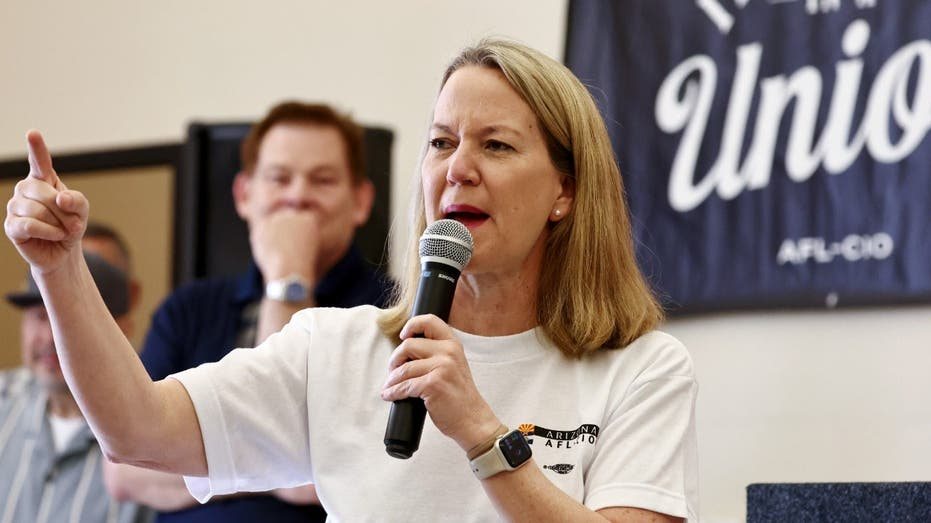
Arizona Attorney General Kris Mayes' office repeatedly sought recruiting help from two legal groups that had spent years suing the state's prison system, according to internal emails obtained by Fox News Digital. Chief Deputy Attorney General Daniel Barr asked the American Civil Liberties Union and the Berkeley-based Prison Law Office for recommendations of attorneys to handle Arizona Department of Corrections, Rehabilitation and Reentry work inside the Attorney General's Office, and later for candidates to serve as the department's general counsel.
Barr had a long history with both organizations before joining Mayes' office. As a partner at Perkins Coie, he spent years litigating alongside the ACLU and the Prison Law Office in a federal case that ended with a judge finding Arizona's prison conditions constitutionally inadequate. Both groups advocate substantial changes to incarceration policy. The ACLU has pursued a nationwide goal of cutting jail and prison populations by 50 percent through measures including decriminalization, bail reform, shorter sentences and clemency, and has called for reductions in immigration detention. The Prison Law Office says it works to reduce incarceration while litigating on prison conditions, medical care, disability rights and solitary confinement.
The correspondence began in February 2023, when Barr wrote to representatives of both groups that he wanted to bring as much corrections work in-house as possible and needed attorneys to represent the department in numerous capacities. «If you know of anyone who may be interested in helping to turnaround things around here, please let me know,» he wrote. In April, he again contacted the groups, this time seeking candidates for the department's top legal position. «Let me know if you have any suggested candidates,» he wrote while forwarding an email soliciting applications for general counsel.
When the effort produced no results, Barr returned to the groups on May 11, 2023. «Still no takers for the ADCRR general counsel job. If you have any suggestions, please let me know,» he wrote. David Fathi, director of the ACLU National Prison Project, responded the same day, promising to «redouble» his efforts to find a candidate. The project lists among its priorities substantially reducing the incarcerated population and promoting a criminal justice system in which incarceration is used only as a last resort. Fathi has also criticized relying on police and prisons to address drug problems.
Corene Kendrick, the project's deputy director, replied that one possible recommendation was already «enjoying suing ADCRR in civil rights damages cases in her spare time of running her café in Carrizozo,» indicating that at least one prospective candidate floated to Barr had experience suing the department in civil rights cases. The records obtained were email correspondence only, not call transcripts or meeting minutes, so it is unclear what further assistance, if any, the groups provided.
The department ultimately hired Ashley Oddo as its general counsel. Before joining, Oddo led Arizona State University's Academy for Justice and had backed several criminal-justice positions associated with the left, including addressing systemic racism in policing and pardoning people convicted of nonviolent federal marijuana offenses. She has no institutional affiliation with the ACLU or the Prison Law Office, and neither group mentioned her name in the emails.
Mayes, who describes herself as a moderate, is seeking re-election and is slated to face Republican state Sen. Warren Petersen in November's general election. She won her 2022 race by just 280 votes, one of the narrowest margins in state history. Her campaign manager, Delaney Corcoran, said the ACLU has repeatedly sued Mayes over disagreements and that Mayes has consistently fought for funding for Arizona police and cartel task forces. Mayes has defended the state against ACLU lawsuits challenging laws that allowed police to arrest people entering the country illegally between ports of entry and restricted when people could film officers, later settling the filming case by agreeing to permanently prohibit the recording law.
4