6 minPolitics
El-Sayed’s Michigan Senate Primary Victory Energizes Democratic Left
Abdul El-Sayed’s narrow win over Representative Haley Stevens in Michigan’s Democratic Senate primary has energized progressives, deepened the party’s internal divide and given Republicans a fresh target in a battleground race.
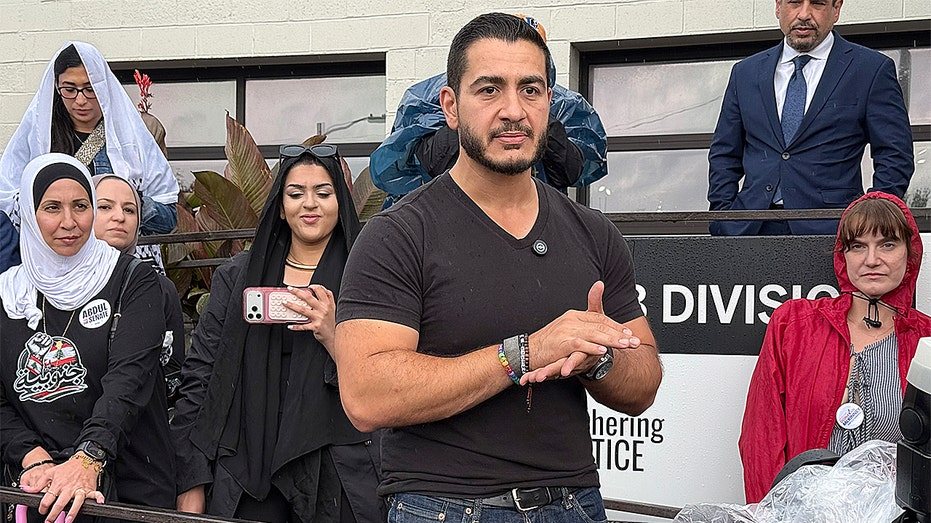
Abdul El-Sayed’s narrow victory over Representative Haley Stevens in Michigan’s Democratic Senate primary has energized the party’s left wing and intensified its long-running fight with centrists. The result also gave Republicans a ready-made line of attack in a battleground Senate race that Democrats must defend as they try to reclaim control of the chamber.
El-Sayed, a former Wayne County health director and epidemiologist, won the primary to succeed retiring Democratic Senator Gary Peters. He will face Republican nominee Mike Rogers, a former congressman, in a general election that could help determine which party controls the Senate. If elected, El-Sayed would become the first Muslim senator in U.S. history.
The race tested how far Michigan Democrats are willing to move to the left. El-Sayed made support for Medicare-for-all a central theme of his campaign, called for abolishing Immigration and Customs Enforcement, and has been one of the party’s sharpest critics of Israel’s military campaign in Gaza, which he has described as genocide against Palestinians. He also pledged not to accept PAC donations.
His campaign drew support from prominent progressives, including Senator Bernie Sanders, Representative Alexandria Ocasio-Cortez and other members of the Squad. He ran for governor in 2018 as an insurgent candidate and served as a senior surrogate on Sanders’ 2020 presidential campaign.
Rogers had already made El-Sayed’s record a focus of his campaign. Before the primary, he argued that El-Sayed is «way too extreme for Michigan» and said the Democrat has «his own special sauce of crazy.»
Democratic strategists were divided over what the outcome meant for the party. Matt Bennett, a leader at the center-left group Third Way, cautioned that the result did not necessarily signal a broader shift to the left. He pointed to intense anger among Democratic voters toward President Donald Trump and suggested Michigan may have been «a unique situation where candidates matter.»
«In this moment Democratic voters everywhere are very, very angry at Trump and they’re flipping over the tables and taking it out on the establishment», Bennett said. «And Haley, for better or worse, has run as the establishment.»
Matt Grossmann, director of the Institute for Public Policy and Social Research at Michigan State University, described the race as a «recruitment failure.» He noted that Stevens was «no one’s first choice» after term-limited Governor Gretchen Whitmer and former Transportation Secretary Pete Buttigieg decided not to run. He also said that with opposition to Israel’s military operations widespread among Democratic voters, «this was a terrible year to be running the most pro-Israel candidate available.»
The Senate primary was the most expensive Democratic Senate nomination contest in history, with more than $80 million spent. Much of the money came from outside groups that supported Stevens or opposed El-Sayed. The largest single spender was United Democracy Project, a political action committee aligned with the American Israel Public Affairs Committee, or AIPAC.
El-Sayed said his victory reflected what he heard from voters. «I think the people are telling us that they want money out of politics. Money in your pocket, Medicare-for-all», he said. «Endorsements don’t vote. People vote.»
Adam Green, co-founder of the Progressive Change Campaign Committee, called the result a milestone for progressives and said it sets up a test of whether the left’s message can succeed in a competitive statewide contest. «Any win against $60 million dollars of outside spending by AIPAC and corporate interests is a giant win and sets us on a path of proving our case in November to shake up the system», he said.
The progressive-versus-establishment clash extended beyond the Senate race. In Michigan’s 7th Congressional District, William Lawrence, a co-founder of the Sunrise Movement climate advocacy group, beat two more moderate Democrats in a primary for a Republican-held swing seat and will face Republican Representative Tom Barrett in November. Lawrence had backing from Sanders and El-Sayed. In the heavily Democratic 13th District, state Representative Donovan McKinney, backed by Sanders, El-Sayed and members of the Squad, narrowly defeated Representative Shri Thanedar, who had the support of top House Democratic leaders.
The Michigan results are likely to sharpen the broader argument over the party’s direction as Democrats try to channel voter frustration into victories in November. For progressives, El-Sayed’s nomination gives them a high-profile standard-bearer in a pivotal state. For moderates and Republicans alike, it gives the general election campaign a clear dividing line in a race that could decide Senate control.