5 minPolitics
Economy remains top voter issue but not enough to boost Democrats, analysis finds
With eight weeks until the midterms, economic concerns dominate voter priorities, yet polling shows Democrats have not gained a clear advantage despite negative views of President Trump's handling of costs and inflation.
Eight weeks before Americans choose their next Congress, the economy remains the dominant issue shaping voter decisions, yet the political picture is more complicated than simple dissatisfaction with the current administration. New analysis from the Fox News Power Rankings examines why negative views on President Donald Trump's economic performance have not translated into broad enthusiasm for Democratic alternatives, and what that could mean for control of the House in November.
The economy has been a top-three issue throughout the Trump era, including the last two midterm elections, where it was the most important issue for 47% of voters in 2022 and 18% of voters in 2018. In that earlier cycle, healthcare and immigration finished ahead of the economy, and Republicans lost 42 seats. The lesson from that year, according to strategists, is that economic strength alone does not protect a party in power when other concerns dominate, and that the economy often bleeds into other major issues like healthcare, which ranks close behind the economy in most surveys this year.
Polling suggests a split in how voters view the economy. On one hand, Trump has notable achievements to point to: the U.S. added 162,000 jobs last week, about triple what economists expected, and the unemployment rate held steady at 4.1%. The stock market continues to grow despite volatility from Iran tensions and tariffs. These factors have helped keep Trump's overall economic approval rating in the low-to-mid 30s in multiple polls this summer.
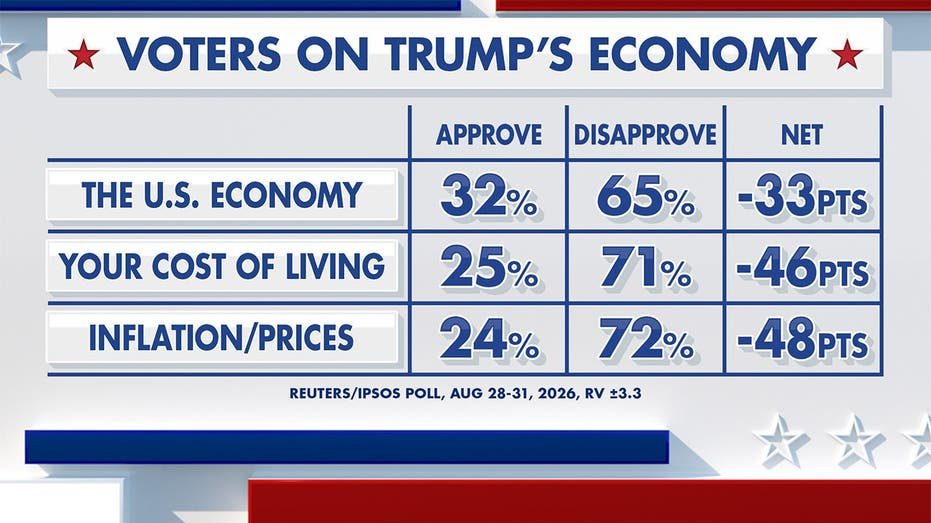
When pollsters ask specifically about personal financial situations, the numbers look far worse. A Reuters/Ipsos poll released last week found 32% of voters approve of Trump on the economy, but only a quarter approve of his performance on the cost of living, and just 24% approve of him on inflation and prices. The costs of gas, food, and other basic goods are the major factors driving this discrepancy, with gas prices currently around $4.15 per gallon.
The situation bears resemblance to the 2022 midterms, when President Joe Biden faced similar headwinds. The economy was rebounding by some measures, but inflation hovered around 8% all year and gas prices came in around $3.75. The Biden administration's messaging, which emphasized positive indicators and downplayed inflation concerns, was rejected at the ballot box. Democrats lost nine seats and the House majority, and Biden's net approval rating on the economy fell to -23 points.
Today, headline inflation is less than half of what it was in 2022 at 3.4%, yet Trump's net approval on the economy currently sits at -33 points, ten points worse than Biden's at the same stage. The Trump administration appears to be running a familiar playbook, with Vice President JD Vance saying last week that gas prices could be worse if not for the administration's policies, a comment that echoes statements made by Biden officials four years earlier.
Despite these headwinds for Republicans, Democrats have not consolidated voter support on economic issues. The party is offering competing visions: some candidates advocate for sweeping changes like Medicare-for-all and higher taxes on the wealthy, while others propose undoing Trump's agenda while preserving the core economic system. It remains unclear whether these visions are unappealing to voters or whether the contrast between them is the problem.
The Reuters/Ipsos survey found 36% of voters say Republicans are the better party to handle the economy, while 37% prefer the Democrats, a statistical tie given the poll's margin of error. That narrow gap is not encouraging for Democrats, who would typically expect a significant advantage on the economy when the incumbent president's approval ratings on inflation and prices are in the mid-20s.
Democrats remain the favorites to take the House this November, with 212 seats in their column to the GOP's 206. Seventeen seats are considered too close to call and could swing either way as votes are counted. On a good night for Democrats, that could mean 229 seats, but the polling data suggests that economic discontent alone may not be enough to deliver the sweeping victory that some anticipate.
69