6 minPolitics
DHS Threatens Federal Funding Cutoff for States Refusing Voter-Roll Security Cooperation
Homeland Security Secretary Markwayne Mullin announced that states refusing to comply with federal election-security requirements could lose funding, and election officials who ignore DHS-provided information may face fines, penalties, or prison time. The move is part of the Trump administration's push for voter-roll integrity, with 23 states currently participating in the expanded SAVE program.
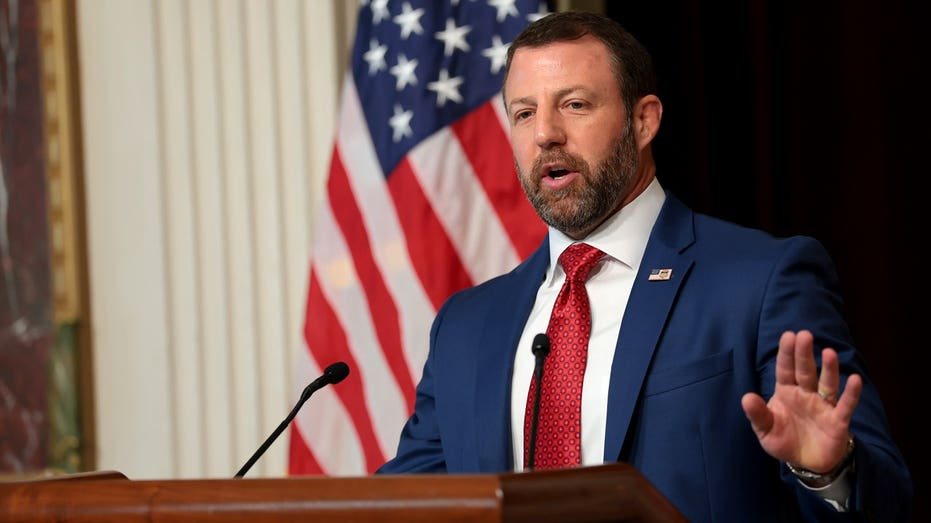
Homeland Security Secretary Markwayne Mullin warned Friday that states refusing to comply with the Trump administration’s election-security requirements could face a cutoff of federal funding, while election officials who disregard information provided by the Department of Homeland Security may be subject to fines, penalties, or even prison time. Speaking at a press conference following President Donald Trump’s address to the nation on election integrity, Mullin emphasized the administration’s commitment to securing voter rolls against potential noncitizen registration and foreign interference.
Mullin stated that DHS has identified approximately 250,000 voter-registration records in California, New Jersey, Nevada, and Pennsylvania that the department believes belong to noncitizens. He urged all states to join DHS’s expanded SAVE program, which allows election officials to compare voter records against federal immigration databases to identify potentially ineligible registrations. Currently, 23 states are participating in the program, but several Republican-led states, including Mississippi, North Dakota, and West Virginia, have not yet joined. Mullin questioned the reluctance of nonparticipating states, saying, «Every state that's not participating with us should be asked the hard question why not? What are you afraid of?»
The secretary did not specify which laws election officials might violate or what specific charges could be brought if they decline to act on DHS-provided intelligence. However, he made clear that the administration expects full cooperation. Mullin also announced that the Cybersecurity and Infrastructure Security Agency (CISA) will release an updated election-infrastructure plan within 30 days. Additionally, DHS has introduced election-security conditions for recipients of the Federal Emergency Management Agency’s Homeland Security Grant Program, linking funding to compliance with federal standards.
During the press conference, Mullin called on Congress to pass the SAVE America Act, which would require documentary proof of citizenship to register to vote in federal elections and mandate photo identification at polling places. «I think the Save Act should be passed tomorrow. I think it should have already been passed,» Mullin said. However, Senate Majority Leader John Thune has expressed doubt about the bill’s prospects, noting that Republicans lack the 60 votes needed to overcome a Democratic filibuster. The legislation has become a central part of the administration’s election-security agenda.
Mullin also revealed that he is working with Commerce Secretary Howard Lutnick on additional security requirements for states. The DHS push comes amid ongoing debate over election integrity, with critics arguing that the administration’s actions could lead to voter suppression or overreach. Supporters, however, contend that the measures are necessary to prevent noncitizen voting and foreign interference. The threat of funding cuts has raised concerns among state officials, who fear losing critical federal resources for emergency management and infrastructure projects if they do not comply.
Trump’s Thursday night address, which included the declassification of intelligence alleging «shocking vulnerabilities» in election systems, set the stage for Mullin’s announcement. The president claimed that the intelligence community had hidden evidence of Chinese meddling in U.S. elections, a charge that has been met with skepticism by some lawmakers. Mullin’s press conference reinforced the administration’s stance that states must take immediate action to secure their voter rolls or face consequences.
The DHS initiative has drawn a mixed response from state election officials. Some have welcomed the additional resources and data-sharing opportunities, while others have expressed concerns about federal overreach and the potential for errors in the databases. The 250,000 flagged records represent a small fraction of the millions of registered voters in the four states mentioned, but the administration has framed them as evidence of systemic vulnerabilities. Mullin insisted that the effort is nonpartisan, stating, «This isn't a partisan issue.»
As the debate continues, the administration is expected to intensify pressure on noncompliant states through both financial incentives and legal threats. The coming weeks will likely see further developments as CISA releases its updated plan and Congress considers the SAVE America Act. For now, state officials are weighing the risks of noncompliance against the potential backlash from voters and civil liberties groups.
81