4 minPolitics
Democrats' first 100-day agenda would add $4.1 trillion to national debt, budget watchdog finds
A Committee for a Responsible Federal Budget estimate puts the cost of the Democrats' first 100-day agenda at $4.1 trillion through 2037, with tariff repeal the largest factor.
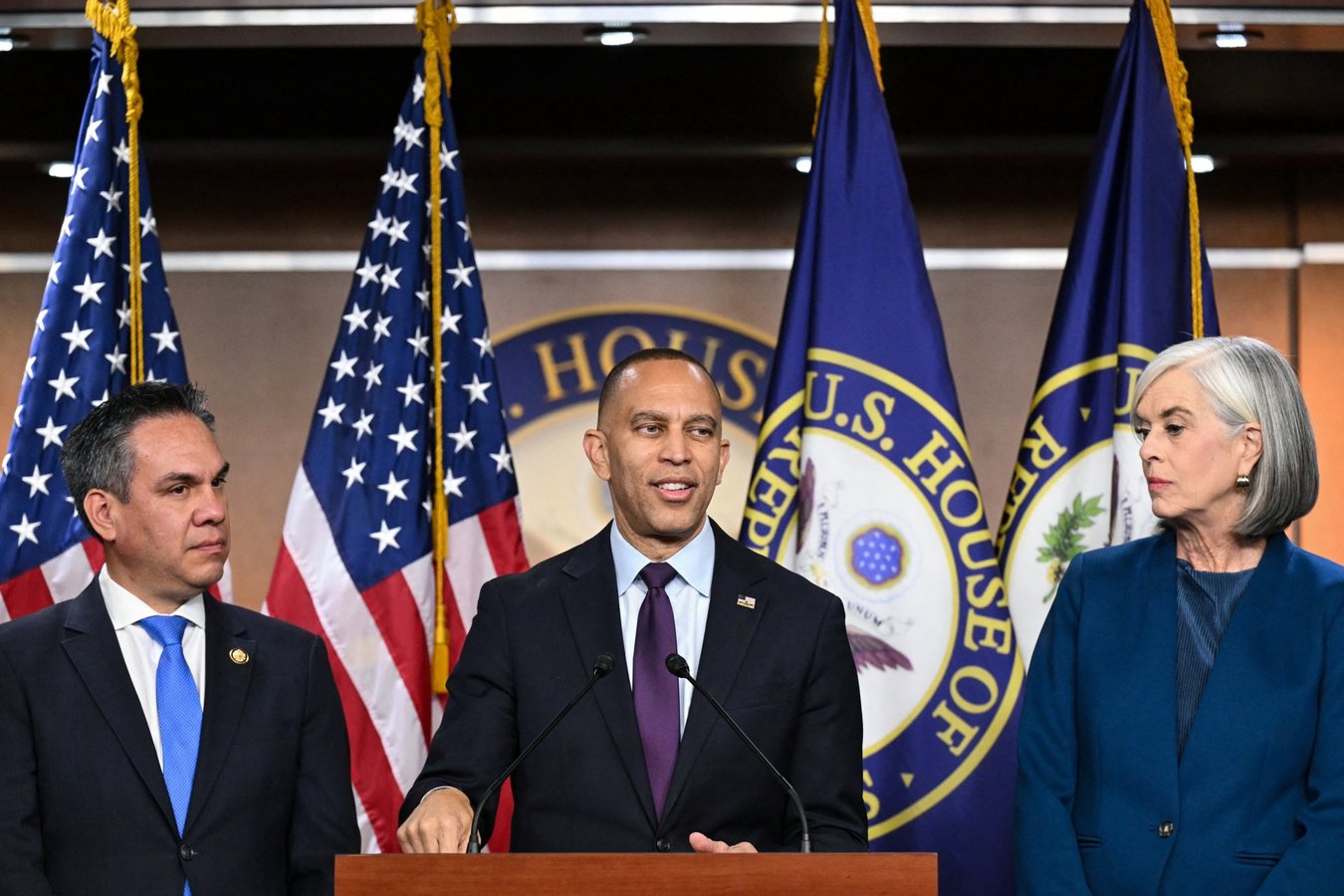
The Committee for a Responsible Federal Budget has estimated that the Democrats' first 100-day agenda would add $4.1 trillion to the national debt through 2037, or $4.9 trillion including interest costs if left unoffset. The figure comes as Democrats prepare to enter the 120th Congress with slim majorities in both chambers after winning a wave of seats in the midterm elections.
Hakeem Jeffries, nominated by Democrats to be Speaker of the House of Representatives, outlined the agenda in November. It calls for reversing the Medicaid cuts, restoring SNAP funding, extending the Affordable Care Act tax credits, eliminating the Trump tariffs, and stopping what he called the reckless war of choice in Iran. Each goal carries a different budget effect, and the watchdog broke them down line by line.
The largest single cost comes from repealing the Trump tariffs. The committee estimates that removing them would cost $1.8 trillion in total over the 2027 to 2037 period. Repealing Section 301 tariffs accounts for $955 billion, Section 232 tariffs for $780 billion, and undoing Section 338 tariffs on certain Canadian goods for $35 billion. The Richmond Fed reported that customs duties, taxes and fees generated $287 billion in 2025, up 192 percent from the prior year, so ending the tariffs would remove a substantial revenue stream.
Reversing the health provisions of the One Big Beautiful Bill Act would cost $1.6 trillion by 2037, according to the committee. That total includes $600 billion to cancel provider tax and state-directed payment limits and $485 billion to remove Medicaid work requirements. Reversing the SNAP provisions would cost $250 billion over the next decade. The committee also projected about $840 billion in additional interest payments over the same period if the deficit grows.
Not every proposal increases spending. The committee noted that ending the conflict in Iran would not immediately reduce deficits, but it would likely avoid further increases in military and defense spending. The committee said continuing the war costs approximately $30 billion a year, a sum that could be avoided if the fighting ended.
The debt-to-GDP ratio is the measure that budget analysts watch most closely. It compares a nation's borrowing with its economic output and indicates its capacity to service that debt. According to the Federal Reserve Bank of St. Louis, the ratio currently stands at around 121 percent. The committee estimates that the House Democrats' policies would push it to 135 percent by 2037 without offsets, compared with 125 percent under an adjusted Congressional Budget Office baseline. Economists warn that if the ratio rises further, lenders could demand higher premiums to cover the added risk, potentially triggering a bond market crisis.
The committee also offered options for raising revenue to offset the proposals, though it acknowledged such measures are unlikely to be popular with voters. Repealing the tax cuts for high earners in the One Big Beautiful Bill Act would generate about $2 trillion in savings, enough to offset an agenda scaled back by half. Repealing all of the law's tax cuts and spending increases, including its low-income and middle-class tax cuts, would raise about $7 trillion, which the committee said would pay for the 100-day agenda 1.7 times over.
Source: fortune.com
45