7 minPolitics
Democratic Socialists of America Fractures Over 2028 Presidential Endorsement as AOC Speculation Intensifies
Internal divisions within the Democratic Socialists of America have erupted over the timing and method of selecting a 2028 presidential endorsement, with a faction pushing for an early poll to back Rep. Alexandria Ocasio-Cortez, while the national committee voted to delay the decision until the 2027 convention, sparking accusations of suppressing member democracy.
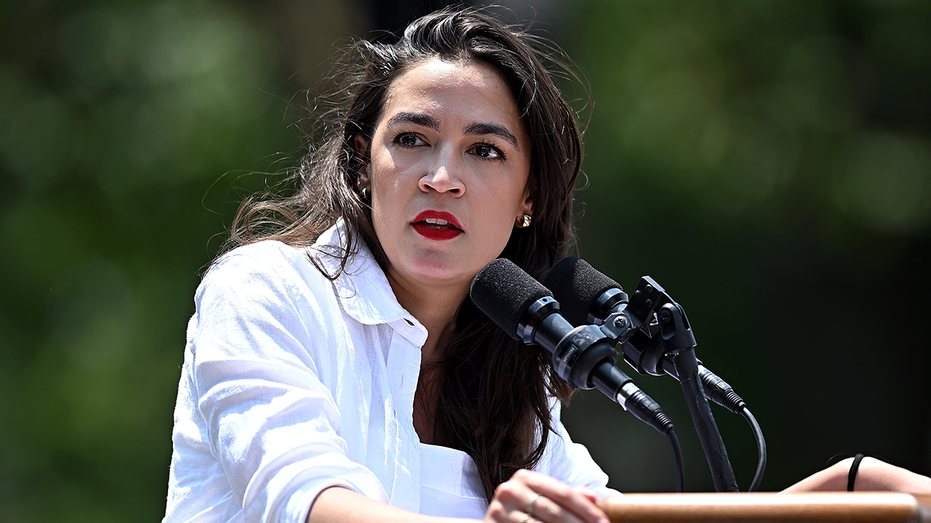
Infighting has erupted within the Democratic Socialists of America (DSA) over the selection of its presidential pick for 2028, as the group’s influence grows on the national stage and speculation swirls about a potential White House bid by Rep. Alexandria Ocasio-Cortez, D-N.Y. The roughly 120,000-member organization, which has emerged as the preeminent socialist group in the United States, is grappling with deep divisions over how to best capitalize on its recent electoral gains and the rising popularity of socialist ideas. The conflict centers on whether to accelerate the endorsement process to support Ocasio-Cortez early or adhere to the group’s traditional timeline, which would delay any official backing until its biennial national convention in August 2027.
A faction known as the «Groundwork» caucus is pushing aggressively for an early endorsement, calling for a national member poll to «endorse AOC on day one.» The caucus argues that an early endorsement would allow the DSA to play a more influential role in the 2028 presidential race and «build power for socialism.» In an online petition, DSA members voiced that without a member poll, they would be «left out of DSA’s most fundamental way of building a democratic strategy.» The push reflects a belief among some members that Ocasio-Cortez, a four-term congresswoman and close ally of Sen. Bernie Sanders, I-Vt., represents a historic opportunity to advance socialist policies on a national scale.
However, the DSA’s National Political Committee (NPC) rejected the proposal for an all-member poll in a narrow 14–13 vote on Sunday, according to Canary Mission. By rejecting the proposal, the committee left the endorsement decision to the existing convention process, meaning any national endorsement will likely wait until the group’s next convention in August 2027. The decision sparked immediate backlash from many DSA members, who accused the leadership of undermining grassroots democracy. Gustavo Gordillo, co-chair of the group’s New York City chapter, posted on X that the NPC «just voted to overturn our convention & took away rank and file members’ right to vote in an all-member poll on presidential endorsement.» Gordillo added that the committee is «taking away our members’ right to vote» while NYC-DSA, the group’s largest chapter, sends the national body approximately $2 million per year in dues.
J. Ryder, founding editor of a magazine on communism, wrote that the committee’s decision «to suppress polling the will of the members on presidential endorsement is severely disappointing.» Ryder warned that «this will inevitably put DSA on the back foot in the 2028 moment,» adding, «Waiting to endorse in August of next year at the convention may mean 6 months+ of vital AOC campaign time where the masses will be mobilizing without intervention by DSA.» Ryder further argued that «the worst part is, the members want to mobilize, they see the opportunity that this moment represents for socialism and want so desperately to grasp it. The fact that some sectarians on the NPC are suppressing even a non-binding poll shows that they know this, and are scared of the implications of member democracy and mass politics in DSA.»
In response, NPC member Amy Wilhelm fired back at Gordillo, posting on X that «NYC members deserve co-chairs that don't lie.» Wilhelm said that «there was never intention to prevent» DSA members from participating in chapter polls and that «with the resolution where we left it today chapters are allowed to carry out the poll per their standard method.» Another X user, «tylerisposting,» blasted Gordillo, telling him to «stop lying» and «stop trying to foment a split.» Meanwhile, Eve Seitchik, a Massachusetts DSA member, characterized the events as «a massive escalation of factional tensions,» adding, «I'm afraid DSA has been set down a dangerous path.»
The internal strife comes as Ocasio-Cortez has not directly stated whether she will launch a presidential run in 2028, though rumors also circulate about her potentially challenging Senate Minority Leader Chuck Schumer, D-N.Y., for his seat. Despite being one of the most prominent socialists in the country, Ocasio-Cortez has had a fraught relationship with DSA leadership. In summer 2025, the group issued a statement condemning her vote against an amendment to block additional funding for Israel’s «Iron Dome» missile defense system, which would have denied Israel $500 million in U.S. funding. In 2024, the DSA withdrew its endorsement for Ocasio-Cortez’s re-election, citing that she had not met its conditions, including opposing all funding to Israel and publicly supporting boycott, divestment, and sanctions against the country. The DSA’s New York City chapter, however, notably retained its endorsement for her.
The authors of the Groundwork caucus’s petition argued that DSA’s recent electoral wins and the «Fight Oligarchy» tour by Ocasio-Cortez and Sanders «have shown that there is energy all across the country to support a bold, democratic socialist presidential campaign.» They wrote that Ocasio-Cortez is «on the precipice of running for — and potentially winning — the presidency of the United States» and that «this opportunity is years in the making.» They warned, «If we drag our feet, we will have forced ourselves into the backseat and miss the opportunity to strike when the iron is hot.» The debate underscores the broader challenge facing the DSA as it seeks to translate grassroots energy into lasting political influence while navigating internal ideological and procedural disputes.