5 minPolitics
Cooper shifts on data centers as power costs become Senate campaign issue
Democratic Senate nominee Roy Cooper, who once celebrated data center growth as North Carolina governor, now says companies should pay more for their own power as rising utility costs become a campaign issue.
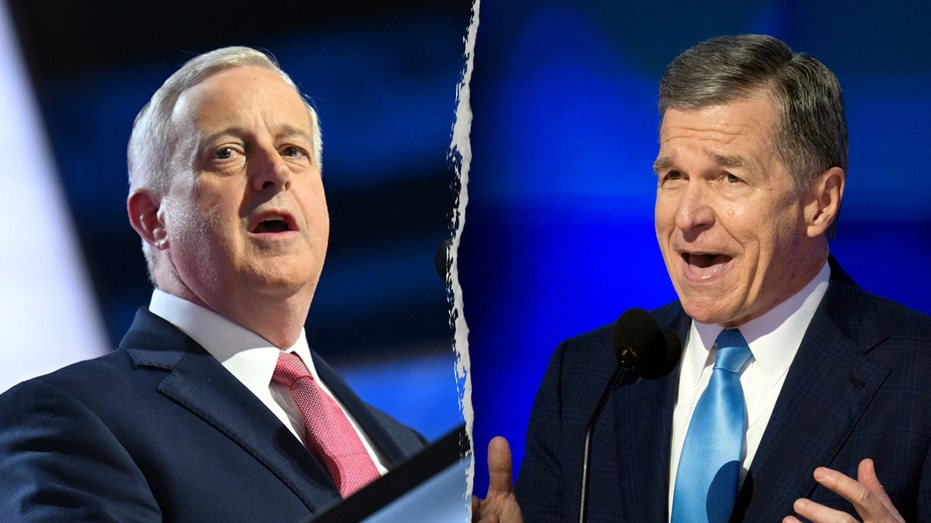
Democratic U.S. Senate nominee Roy Cooper is recalibrating his position on data centers, telling voters the companies behind the sprawling facilities should shoulder more of the cost of the electricity they consume. The former North Carolina governor, who spent years welcoming the industry to his state, now frames the issue through the lens of household affordability.
«We need to make sure data centers pay for their own power and we need to encourage them to build their own energy sources because right now that’s causing rates to go up for consumers and we can’t have that,» Cooper said in a local media interview. The remarks are part of his broader «make stuff cost less» campaign message, which he has used to address inflation and utility pricing on the trail.
Cooper’s shift places him among a growing number of Democrats who have folded data center expansion into affordability concerns, positioning themselves as advocates for consumers by pressing companies to absorb more of their infrastructure costs. The issue has gained traction in several states as artificial intelligence and cloud computing drive a surge in electricity demand.
During Cooper’s tenure as governor, which began in 2017, North Carolina’s data center industry expanded rapidly. The state had already enacted a key tax exemption statute in 2016, before Cooper took office, allowing qualifying companies to avoid sales taxes on servers, storage, and networking equipment if they invested at least $75 million in projects over five years. Commercial real estate firm CBRE reported that those incentives helped produce a 15-fold increase in data center construction, much of it occurring under Cooper’s administration.
In one notable case, Cooper’s administration went beyond the general tax breaks. In 2019, Apple received a Job Development Investment Grant from the state, securing an $845 million incentive package spread over 39 years, along with $112.4 million for an industrial development fund aimed at rural infrastructure. At the time, Cooper celebrated the announcement, saying the project was expected to create 3,000 jobs and highlighting North Carolina’s «favorable business climate» and «tech-ready workforce.»
Other companies, including Meta, Microsoft, Google, and Corvid Technologies, also completed or announced data center projects during Cooper’s time in office. State records show that between 2015 and 2025, 37 companies secured tax exemptions. Corvid Technologies received a separate $9 million reimbursement over 12 years for two three-story data centers, a deal Cooper praised without directly mentioning the facilities themselves.
Now, the political climate has shifted. Cooper’s successor, Gov. Josh Stein, has publicly criticized Duke Energy’s proposed rate hike, linking it to the utility’s data center customers. «Duke Energy’s proposed rate hike is simply too high and comes as the company is also retreating on more affordable clean energy,» Stein said earlier this year. «At a time when families are struggling to make ends meet, we should be doing everything we can to make life more affordable, not less.»
Cooper has echoed those concerns, pointing to his record of fighting utility increases. «As Governor and Attorney General, I put aside party politics to fight utility cost increases for North Carolinians,» he said in a press release last month, citing his veto of a Senate bill he said prioritized utility profits and his court battle to lower Duke Energy’s profit margin.
Cooper has not called for a ban on data centers. Instead, he argues the companies should be required to pay more directly for their energy consumption. «The companies that build these data centers must pull their own weight, pay for the power they use and completely remove this burden from North Carolina families and small businesses,» he said.
59