6 minPolitics
California Republicans Make Voter ID Initiative Centerpiece of 2026 Strategy
California GOP Chairwoman Corrin Rankin says Proposition 39 would close election loopholes and rebuild trust, as Republicans also focus on affordability, education and concerns about slow vote counting.
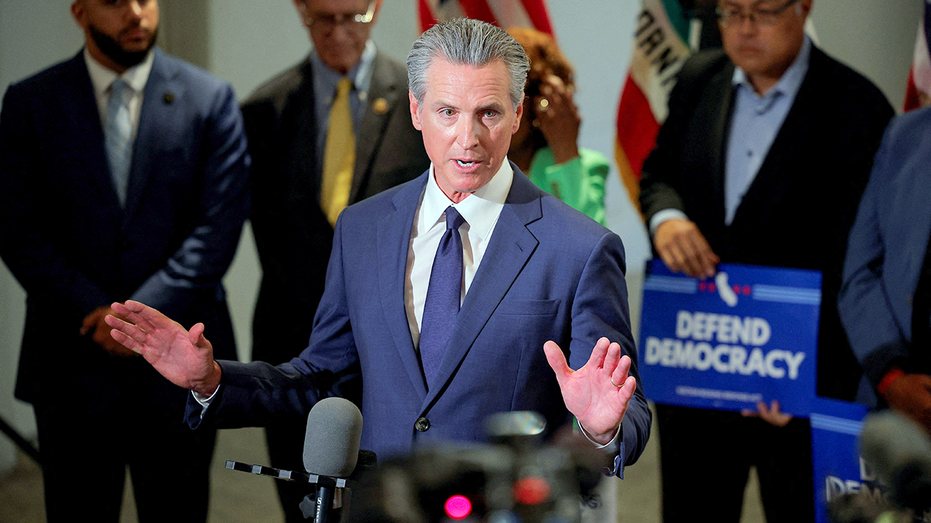
California Republicans are putting a voter identification ballot initiative at the center of their push to win back frustrated voters ahead of the 2026 midterm elections, arguing that the measure would address widespread concerns about trust in the state’s election system.
The proposed measure, Proposition 39, would close loopholes in California’s voting rules and give residents more confidence that elections are secure, according to California GOP Chairwoman Corrin Rankin. «Californians need to feel secure in our elections,» Rankin said in an interview. «The way it is now, there’s so much room for uncertainty and confusion. What Proposition 39 is going to do is it’s going to sort of close the loopholes. It’s a commonsense solution that will strengthen our democracy.»
Rankin framed the initiative as part of a broader message aimed at voters who are disillusioned with Democratic leadership in the state. She said Californians are most concerned about affordability, education and confidence in state government. «Californians need to feel like we can trust our election systems, and trust is not given. Trust is earned, and this will allow Californians to feel more like they can trust our election system,» she added.
The push comes after California’s June 2 primary drew national criticism because results took weeks to arrive. State election officials were allowed to count ballots that were postmarked by Election Day even if they arrived up to seven days later, and counties had up to 30 days to certify results. The slow pace became a flashpoint in the Los Angeles mayoral race, where the contest was called six days after Election Day. Outspoken critics, including President Donald Trump, challenged the runoff results as counting continued. Spencer Pratt lost the race, and City Council Member Nithya Raman advanced to face incumbent Mayor Karen Bass in November.
Rankin contrasted California’s timeline with other states that declare winners much faster. «There’s so many other states throughout our country and throughout the world actually that seem to be able to have a winner on election night,» she said. «It’d be wonderful if California could do the same.»
Although election reform is the party’s signature ballot effort, Rankin said kitchen-table issues will determine whether Republicans gain ground in November. She described affordability as the top concern, noting that California ranks among the five most expensive states in a quarterly cost-of-living index from the Missouri Economic Research and Information Center. «A lot of parents want their adult children to stay in California, to be a part of and contribute to the same California dream that was so great for our grandparents and our parents,» Rankin said. «We want it to be great for us and for our children. Affordability is the top issue.»
Gas prices remain a visible strain on household budgets. California drivers are paying about $5.65 per gallon for regular gasoline, roughly $1.25 more, or about 28 percent higher, than at the same time last year, according to AAA and federal energy data. Rankin said voters also worry about public schools and the fact that the quality of a child’s education can depend on zip code, an argument Republicans have long used to push for school choice. She urged candidates to focus on local concerns such as affordability, children’s education and the cost of gas and groceries. «That’s what voters want to hear. That’s what they care about. They care about what happens locally,» she said.
Rankin also pointed to Gov. Gavin Newsom, who is serving his second and final term, as an opportunity for Republicans to win back voters who have grown tired of Democratic control. Newsom’s political future has prompted speculation about a possible 2028 presidential bid. Rankin cited California’s troubled high-speed rail project as an example of government waste under one-party rule. «We’ve got a bullet train that he’s been funding with billions of dollars for years, yet we have no train. So where’s the money going to?» she asked. The project, approved by voters in 2008 with an estimated $33 billion price tag, is now projected to cost more than $200 billion, drawing scrutiny from critics for years.
Rankin argued that the spending reflects a broader ideological shift in the Democratic Party, saying California has embraced policies that are spreading nationwide. «I think that the Democrats have gone so far to the left that many Californians just don’t see themselves... many Democrats in California just don’t relate to the current flow of the Democrat party,» she said. «They’re moving way too far into the extremism of socialism. I think a lot of people have red flags and just don’t want to be part of it.»