4 minPolitics
Army Secretary Dan Driscoll steps down after 18 months, deepening Pentagon leadership void
Army Secretary Dan Driscoll is leaving his post after 18 months, the latest in a series of top military departures. Lawmakers from both parties expressed concern about the Pentagon's leadership vacuum and praised Driscoll's work, while noting tensions with Defense Secretary Pete Hegseth.
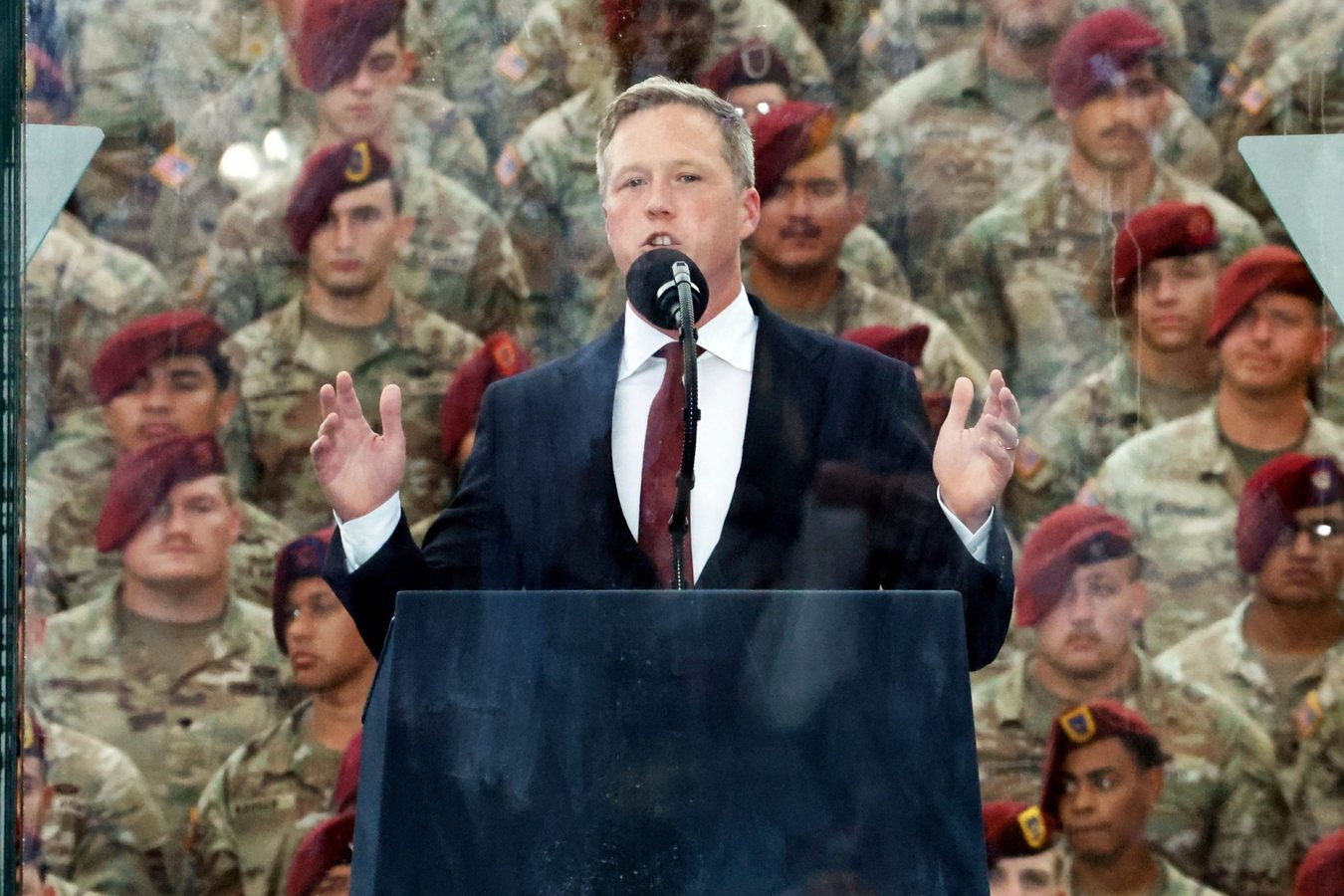
Army Secretary Dan Driscoll is stepping down after just 18 months on the job, the latest in a string of senior military departures that lawmakers say has left the Pentagon without steady leadership. The White House announced his departure after Driscoll spoke with President Donald Trump about the current state of the Army, an Army official told The Associated Press on condition of anonymity.
No reason was given for Driscoll's exit, but tensions with Defense Secretary Pete Hegseth have been widely reported. His departure follows the ouster of one of his allies from the Army as well as the rollback of a drone program he had championed. Hegseth had suddenly removed the service's top uniformed leader, Gen. Randy George, in April, while the Army's commander in Europe and Africa, Gen. Christopher Donahue, unexpectedly stepped down in June. Gen. Christopher LaNeve took George's place and directed a Europe-based Army unit that was building its own drones to end its efforts.
Rhode Island Sen. Jack Reed, the ranking Democrat on the Senate Armed Services Committee, said in a statement that Driscoll "worked to transform the Army for the battlefield of the future, and he engaged with Congress candidly and consistently." Reed, a former Army officer, also criticized Hegseth's leadership, saying he "is cultivating a culture where dissent is punished and competence is secondary to personal allegiance," while noting that "hundreds of thousands of soldiers are deployed around the world, many in combat zones."
Rep. Jason Crow, a Colorado Democrat who serves on the House Armed Services Committee and co-chairs the House Army Caucus, said the "Pentagon right now is, in some cases, rudderless," with so many senior leaders gone. "So, I'm gravely concerned about it," he said. Crow, a former Army Ranger, told reporters that he worked well with Driscoll despite their policy differences. "It was actually nice, I will say, having somebody who was smart, that knew the policy, that wanted to do the work, that had a background in these issues," Crow said, adding that "it's unfortunate that somebody like that can't last in this administration."
Republicans also praised the outgoing secretary. Rep. Steve Womack, an Arkansas Republican who served in the Army National Guard, said on X that Driscoll is "a transformative leader who brought common sense and discipline to the Department of the Army." Womack wrote that he appreciated Driscoll's engagement "from mentoring cadets at West Point to leading the Army at the Pentagon," and that "the Army is better equipped and prepared to tackle emerging threats because of his leadership that strengthened the force while putting our Soldiers first."
Driscoll is an Iraq war veteran, tech investor and former adviser to Vice President JD Vance, whom he met at Yale Law School. When nominating Driscoll in 2024, Trump called him "a disruptor and change agent." As Army secretary, Driscoll was tapped for the unusual role of key negotiator to try to end the war between Russia and Ukraine. He was also a major force behind trying to cut red tape for military contractors to quickly develop more drones and counter-drone capabilities as warfare rapidly changes around the world.
Driscoll told Congress in April that the military's civilian leadership gets "to pick the leaders that they want." His exit comes as House lawmakers returned to Washington with a short to-do list after five weeks back in their home districts. The first order of business is most likely a vote on a stopgap spending bill designed to keep the federal government fully funded through early December, removing the possibility of a shutdown before the midterm elections.
59