5 minPolitics
Arizona Governor Katie Hobbs Secures Democratic Nomination Unopposed
Democratic Arizona Governor Katie Hobbs won re-nomination unopposed, setting up a competitive general election battle for the governorship in the key southwestern battleground state.
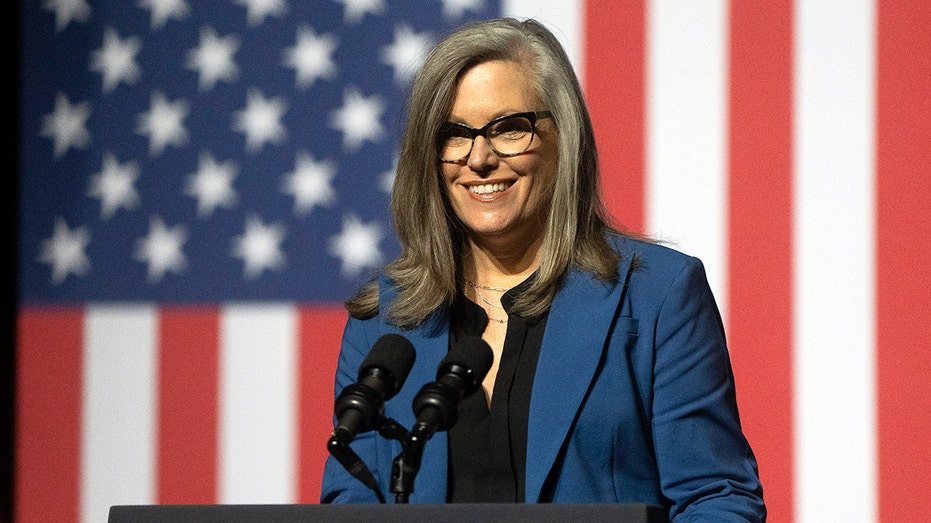
Democratic Governor Katie Hobbs of Arizona cruised to re-nomination in Tuesday's primary election, facing no opposition within her party. The incumbent governor, a former Arizona Secretary of State, now heads to the general election in November, where she will face the winner of the Republican gubernatorial primary. The race is expected to be one of the most closely watched contests in the country, as Arizona remains a pivotal battleground state.
Hobbs narrowly defeated Republican nominee Kari Lake in the 2022 gubernatorial election by less than one percentage point. In a social media post shortly after polls closed, Hobbs acknowledged the tight race ahead, stating, «I've never lost an election, but I've also never won one alone. This will be a close race, but I'm excited to be in this fight with all of you to keep Arizona moving forward.» Her campaign has already spent roughly $7 million on advertising during the primary, even without a challenger, aiming to reach independent and Republican voters with messages highlighting economic gains and bipartisan cooperation with the GOP-controlled state legislature.
The Republican primary field includes several candidates, with Representative Andy Biggs, a former chair of the House Freedom Caucus, receiving endorsements from President Donald Trump and the political wing of Turning Point USA. Other GOP contenders are Representative David Schweikert, concrete pumping contractor Scott Neely, and business owner Ken Miceli. The winner of that primary will face Hobbs in a general election that also features candidates from the Libertarian Party, the Green Party, and No Labels.
Governor Hobbs has built a substantial campaign war chest, and her advertising strategy has focused on her record of bipartisan achievements. «We are running the race we need to win, and it is going to take a lot to get there,» Hobbs told reporters on Monday. «I'm proud of the support I've garnered and, you know, I'm not raising campaign money to haul it away. I'm raising it to spend.» Kentucky Governor Andy Beshear, chair of the Democratic Governors Association, pledged full support, saying, «Arizona is always an incredibly competitive battleground and the DGA is all-in to make sure Gov. Hobbs wins so she can continue putting Arizona first.»
The general election battle for Arizona's governorship is set against a backdrop of intense national political focus. The state has emerged as a key swing state in recent presidential elections, with razor-thin margins in both 2020 and 2024. Control of the governor's office carries significant implications for policy on issues such as immigration, election administration, and economic development. Hobbs' tenure has been marked by clashes with the Republican-led legislature over voting rights, abortion access, and border security, making the November contest a proxy for broader national debates.
In addition to the gubernatorial race, Arizona features competitive congressional contests. Representative Juan Ciscomani, a moderate Republican, won the GOP primary in a battleground district that Democrats view as a top target for flipping control of the House. Ciscomani, who is seeking a third term, ran unopposed with Trump's endorsement. His Democratic opponent, JoAnna Mendoza, a Marine veteran and political consultant, also ran unopposed in her primary but has faced scrutiny over social media activity and past statements on decriminalizing prostitution. The nonpartisan Cook Political Report rates Ciscomani's re-election bid as a «toss-up.»
The outcome of the Arizona governor's race will likely hinge on turnout among independent voters and the ability of each campaign to mobilize their respective bases. Hobbs' strategy of running ads during the primary, despite having no opponent, suggests a focus on defining her record early and appealing to moderate voters. Meanwhile, the Republican primary winner will need to unite a fractured party base while also attracting swing voters in a state where Trump's influence remains strong but not universally popular. With multiple third-party candidates on the ballot, the race could be influenced by vote-splitting, adding another layer of complexity to an already high-stakes contest.
69