4 minPolitics
Arizona Governor Hobbs Set to Pick Republican Running Mate
Gov. Katie Hobbs is expected to name John Giles, the Republican mayor of Mesa who has crossed party lines before, as her running mate for the 2026 general election, reports say.
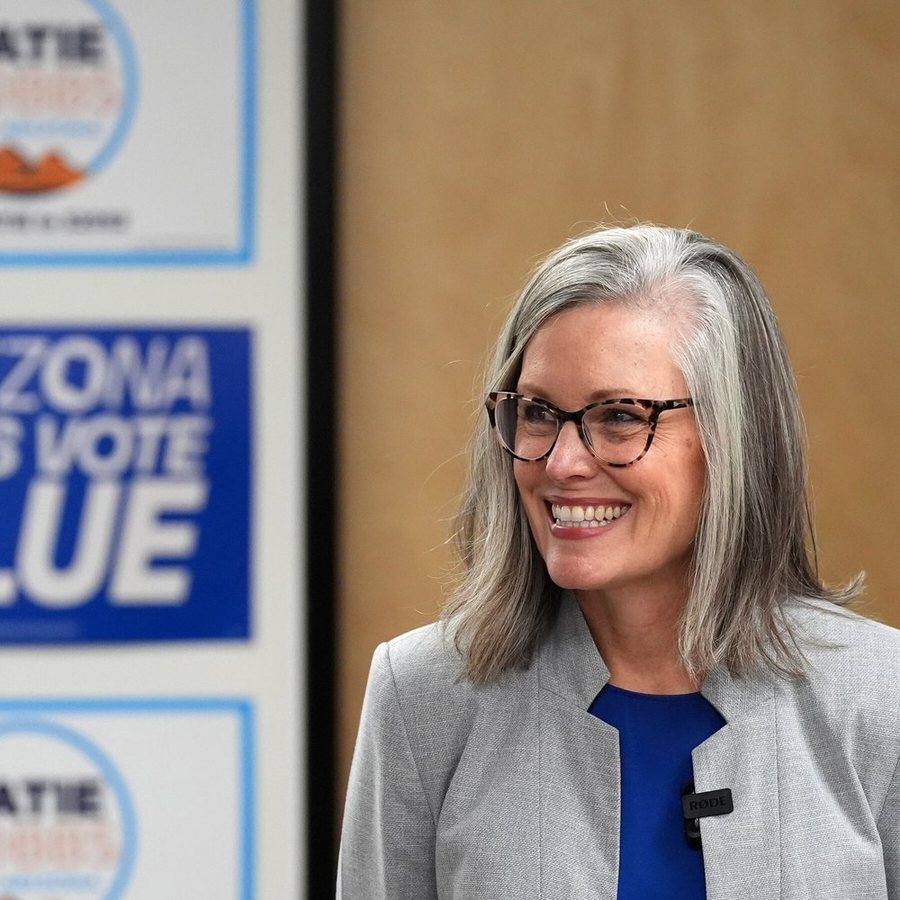
Gov. Katie Hobbs of Arizona is set to put a Republican on her ticket, choosing John Giles, the longtime mayor of Mesa, as her running mate for the 2026 general election. Reports published this week identify Giles as the Democratic governor's likely pick, although her campaign has not yet made a formal announcement.
Giles is one of the most prominent Arizona Republicans willing to break with former President Donald Trump. He has crossed party lines before, publicly endorsing the Democratic presidential nominee in 2024 and sharply criticizing Trump's influence over the Republican Party. His presence on the ticket gives Hobbs a running mate who can appeal to moderate Republicans and independent voters in a state where statewide elections are routinely decided by narrow margins.
The choice carries unusual weight because Arizona is one of the few states where the governor and secretary of state run together as a single ticket. Hobbs served as Arizona's secretary of state before winning the governor's office in 2022. If the Democratic ticket prevails in November, Giles, a Republican, would become the state's top elections official — a position that has drawn intense scrutiny in Arizona since the 2020 presidential race, when vote-counting procedures became a national flashpoint. The office also handles corporate registrations and business filings, making it one of the most consequential administrative posts in state government.
Hobbs is shifting into the general election phase of the campaign after winning last month's primary, which was held in Phoenix and secured her party's nomination. The primary capped a busy political summer in a state that has been a battleground in every recent cycle. Hobbs now faces the challenge of assembling a coalition broad enough to win a state where her own narrow 2022 victory — decided by less than a percentage point — showed that neither party can take the outcome for granted.
For Giles, the role would bring statewide prominence after more than a decade as mayor of Mesa, one of the largest cities in the Phoenix metropolitan area. He has developed cross-party appeal that has helped him hold the mayor's office in a city that leans Republican, and he has shown a willingness to defy his party's dominant faction. That record made him a logical bridge to the suburban voters who have decided recent Arizona elections.
The choice is likely to be scrutinized from both directions. Some Democrats may question why an incumbent governor would hand a Republican a place on the ticket, while some Republicans have already treated Giles' past endorsements of Democrats as a betrayal. For Hobbs, the calculation appears to be rooted in the state's electoral math: in a closely divided Arizona, adding a Republican who has proven he can win crossover support may be worth the criticism from either side.
If the announcement comes as reported, Arizona will enter the fall campaign with a top-of-the-ticket pairing that is rare in American politics: a Democrat and a Republican running side by side. The coming weeks will show whether the experiment broadens the appeal of the ticket or becomes another line of attack, but the reports made clear that Hobbs intends to campaign as a coalition-builder rather than a strictly partisan one.