6 minNews
Trump urged to establish truth commission on Biden border crisis
A Fox News opinion piece argues that President Trump should appoint a presidential commission to investigate the Biden administration's border policies, citing the need for an official public record to prevent future crises.
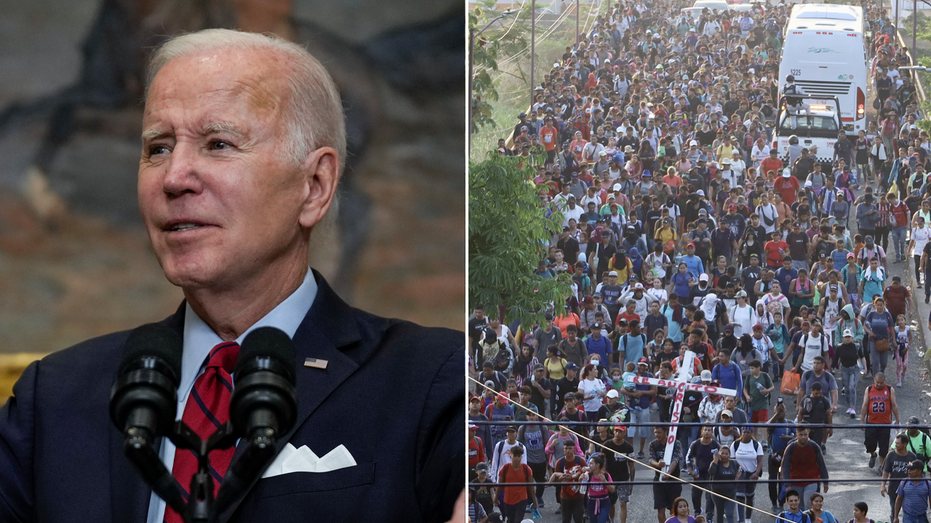
Nearly 18 months after President Donald Trump ended what is described as the worst mass migration border crisis in American history, terabytes of government emails and records that could explain how and why it happened remain unexamined. The opinion piece argues that Trump must appoint a presidential commission now to establish a comprehensive official public record of the events between January 2021 and January 2025, when at least 8 million foreign nationals entered through the U.S. Southwest Border. The author contends that this knowledge is crucial to prevent history from repeating itself.
The Trump administration is currently focused on repairing the damage through mass deportations and policies to secure the southern border. However, the piece urges a pause for the longer-range benefit of establishing a historical record before the opportunity to prevent another major crisis is lost. It describes the mass migration crisis as a transformational event of lasting generational consequence that affects all Americans and, by most accounts, decided the 2024 presidential election.
Competing narratives about who carried out which border policies, as well as the crisis's magnitude, costs, and consequences, continue to fester along partisan lines. The author argues that a commission must form now, before Trump leaves office in January 2029, to ensure enough time for records excavators, analysts, researchers, and writers to complete the job before a less amenable president enters office. The piece notes that for the last 150 years, relatively trusted presidential and congressional commissions have cleared the national air of damaging conspiracy theories and public disputes over consequential events.
The piece cites historical examples such as the Warren Commission, which examined the assassination of President John F. Kennedy, and the National Commission on Terrorist Attacks Upon the United States, which produced the famed 9/11 Commission report in 2004. Congress has ordered over 170 such commissions since 1989, according to a 2017 Congressional Research Service report. However, the author argues that Congress is too fractured for bipartisan study today, so a presidential commission must be the option. Presidents have ordered 45 such commissions over the decades.
While acknowledging that commissions can be wasteful and their suggestions sometimes ignored—such as the Hart-Rudman Commission's 1998 warning about a major terrorist attack on U.S. soil before 9/11—the piece emphasizes that other commissions have mattered. The U.S. presidential Tower Commission, for instance, investigated the Iran-Contra Affair, laying bare a vast secret foreign military venture during the Ronald Reagan administration. The author argues that a presidential truth commission is warranted for other sound reasons, including the Biden administration's frequent obstruction of good information flow.
Throughout the Biden administration's four years, President Joe Biden, his staff, media outlets, and prominent partisan pundits denied that anything was amiss at the border. Official White House communications policy required Biden's top officials to say that nothing extraordinary was happening, calling record-smashing border-crossing numbers a mere "challenge" and, in the face of video evidence and credible reporting, stating, "The border is closed. The border is secure!" No top administration official, including Biden, would go near the border as 200,000 inadmissible aliens a month were crossing it.
Biden once told reporters in March 2021 that the crossings were due to "a seasonal thing … earthquakes, floods … lack of food. It's because of gang violence and because of a whole range of things," when all-time national crossing records had just been broken. Such claims found traction in mainstream media outlets for all four years. When they eventually acknowledged the crisis, Biden officials insisted it was disconnected from administration policies. From beginning to end, the Biden administration sandbagged the release of data and information that would illuminate impacts on local public safety and national security, as well as the expense of it all.
The piece questions what the crisis ended up costing the American people to care for the millions who crossed and were released by design, where all the immigrants went afterward, and how U.S. tax money helped United Nations agencies and migrant advocacy nongovernmental organizations aid the illegal immigrant flows. Lawmakers never got answers to information requests about these matters. The author concludes that a truth commission is needed to show the world the "insanity" of the Biden border crisis and to ensure that future generations learn from this chapter in American history.
81