5 minNews
Trump Declassifies Election Intelligence, Alleges Foreign Interference and Voter Fraud
President Donald Trump delivered a national address announcing the declassification of intelligence documents that he says reveal vulnerabilities in U.S. election systems, including foreign interference and noncitizen voter registration, while renewing calls for stricter voting laws.
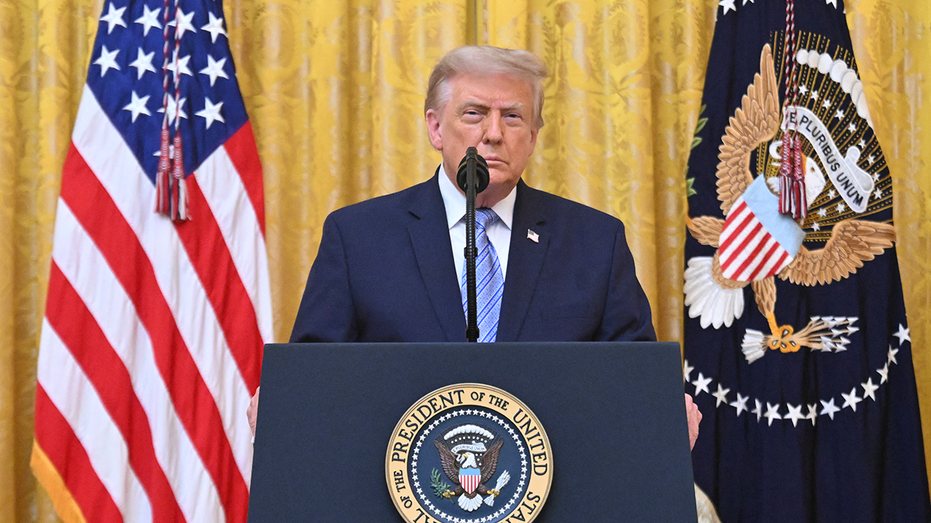
President Donald Trump addressed the nation Thursday evening, announcing the declassification of intelligence documents that he said expose widespread vulnerabilities in the U.S. election system, including foreign interference and potential voter fraud. Speaking from the White House, Trump claimed the materials, gathered by the White House Government Transparency Taskforce and reviewed by intelligence agency chiefs, reveal what he described as “shocking vulnerabilities” related to hacking, exploitation, and foreign meddling.
“This vital information has for many years been covered up and hidden from you,” Trump said during the address. “The American people are beautiful, our great American people. But that all changes right now.” The documents were posted to the White House website during the speech, which came as the administration has pushed policies, legislation, and executive orders aimed at securing elections.
The declassified materials include four sections focusing on alleged weaknesses in electronic voting and ballot-counting systems, China’s acquisition and exploitation of American voter data, a Michigan voter-registration investigation, and the presence of noncitizens on state voter rolls. Trump said China obtained personal information about U.S. voters, including names, addresses, phone numbers, and political affiliations, and formed a dedicated unit to exploit the data. He claimed that reports from the CIA and National Security Agency about China’s interference were kept out of his daily presidential briefings and that Congress was not notified.
Trump called on the director of national intelligence, the Department of Justice, the FBI, and the CIA to investigate and, if warranted, prosecute those involved in what he alleged was a cover-up. Election law expert Hans von Spakovsky, a senior legal fellow at Advancing American Freedom, supported the president’s actions, stating, “The president should be commended for declassifying and releasing the reports that support his claims so they can be reviewed in depth.” Von Spakovsky added that anyone involved in covering up such intrusions should be investigated and prosecuted for any criminal violations.
The president also drew attention to Venezuela, saying newly declassified CIA documents show that the former regime of President Nicolás Maduro developed methods to digitally manipulate election results. Maduro was captured by U.S. forces in January and is facing charges of narco-terrorism, drug trafficking, and weapons offenses. Trump renewed his push for the SAVE America Act, which would require proof of citizenship and photo identification to register and vote in federal elections. He said he has ordered the Department of Homeland Security to notify states about noncitizens on their voter rolls and direct them to remove ineligible voters immediately.
The Department of Homeland Security sent letters to election officials in California, New Jersey, Nevada, and Pennsylvania, stating that a preliminary review identified more than 256,000 potential noncitizens on those states’ voter rolls. Trump has attempted to attach the stalled election legislation to defense spending and other bills, but Republicans face a narrowing window to pass the measure before the midterm elections.
Critics have disputed many of Trump’s claims about the 2020 election and widespread voter fraud, and the address drew immediate fact-checking from some media outlets. Nevertheless, the president framed the declassification as a victory for transparency and a step toward ensuring election integrity. The speech also touched on other administration achievements, including lower drug prices, reduced crime, and strengthened border security, but the main focus remained on election security.
NBC News correspondents Kelly O’Donnell, Ryan Nobles, and Dan De Luce examined Trump’s statements during the address, noting the significance of the declassification and the ongoing debate over election integrity. The release of the documents is likely to fuel further political controversy as the nation approaches the next election cycle.
89