6 minNews
Penn State Researchers Develop Paint-On Electronic Tattoo for Heart Monitoring
Engineers at Penn State have created a conductive ink that can be painted directly onto the skin to form an electronic tattoo capable of monitoring heart activity, muscle signals, and brain waves, with potential future applications for early heart attack detection.
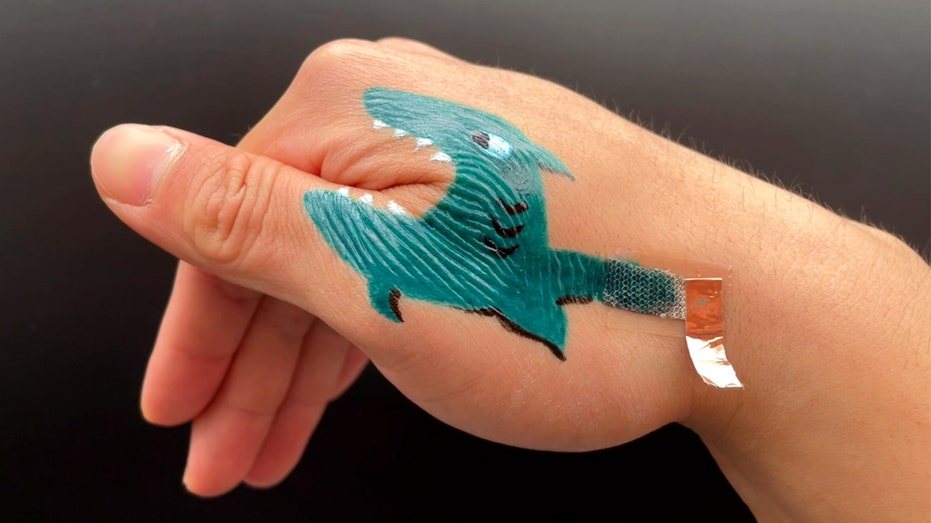
Engineers at Penn State University have developed a paint-on electronic tattoo made from conductive ink that can monitor the electrical activity of the heart, muscles, and brain, offering a more comfortable and customizable alternative to traditional medical sensors. The ink, which dries into a working electrode within minutes, can be mixed with food dye to create almost any color or design, making the sensor look more like face paint than a clinical patch. The researchers have filed a provisional patent for the technology and published their findings in the Proceedings of the National Academy of Sciences.
The ink is created by mixing several polymers and acidic additives into a water-based solution, resulting in a glue-like consistency. Once painted onto the skin, it dries in less than 10 minutes, and a hair dryer can shorten the drying time. Because the ink is applied directly to the body, it follows tiny ridges and uneven areas of the skin, producing more reliable measurements than traditional rigid electrodes, which can pull away during exercise or everyday movement. Some experimental sensors use hydrogel, which absorbs water and stretches with the skin, but hydrogel can dry out over time and lose its grip. Prefabricated electrodes can also leave a small air gap after application, and hair or sweat may worsen that gap, making it difficult to capture a clear signal. Painting the electrode in place helps it settle into the skin's natural texture before it hardens.
The dried ink handles the skin contact, while a piece of porous silver textile connects the electrode to the rest of the system. Researchers paint part of the wet ink over the silver fabric, and the liquid flows into the textile and hardens, forming a secure connection. A clip then connects the fabric to a larger electronic module, which the wearer keeps taped beneath their clothing. The module sends the collected signals to a computer through Bluetooth. The porous textile allowed the electrode to stretch beyond 150% of its original size without breaking, and its open structure gives hair and moisture space to pass through the material.
In one experiment, a co-author wore the painted electrodes during normal daily activities for 12 hours, and the system successfully tracked the person's ECG readings throughout the test. An ECG records the electrical activity of the heart, which doctors can use to examine heart rhythm and identify signs that may need further attention. A separate co-author wore the electrodes during exercise, and the material remained attached and continued recording accurate signals during physical activity. The researchers also painted an electrode onto a co-author's forearm, where it captured EMG signals produced by muscle contractions. The team sent those signals to a robotic prosthetic, allowing the person to control the robotic hand without touching it. The research paper also describes EEG detection through hair, reflecting electrical activity in the brain, and the researchers reported no image artifact during MRI testing, suggesting the design may work alongside medical imaging.
Penn State says the technology could eventually help spot heart attacks early by recording detailed ECG data that may reveal changes in the heart's electrical activity. However, the researchers have not shown that the tattoo can diagnose a heart attack. The reported tests involved co-authors during daily activities and exercise, and the team did not test the system on patients experiencing heart attacks. Therefore, the heart attack application remains a future possibility, and the prototype cannot replace emergency care or medical testing.
Medical wearables can make some people feel self-conscious, and a visible patch may feel intimidating to a child who needs ongoing monitoring. The paint-on electronic tattoo gives the wearer more control over its appearance, allowing them to choose a cartoon, a favorite color, or a less noticeable design. Researchers believe that personalization could encourage people to wear the sensors longer, especially children, teenagers, and people who worry about the stigma of wearing a medical device. The electrodes can also wash away after use, and a person can then paint on a fresh set while continuing to use the more expensive electronic module. According to the researchers, one bottle of ink could contain enough material for several applications over multiple days or a week.
The team plans to keep developing the electrodes, with future versions potentially able to monitor biomarkers such as glucose or cortisol. Researchers are also considering how health care providers, including pediatricians, might use the technology for patient monitoring. The development represents a step toward more comfortable and less intrusive medical sensors that could improve patient compliance and data quality.
76