5 minNews
Lindsey Graham Refused Medical Help Before Scheduled TV Appearance, Report Says
Sen. Lindsey Graham reportedly declined immediate medical attention before his scheduled appearance on NBC's 'Meet the Press,' telling an associate he needed to finish his work on Russia sanctions, Iran policy, and Israeli-Saudi normalization. He died suddenly at 71 from aortic dissection.
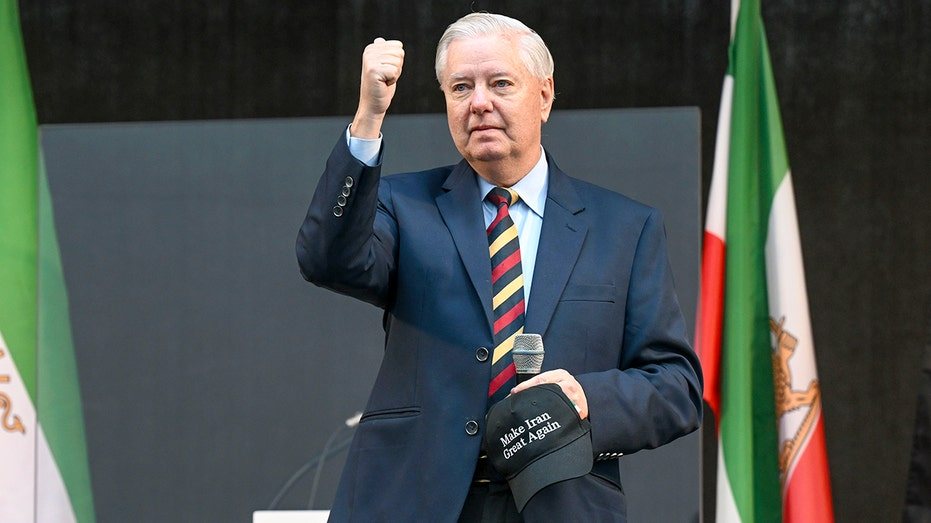
Senator Lindsey Graham, the South Carolina Republican who died suddenly at age 71, reportedly refused offers of medical assistance before a scheduled television appearance, according to a person familiar with his final hours. The lawmaker, who had been feeling unwell, told an associate that he would seek medical help only after completing his planned interview on NBC's «Meet the Press,» Axios reported.
In what may have been one of his last conversations, Graham said, «I can't die now. I still need to do the Russia sanctions, get Iran sorted out and do Israeli-Saudi normalization,» according to the report. The senator had been booked for his 64th appearance on the Sunday news program, underscoring his long-standing role as a prominent voice on foreign policy and national security.
Graham's office released a preliminary cause of death on Sunday evening, stating that he died from «aortic dissection due to arteriosclerotic cardiovascular disease.» Aortic dissection occurs when a tear develops in the inner wall of the aorta, the body's main artery, and is considered a life-threatening medical emergency. Officials noted that the death certificate will remain pending until toxicological and microscopic testing is completed.
President Donald Trump, who spoke with Graham shortly before his death, said he believed he may have been the last person to talk with the senator. «I don't know exactly, but I got a message about 1 in the morning from one of the people in his office that he had passed away. I said, 'I just can't believe it,'» Trump told «Meet the Press.» He described Graham as «like a member of the family» and called the loss «very tough.»
Trump later paid tribute to Graham on Monday, recalling him as a «great guy» and a «workaholic politician» who was widely respected across party lines. The president highlighted Graham's passionate defense of Supreme Court Justice Brett Kavanaugh during his confirmation hearings, calling it one of the defining moments of his career. «I think it saved… Brett becoming a justice,» Trump said on «Fox & Friends.»
Graham's death has triggered a political scramble in South Carolina, where Governor Henry McMaster must appoint a temporary replacement to serve out the remainder of the year. Representatives Nancy Mace and Ralph Norman, both South Carolina Republicans, are reportedly considering bids for the GOP nomination in the forthcoming special election. The vacancy also threatens to complicate key elements of Trump's legislative agenda, including the annual National Defense Authorization Act, judicial nominations, and the SAVE America Act, which Graham strongly supported.
One of Graham's top priorities before his death was advancing normalization between Saudi Arabia and Israel, a diplomatic effort he had pursued for years. He had recently returned from Ukraine and had renewed White House backing for imposing severe sanctions on Russia. Senator Jeanne Shaheen, a New Hampshire Democrat who traveled with Graham overseas, said in a statement that his death should spur passage of their Russia sanctions package. «There can be no more fitting memorial to Lindsey, his legacy or the causes he fought for than to pass this legislation and realize his long-held dream of an independent and secure Ukraine,» Shaheen said.
Graham's sudden passing leaves a significant void in the Senate, where he was known for his bipartisan relationships and his willingness to engage on complex foreign policy issues. His colleagues from both parties have expressed shock and grief, with many recalling his energetic presence and his ability to bridge partisan divides. As the Senate prepares to return on Monday, the focus now shifts to how his absence will affect the chamber's dynamics and the broader political landscape in South Carolina.
84