5 minNews
House report accuses South Korea of targeting US company Coupang after data breach
A House Judiciary Committee report alleges South Korea's government discriminated against American-owned Coupang, including a covert laptop recovery mission in China and a record $410 million fine, amid claims of bias favoring China.
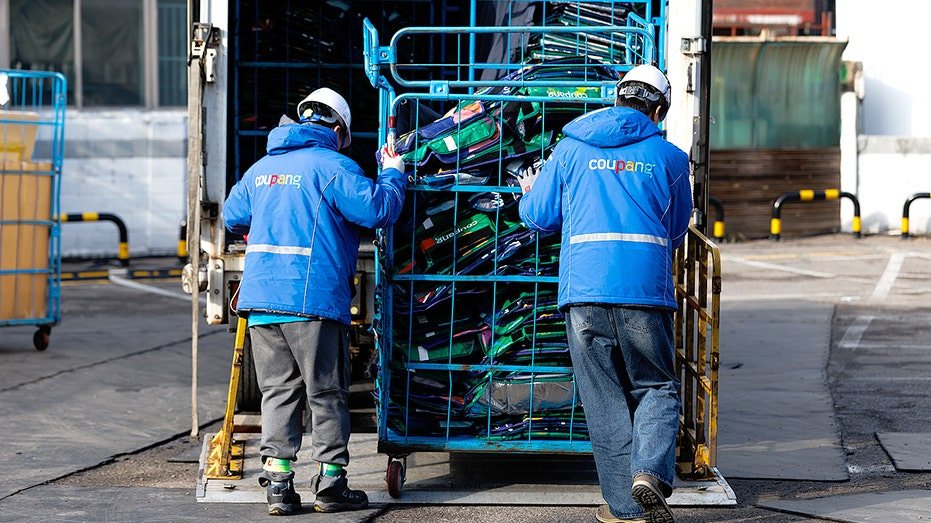
The House Judiciary Committee has released a detailed report accusing South Korea's left-leaning government of systematically discriminating against American-owned companies, with a focus on the Seattle-based e-commerce giant Coupang. The report, which some lawmakers say reflects a South Korean government «aligned with China,» outlines a series of events stemming from a data breach that led to a covert laptop recovery mission in Chinese territory and culminated in a record $410 million fine against the company.
Coupang, often described as the «Amazon of Korea» though it has no affiliation with Amazon, has faced intense scrutiny from South Korean authorities following a data breach last year. According to the committee's findings, a Chinese national and former senior engineer at Coupang began accessing consumer data from outside South Korea for several months before the breach was confirmed in November. The former employee admitted to stealing an authentication key to gain access, and Coupang reported the incident to the Korea Internet & Security Agency, noting that roughly 3,000 accounts had been compromised.
The report alleges that South Korea's National Intelligence Service instructed Coupang to retrieve the stolen data, which was stored on a laptop at the bottom of a murky river in China. This led to a covert mission on Chinese territory to recover the device. Fox News Digital obtained video footage showing a man in scuba gear holding up a Coupang bag containing the laptop and consumer data from a muddy river, though the footage has not been independently authenticated. Following the recovery, Coupang CEO Park Dae-jun resigned, and Harold Rogers was appointed interim CEO of Coupang Corp., the South Korean subsidiary.
In late December, Rogers testified under oath before the South Korean assembly that the National Intelligence Service had instructed the company to retrieve the stolen data. The Judiciary Committee report supports Rogers' claim, citing documentation of a meeting where officials told Coupang they were «part of the joint government investigation» and that the company was «legally required» to work with them. However, South Korean officials denied giving such instructions and berated Rogers at the hearing, later calling for him to face perjury charges. He has not been formally charged or indicted.
The situation escalated in June when South Korea's Personal Information Protection Commission imposed a $410 million fine on Coupang, the largest privacy penalty in the country's history. The Judiciary Committee alleged that the Korea Fair Trade Commission has been «particularly aggressive in using competition policy to attack American companies» and that South Korea has used digital laws to target U.S. firms. Coupang's stock has plummeted more than 45% since the breach was announced and the government began its actions.
A spokesperson for Coupang expressed regret over the investigation, stating the company remains committed to finding a constructive resolution so it can «once again serve as a bridge to strengthen the U.S.-Korea alliance.» The company has said it will challenge the fine in court. A South Korean embassy spokesperson pushed back against the report, calling it «largely based on the unilateral assertions of Coupang» and reaffirming the country's commitment to a fair business environment for all companies regardless of nationality. The spokesperson noted that the penalties were imposed in accordance with South Korean law and remain below the statutory maximum, while emphasizing the government's dedication to its strategic partnership with the United States.
The report adds to growing tensions between Washington and Seoul over trade and regulatory practices, with over 50 House members previously accusing South Korea's government of attacking U.S. companies and favoring China. The committee's findings highlight the broader geopolitical implications of the case, as Coupang's experience underscores challenges faced by American firms operating in markets where local regulations may be used as tools of economic leverage.
87