3 minNews
Harvard astrophysicist disputes NASA chief on mysterious asteroid-like object
Harvard astrophysicist Avi Loeb rejects NASA Administrator Jared Isaacman's view that object 1998 KY26 is only an asteroid, arguing its unexplained acceleration could point to a lost Soviet probe.
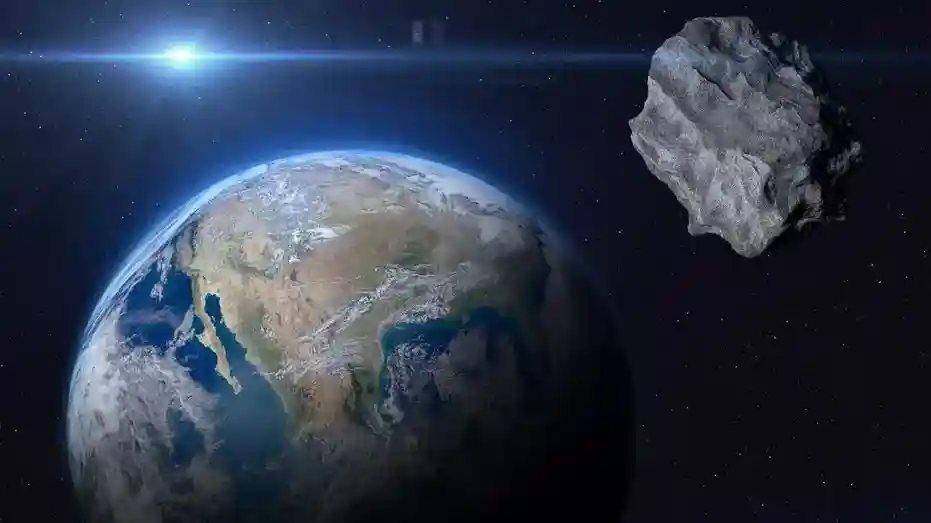
A Harvard astrophysicist is challenging NASA Administrator Jared Isaacman's conclusion that a small near-Earth object known as 1998 KY26 is simply an asteroid, arguing that its behavior may point to something built by humans. Avi Loeb, a professor at Harvard, told Fox News Digital that the object's motion does not fit the explanation offered by the space agency.
KY26 is roughly 36 feet wide and has been observed accelerating beyond what gravity alone can account for. Isaacman said the evidence points only to an asteroid. Loeb disagrees, and in his interview he proposed that the object may be Phobos 1, a Soviet probe that lost contact while en route to Mars in 1988. The mission was one of the Soviet Union's efforts to explore the Martian moon Phobos, and its disappearance has long been a subject of speculation among space researchers.
Loeb said his team's analysis found that the object's trajectory resembles that of Phobos 1, and that a push from sunlight could match the acceleration that has been measured. He pointed to the object's high reflectivity and its rotation, which is about once every five minutes, as features he considers relevant to his hypothesis. Those characteristics, he argued, fit the profile of a manufactured spacecraft as much as a natural rock.
A central point of Loeb's skepticism is the absence of a visible tail or any observed outgassing. Comets typically release gas and dust that produce such tails and can drive acceleration. Researchers have explored a so-called dark-comet theory, in which a rocky body behaves like a comet without displaying a visible tail. Research from Georgia Tech, however, has cast doubt on that explanation, concluding that KY26 is unlikely to retain enough ice to produce the effect. Other studies have suggested that sunlight pressure and heat from the surface could account for the acceleration without invoking either a comet or a spacecraft.
Loeb acknowledged that his theory remains unproven. He said the question could ultimately be settled by direct examination. Japan's Hayabusa2 spacecraft is expected to reach KY26 in 2031, and Loeb predicted that a landing would reveal Soviet-made hardware if his hypothesis is correct. Until such a visit, the competing explanations will rest on remote observations and modeling.
NASA had not responded to Fox News Digital's request for comment on Loeb's remarks at the time of reporting. The disagreement between a leading academic and the head of the space agency highlights an unresolved scientific question about an object whose behavior has yet to be fully explained.
Source: foxnews.com
46