5 minNews
GOP senators challenge former Biden pardon attorney over clemency for death row inmates
Republican senators questioned the credibility of former U.S. Pardon Attorney Elizabeth Oyer during a confirmation hearing for Todd Blanche, focusing on her role in recommending clemency for 37 federal death row inmates, including mass murderers.
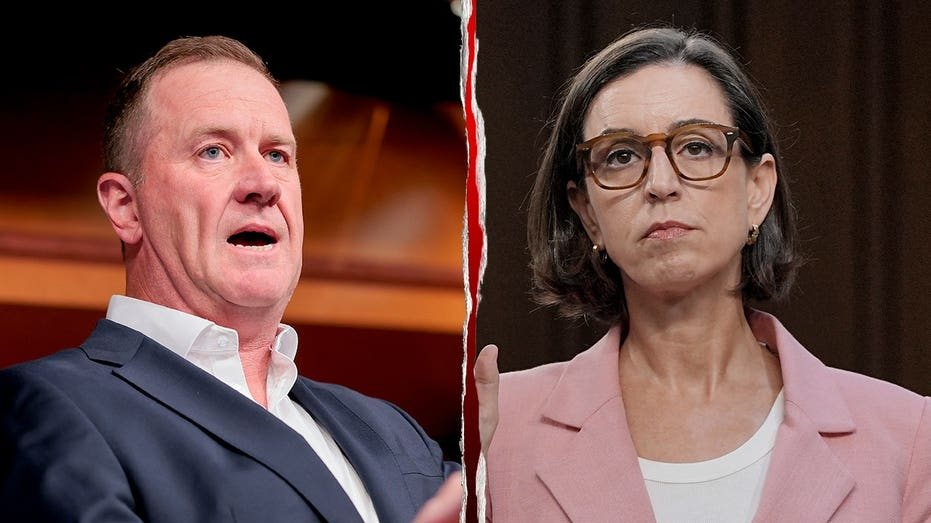
Republican senators on the Senate Judiciary Committee sharply questioned former U.S. Pardon Attorney Elizabeth Oyer during the second day of Todd Blanche's confirmation hearing, challenging her credibility over her role in recommending clemency for 37 federal death row inmates. Oyer, who served as the nonpolitical pardon attorney at the Department of Justice from April 2022 until her firing in March 2025, testified that her dismissal was politically motivated. However, GOP lawmakers focused on a November 2024 internal memo in which she recommended that Attorney General Merrick Garland advise President Joe Biden to commute the sentences of 40 federal death row inmates, a recommendation that led to Biden commuting 37 of those sentences.
Senator Josh Hawley, Republican of Missouri, pressed Oyer on her recommendation to commute the death sentence of Dylann Roof, who was convicted of killing nine Black parishioners during a 2015 Bible study at Emanuel African Methodist Episcopal Church in Charleston, South Carolina. Hawley noted that Oyer's memo acknowledged Roof was not a compelling candidate for clemency but recommended it anyway, citing Roof's anxiety. «Did it ever occur to you that maybe the family of his victims might suffer a little bit of anxiety because he marched into their church and murdered them in cold blood?» Hawley asked. Biden ultimately did not commute Roof's sentence.
Hawley also questioned Oyer about her recommendation to commute the death sentence of Robert Bowers, who was convicted of 63 federal charges for the 2018 Tree of Life synagogue shooting in Pittsburgh, which killed 11 Jewish worshipers. Biden also did not commute Bowers' sentence. «A jury recommended that he be sentenced to death, and you substituted your judgment for theirs, and now he's going to live. Are you proud of that?» Hawley asked. Oyer responded that she took her job seriously and that all the inmates whose sentences were commuted would remain incarcerated for life, likely in maximum security facilities.
Senator Eric Schmitt, Republican of Missouri, echoed Hawley's criticism, telling Oyer, «You have no credibility to talk about Todd Blanche. You have none.» Schmitt argued that Oyer's recommendations showed disregard for victims' families, noting that a Justice Department report found her 73-page memorandum only devoted three paragraphs to addressing the grievances of victims' families. «You recommended the commutation of murderers. You gave no quarter at all or any time to the victims of these brutal murders,» Schmitt said.
Senate Judiciary Committee Chairman Chuck Grassley, Republican of Iowa, pressed Oyer on her recommendation to commute the death sentence of Jorge Avila-Torrez, who was on federal death row for the stabbing deaths of two young girls in Illinois, the murder of Navy Petty Officer Amanda Snell at a Virginia military base, and the abduction and rape of a University of Maryland graduate student. When Grassley asked whether Oyer had contacted the victims' families, she refused to answer, invoking executive privilege. Oyer maintained that all the death row inmates who received clemency would spend the rest of their lives behind bars.
Democrats on the committee defended Oyer, portraying her as a nonpartisan official who was fired for refusing to recommend restoring gun rights to actor Mel Gibson, who serves as a special envoy to Hollywood for President Donald Trump. The Justice Department denied that reason for her firing. Senator Cory Booker, Democrat of New Jersey, condemned the Republican questioning, saying, «The badgering you just endured, it should be completely unacceptable.» Booker praised Oyer for using her platform as a private citizen to educate people about the law.
The hearing highlighted the deep partisan divide over the Justice Department's role in clemency decisions and the treatment of death row inmates. Oyer's testimony also touched on Blanche's handling of the Epstein files and the reassignment of Ghislaine Maxwell to a lower security prison, which she cited as reasons Blanche should not become attorney general. Blanche, who has served as acting attorney general since April 2, did not publicly disclose the reasoning for Oyer's firing, but the Justice Department denied her claim that it was politically motivated.
68