5 minNews
Experts raise alarm over Iran's continued construction at secret underground nuclear site
The Institute for Science and International Security reports that Iran is continuing construction at the secret Pickaxe Mountain nuclear facility in the Zagros Mountains, raising concerns about Tehran's commitment to the memorandum of understanding with the Trump administration and its willingness to allow IAEA inspections.
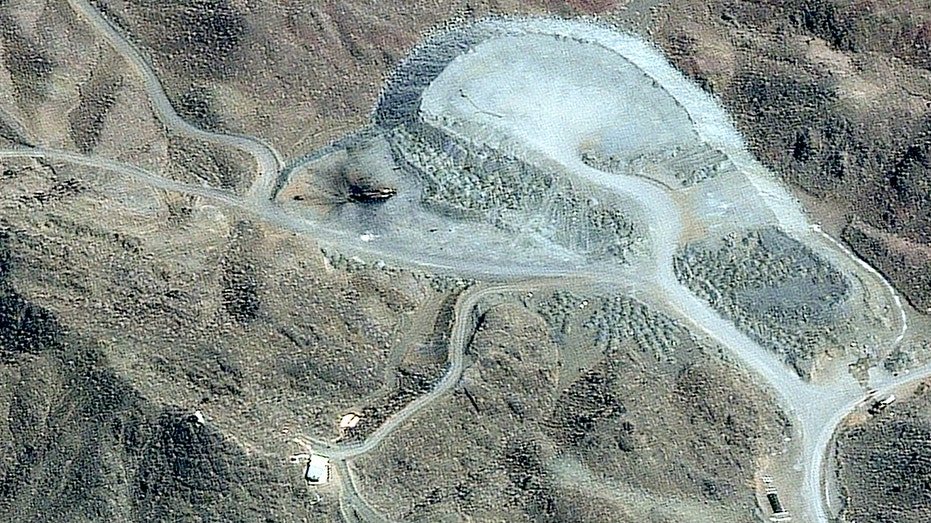
A leading American research institute has expressed deep concern over Iran's ongoing work at a secret underground nuclear facility in the Zagros Mountains, warning that the activity undermines Tehran's commitments under a recent memorandum of understanding with the Trump administration. The Institute for Science and International Security (ISIS) released new satellite imagery from late June 2026 showing continued construction at the site known as Pickaxe Mountain, where inspectors from the International Atomic Energy Agency (IAEA) have not been permitted to visit.
The institute's analysis indicates that vehicle activity on roads leading to the western tunnel portals at Pickaxe Mountain has persisted, suggesting that construction inside the tunnel complex and hardening of the tunnel entrance are ongoing. Spencer Faragasso, a senior fellow at ISIS who covers Iran, North Korea, illicit trade, and nuclear issues, described the work as deeply concerning. He noted that construction has continued steadily since at least 2020 and assessed that the facility is likely large enough to house an enrichment plant.
Faragasso characterized the activity as a hedge by Iran in case negotiations fail, allowing the regime to have a nuclear facility in a late stage of construction. He argued that halting work at Pickaxe Mountain and granting IAEA inspectors access would serve as a key good-faith measure to test whether Iran is prepared to abandon its pattern of deception. The memorandum of understanding signed between the United States and Iran requires that Iran maintain the status quo, which should prohibit construction at any nuclear-related facility, including Pickaxe Mountain.
The United States, together with Israel, launched Operation Epic Fury on February 28, 2026, targeting Iran's nuclear and missile capabilities. Iran has previously used facilities at Natanz, Fordow, and Isfahan to enrich uranium, the key material for a nuclear weapons program. The new satellite imagery shows that at Natanz, little activity can be seen, with access points to below-ground enrichment halls remaining unrepaired. Personnel entrances remain destroyed, and vehicle entrances are severely damaged. A single vehicle was observed on the road outside the Pilot Fuel Enrichment Plant, which was destroyed in June 2025 but later covered by Iran.
At the Isfahan site, no activity was observed as of June 29, 2026, with tunnel portals remaining backfilled with dirt. At Fordow, buried inside a mountain north of the holy city of Qom, Iran added passive defensive measures between May 10 and May 18, including earthen and rocky mounds and other objects on roads leading to tunnel entrances. The alternating placements of these piles create a series of chicanes, which the institute says are not intended as obstructions but rather to prevent rapid ingress and egress by vehicles toward the tunnels. The June 21 satellite image shows that the objects along the road remain in place, and the tunnel portals at Fordow also remain backfilled with dirt.
The IAEA declined to answer a detailed query from Fox News Digital in late June regarding whether it would seek access to the Pickaxe Mountain facility. Fox News Digital also sent questions to the State Department and the Iranian Mission to the United Nations but did not receive immediate responses. The developments come amid heightened tensions over Iran's nuclear program and follow the Trump administration's unveiling of sweeping terms for a proposed agreement with Tehran.
Experts have long warned that Iran's pattern of deception and denial of access to nuclear sites creates dangerous blind spots for international inspectors. The ongoing construction at Pickaxe Mountain, which has remained uninspected, reinforces those concerns and casts doubt on Iran's willingness to abide by the terms of the memorandum of understanding. The institute's analysis underscores the urgency of verifying Iran's compliance and ensuring that the regime does not advance its nuclear capabilities under the cover of negotiations.
100