4 minNews
Daimler Truck Tests Automatic Braking to Prevent Heavy Truck Collisions at Intersections
Daimler Truck, the maker of Freightliner, is adding technology to its trucks that detects a likely collision and can brake automatically. Demonstrations at a proving ground in Oregon produced mixed results.
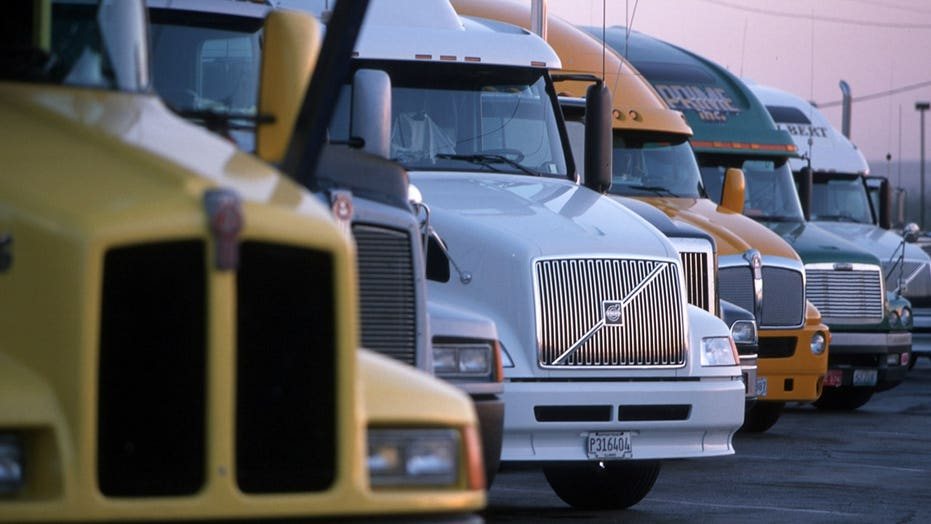
Daimler Truck, the maker of Freightliner trucks, is equipping heavy-duty vehicles with collision prevention systems that can detect a hazard and apply the brakes on their own. The technology is meant to reduce the risk of accidents, particularly in situations where a car crosses the path of a truck or a pedestrian appears near a turn. This is one of the most important safety topics on American roads, since heavy trucks have considerable mass and need a greater distance to stop than passenger cars.
The system was demonstrated at Daimler's proving ground in Oregon. For the tests, mock-ups of light vehicles on remote-controlled platforms were used to simulate intersections with trucks. In the first test, the truck completely avoided a collision. In the second, it braked but still struck the mock-up of the car. The tests were conducted at speeds of roughly 40 to 55 miles per hour, and the trailer weighed about 30,000 pounds during the trials. According to the developers, such scenarios correspond to the real risks at intersections and turns, where the large mass of a truck combines with the unexpected movement of other road users.
The new features are built on Active Brake Assist 6, or ABA6, which is part of the Detroit Assurance driver-assist package. The system uses five radar sensors and one camera, which provide roughly 270 degrees of coverage around the truck. ABA6 warns the driver and can brake if another vehicle ahead is stopped or slowing down. It is standard on the fifth generation of the Cascadia, one of the most common Freightliner models on North American roads.
The company is also adding the Cross Traffic Assist function, which uses radar to detect traffic crossing the truck's path at intersections. The system first issues an audible and visual warning and, if needed, applies partial or full braking. Active Side Guard Assist 2 adds protection during left turns across oncoming traffic, when the driver may not notice a pedestrian or cyclist beside the cab. Both functions are planned to become standard on Cascadias built from 2027 onward, meaning the update will reach new vehicles gradually rather than the entire fleet at once.
An optional Active Lane Assist 2 system is also offered, which keeps the truck centered in its lane. The Attentive Driver Protection function can stop the truck if the driver does not respond. In that case, the hazard lights are activated to warn other road users. The system does not diagnose medical emergencies, so it does not replace the driver's attentiveness, but only responds to the driver's absence from the controls.
There are limitations worth considering. Older trucks do not have the new technologies, so for carriers with aging fleets the benefits will appear slowly. The sensors may perform worse in bad weather or low visibility, and automatic braking cannot guarantee that every collision will be avoided, as the demonstrations themselves confirmed. In addition, the effectiveness of the systems in everyday traffic has not yet been proven in practice, so real-world results will depend on further testing and operation on the roads.
Source: foxnews.com
8