4 minNews
CBC reverses 9/11 terrorism guidance after cross-border backlash
The Canadian Broadcasting Corporation reversed internal guidance that told journalists not to describe the Sept. 11 attacks as terrorism without attribution, following criticism from U.S. and Canadian officials.
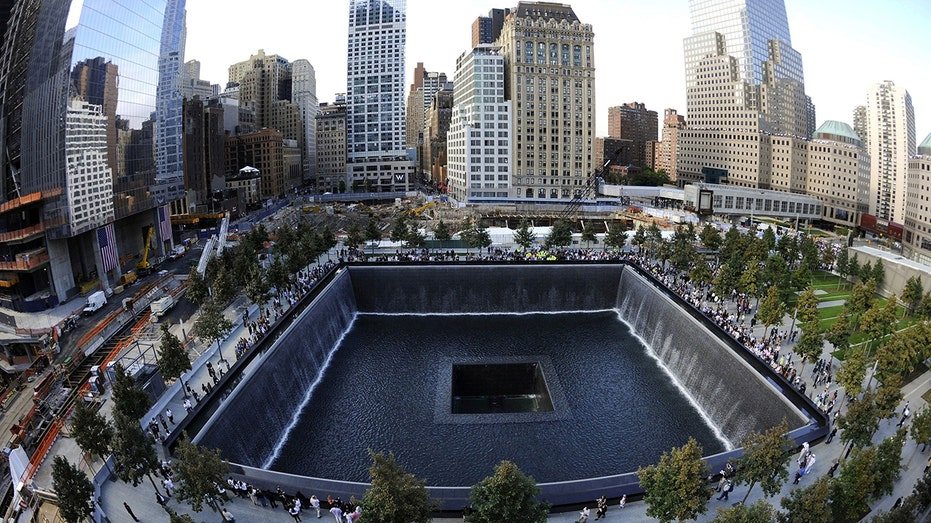
The Canadian Broadcasting Corporation has reversed internal guidance that told its journalists not to describe the Sept. 11 attacks as terrorist attacks without attribution, following days of criticism from elected leaders and senior officials on both sides of the border.
The broadcaster's senior director of journalistic standards and public trust, Basem Boshra, announced the change Friday in an updated Editor's Blog post. The revision came one day after an internal memo authored by Boshra surfaced, in which he explicitly instructed staff: "Do not refer to the Sept. 11 attacks as terrorist attacks."
In the updated guidance, Boshra said the broadcaster decided to adjust its language policy "to clarify that direct attribution is not required for describing the historic events of 9/11 as terrorism." CBC Head of Public Affairs Chuck Thompson directed inquiries to the revised blog post.
The initial guidance drew sharp rebukes from U.S. officials. Former New York Gov. George Pataki, who led the state during the attacks, said the policy sanitized the deliberate hijackings. "Fear of being accused of Islamophobia cannot become an excuse for denying the plain truth. This is a shameful failure of moral courage. Truth matters in a free society," Pataki wrote on X.
FBI Director Kash Patel said the guidance bastardized history, while U.S. Ambassador to Canada Pete Hoekstra warned that failing to confront terrorist ideologies endangered the nations' shared security partnership. House Republicans pressed Canada for an explanation, with the House Republican Conference asking: "What possible motive could there be for sanitizing the worst terrorist attack on American soil?" Sen. Mike Lee, R-Utah, and Rep. Lisa McClain, R-Mich., also criticized the guidance.
Canadian criticism crossed party lines. Conservative Leader Pierre Poilievre demanded a retraction and apology, writing on X that calling 9/11 anything other than a terrorist attack "is an appalling distortion of history. It dishonours the victims and their families, the survivors, and the first responders who suffered from the horrors of that day."
Canadian Culture Minister Marc Miller of the Liberal Party said the reversal corrected guidance that had caused legitimate anger. Public Safety Minister Gary Anandasangaree said Canada had always recognized 9/11 as history's deadliest terrorist attack. CBC posted its revision less than an hour after his statement.
New York City Councilwoman Vickie Paladino said the reversal had not resolved her concerns. "While it's certainly good that some modicum of reality has prevailed in this instance, it should not have required a week of international outrage and pressure from the United States Government," Paladino said. "The fact that the institutional instinct of the CBC was to downplay the 9/11 terror attacks reveals a deep ideological rot that cannot be ignored."
The CBC initially told Fox News Digital that the memo reflected a longstanding attribution policy, pointing to an earlier explanation that the terms were politically and emotionally loaded. It later said the leaked excerpt lacked context and caused concern, anger and hurt.
The Sept. 11 attacks, which occurred 25 years ago next month, remain the most lethal terrorist attacks in history. Nineteen al-Qaeda terrorists hijacked four planes, flying two into the World Trade Center in New York City and another into the Pentagon in Washington, D.C. The fourth airliner crashed in Pennsylvania after passengers attempted to retake control from the hijackers.
61