6 minNews
Battleground State Officials Push Back on Trump’s Election Overhaul Efforts
Election officials in Arizona and Georgia respond to President Trump’s efforts to reshape voting processes, defending their systems against allegations of interference and outlining measures to ensure ballot security.
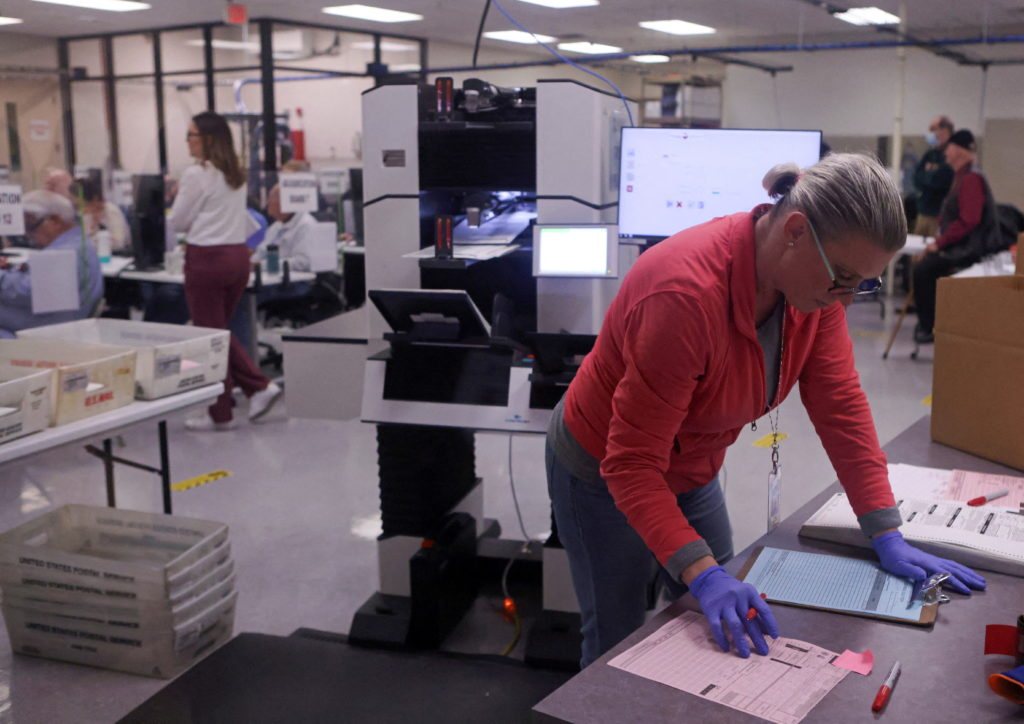
Election administrators in key battleground states are pushing back against President Donald Trump’s ongoing efforts to reshape voting procedures, defending the integrity of their systems and outlining steps to protect future elections. In interviews with PBS NewsHour, Arizona Secretary of State Adrian Fontes and Gabe Sterling of the Georgia Secretary of State’s office addressed the president’s recent allegations of foreign interference and his calls for stricter voting rules.
Fontes, a Democrat, emphasized that Arizona’s election infrastructure remains secure despite repeated claims of vulnerabilities. He noted that the state has implemented robust verification processes, including signature matching and audit trails, to ensure that every vote is counted accurately. “Our systems are tested and proven,” Fontes said, adding that allegations of widespread fraud have been consistently debunked by courts and independent reviews.
Sterling, a Republican who oversees Georgia’s election operations, acknowledged the heightened scrutiny but stressed that election officials are focused on maintaining public confidence. He pointed to Georgia’s adoption of paper ballot backups and risk-limiting audits as measures that have strengthened the state’s electoral process. “We have to be transparent about what we’re doing,” Sterling said, “and we have to make sure that voters understand that their ballots are safe.”
The comments come after Trump delivered a primetime address in which he accused China of meddling in U.S. elections and called for sweeping changes to voting procedures. The president claimed that China had stolen millions of files on American voters, including names, addresses, and political affiliations, with the goal of influencing the 2020 presidential election. He also alleged that Beijing sought to bribe business leaders and journalists to undermine his campaign.
China has dismissed the accusations as “entirely fabricated,” and the White House has released heavily redacted intelligence documents to support the claims. The Department of Homeland Security announced it would tighten restrictions on foreign student visas, a move that critics argue targets Chinese nationals without addressing broader election security concerns.
Fontes and Sterling both expressed concerns that the president’s rhetoric could erode trust in the electoral system. Fontes warned that unsubstantiated allegations of fraud could discourage voter participation, particularly among minority communities. “When you constantly tell people that the system is rigged, they start to believe it,” he said. “That’s dangerous for democracy.”
Sterling echoed that sentiment, noting that election officials are working to counter misinformation by providing clear, factual information about how ballots are processed. He highlighted Georgia’s efforts to expand early voting and improve poll worker training as examples of steps that have increased accessibility while maintaining security.
The debate over election integrity has become a central issue in the run-up to the 2026 midterm elections. Trump has urged state legislatures to adopt stricter voter ID laws, limit mail-in voting, and purge voter rolls more aggressively. Critics argue that these measures disproportionately affect minority and low-income voters, while supporters say they are necessary to prevent fraud.
In Arizona, Fontes has pushed back against proposals to eliminate early voting, calling them “a solution in search of a problem.” He noted that the state’s early voting system has been in place for decades and has a strong track record of security. “We have multiple layers of protection,” he said. “There’s no evidence that early voting leads to fraud.”
Georgia has also faced legal challenges over its voting laws, including a 2021 measure that restricted ballot drop boxes and added new identification requirements for absentee ballots. Sterling defended the law, saying it was designed to streamline the voting process while ensuring consistency across the state. “We want to make it easy to vote and hard to cheat,” he said.
Both officials acknowledged that foreign interference remains a concern, but they argued that the focus should be on strengthening cybersecurity and intelligence-sharing rather than overhauling voting procedures. Fontes called for increased federal funding to help states upgrade their systems and train election workers. “We need resources, not rhetoric,” he said.
The interviews highlight the growing tension between state election officials and the Trump administration over how to safeguard the electoral process. While the president has called for sweeping changes, many local administrators argue that the current system is already secure and that further restrictions could undermine voter access.
As the 2026 elections approach, the debate is likely to intensify. Fontes and Sterling both stressed the importance of bipartisanship in maintaining public trust. “Elections are not about parties,” Sterling said. “They’re about the people. We have to make sure that every eligible voter can cast a ballot and that every vote is counted fairly.”
81