5 minEconomy
FCC Votes to Auction Spectrum, Aiming to Boost Wireless Speeds and Raise Billions for Treasury
The Federal Communications Commission voted to auction 160 megahertz of spectrum in the Upper C-Band by July 2027, a move Chairman Brendan Carr says will make wireless faster and cheaper while raising $30 to $60 billion for the U.S. Treasury.
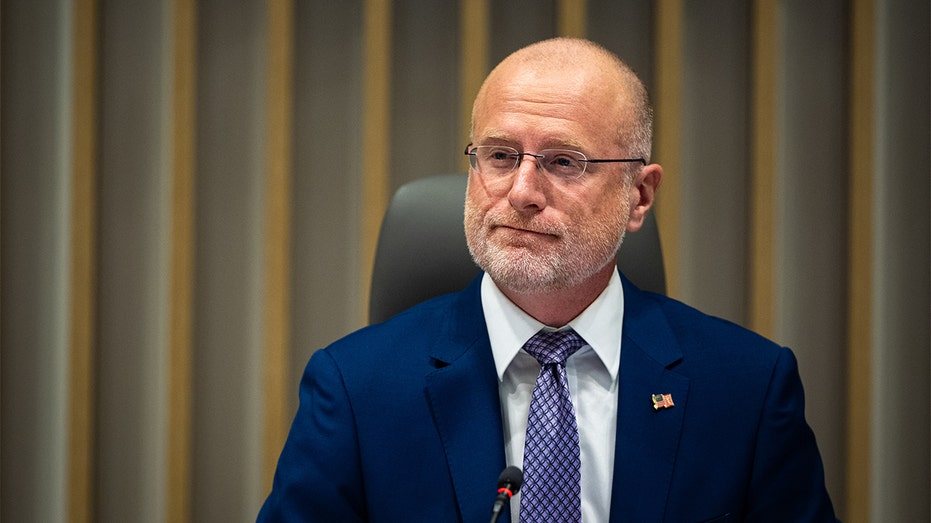
The Federal Communications Commission took a significant step Wednesday toward reclaiming U.S. leadership in wireless innovation, voting to adopt rules for a major spectrum auction that Chairman Brendan Carr says will deliver faster, cheaper service for consumers while generating tens of billions of dollars for the federal government.
The FCC voted to auction 160 megahertz of spectrum in the Upper C-Band by July 2027, a move that combines terrestrial wireless operations across the entire C-Band into a single “super-band” spanning 440 megahertz of prime mid-band spectrum. The auction is expected to raise between $30 billion and $60 billion or more for the U.S. Treasury, according to Carr.
“When most people pick up their smartphone, they usually don’t think why it works or what it takes to make it faster or better. But the FCC is now poised to do exactly that by bringing more spectrum, usually invisible airwaves that your phone actually operates on, and push more of that into the commercial market, so we get more competition, faster speeds, more downward pressure on prices,” Carr told Fox News Digital.
The chairman framed the decision as a fulfillment of the Trump administration’s agenda, arguing that the United States fell behind countries like China during the 5G rollout under the previous administration. “One of the things that President Trump did right off the get-go was restore U.S. leadership in wireless. During the Biden years, we fell drastically behind other countries when it came to making spectrum available,” Carr said.
The order adopts competitive bidding procedures, allowing wireless providers to bid on licenses for the newly available spectrum. The FCC said the move will drive down prices for consumers while improving network performance. Carr described it as a dual win: better service for Americans and significant revenue for the government.
Senate Commerce Committee Chairman Ted Cruz, R-Texas, praised the decision, saying it will “result in better coverage and faster speeds for consumers.” The FCC’s action comes after the passage of the Trump-era Working Families Tax Cut, which authorized and directed the commission to bring more airwaves into the commercial marketplace.
Technically, the order reconfigures 160 megahertz of the Upper C-Band in the contiguous United States for terrestrial wireless flexible use in the 3.98–4.14 GHz range, with a 20-megahertz guard band at 4.14–4.16 GHz. It also folds the Lower C-Band and Upper C-Band into a single 3.7 GHz Service from 3.7–4.14 GHz, harmonizing licensing, operating, and technical rules across the entire band.
The FCC said the plan promotes “a successful co-existence environment with adjacent band radio altimeters” through specific technical measures and a carefully coordinated timeline. Terrestrial wireless operations in the Upper C-Band are scheduled to begin in December 2030, aligning with forthcoming radio altimeter retrofit requirements to be issued by the Federal Aviation Administration.
The auction represents a major step in U.S. spectrum policy, which has been a subject of intense debate in recent years. Industry analysts have long warned that the United States risked falling behind global competitors in 5G deployment due to fragmented spectrum allocation and regulatory delays. The FCC’s move is intended to address those concerns by creating a large, contiguous block of mid-band spectrum that can support high-speed wireless services.
Mid-band spectrum is considered critical for 5G networks because it offers a balance between coverage and capacity, enabling faster speeds and lower latency compared to lower-frequency bands. The creation of a 440-megahertz super-band is expected to give wireless carriers the flexibility to deploy advanced services, including fixed wireless access, enhanced mobile broadband, and future 6G technologies.
The revenue generated from the auction will flow directly to the U.S. Treasury, providing a significant boost to federal coffers at a time of ongoing budget debates. The estimated $30 to $60 billion range reflects the high demand for mid-band spectrum among wireless carriers, which have been aggressively expanding their 5G networks.
Carr emphasized that the FCC’s action is just the beginning. “We’re going to continue to work to bring more spectrum into the commercial market, to make sure the United States is the global leader in wireless innovation,” he said. The commission is expected to release detailed auction procedures in the coming months, with bidding likely to begin in early 2027.
88