6 minEconomy
FCC Spectrum Auction Aims to Boost Economy and Counter China in Wireless Race
The Federal Communications Commission has announced a major spectrum auction of the Upper C-band, aiming to unlock up to $264 billion in GDP growth, create 1.5 million jobs, and strengthen U.S. competitiveness against China in 5G and future wireless technologies.
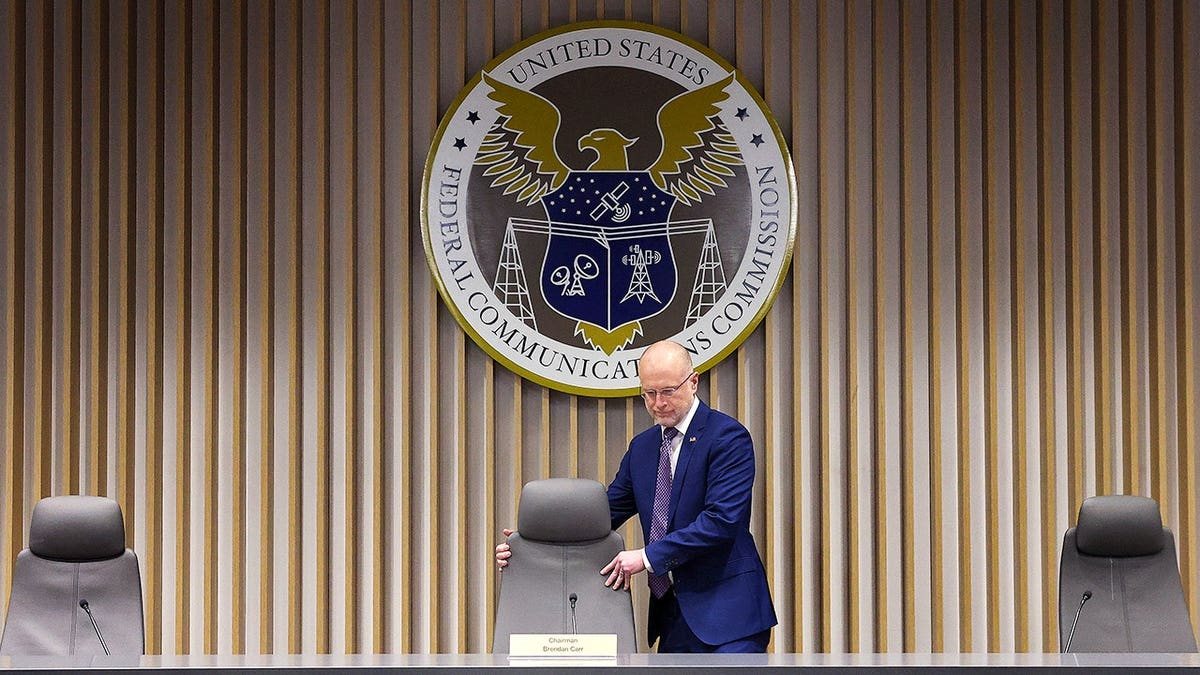
The Federal Communications Commission has launched a significant spectrum auction that officials say could deliver hundreds of billions of dollars in economic benefits, create more than a million jobs, and help the United States maintain its competitive edge over China in the race for next-generation wireless technology. FCC Chairman Brendan Carr announced the so-called "super band" auction of 160 megahertz of the Upper C-band, a valuable slice of mid-band spectrum that combines speed, capacity, and geographic reach essential for modern wireless networks.
Congress had directed the commission to make at least 100 megahertz available, but the FCC exceeded that target by adding another 60 megahertz and combining it with spectrum cleared in 2020. The result will be a contiguous block of more than 400 megahertz, creating one of the most commercially useful bands of wireless spectrum in the world. This will be the first major federal spectrum auction in five years, and the commission moved from a Notice of Proposed Rulemaking to a final order faster than in any comparable proceeding during the 5G era.
The economic potential is enormous. The FCC estimates that putting this spectrum to work could add as much as $264 billion to gross domestic product, support 1.5 million jobs, and create nearly $390 billion in benefits for consumers. History shows the value of these airwaves: the first C-band auction in 2000 raised roughly $81 billion for the federal government. The auction is designed to generate revenue without imposing new taxes, relying instead on market competition to allocate spectrum to companies that value it most.
Beyond the economic benefits, the auction is framed as a national security imperative. The country that leads in mid-band spectrum will have an enormous advantage in 5G, the emerging 6G economy, and the artificial intelligence, robotics, transportation, and defense applications that depend on advanced connectivity. Wireless leadership determines which country's companies develop the next generation of network equipment, whose technical standards are adopted internationally, and where investment and high-paying jobs are created.
China has long treated spectrum as a strategic national asset, deploying extensive mid-band capacity, building networks at enormous scale, and using subsidized telecommunications equipment to increase its influence around the world. By contrast, America's regulatory apparatus has often moved slowly, with spectrum auctions occurring only sporadically and subject to political disputes and bureaucratic delays. The Upper C-band order is a step in the right direction, but experts argue it cannot be a one-time event.
Steve Forbes and Stephen Moore, writing in a recent opinion piece, argue that America badly needs a long-term spectrum strategy rather than the haphazard approach of the past. Wireless companies and technology innovators make investment decisions years in advance and require a predictable pipeline of licensed spectrum. They recommend that Washington establish a multiyear calendar identifying which bands will be studied, cleared, and auctioned. Congress should also make the FCC's auction authority permanent, as allowing it to expire creates uncertainty and delays investment.
Another critical issue is the enormous amount of spectrum controlled by federal agencies, including the Defense Department. While national security operations must be protected, the authors argue that "national security" should not become a mantra preventing officials from examining whether every allocation is being used efficiently. There are effective ways to preserve government capabilities while freeing additional spectrum for commercial use, but federal agencies have little incentive to surrender unused or underused airwaves. Congress could change that by allowing agencies to share in the savings or auction proceeds generated when they consolidate operations, upgrade equipment, or relinquish underused spectrum.
The broader principle, according to Forbes and Moore, is straightforward: government should not attempt to build wireless networks, dictate business models, or select favored technologies. Its responsibility is to free scarce spectrum, establish clear rights, enforce the rules, and then get out of the way. Private capital and American ingenuity will do the rest. Chairman Carr's Upper C-band auction follows this philosophy, and if executed properly, it could serve as a model for future spectrum policy.
The auction also has implications for consumers. Keeping usable spectrum idle or trapped in inefficient government allocations has real costs: networks are not built, jobs are not created, and new services do not reach consumers. American companies lose ground to foreign competitors. Auctions offer a market-based solution that gets spectrum to companies that value it most and are prepared to put it to productive use. They establish clear, enforceable rights and encourage private investment.
As the United States faces increasing competition from China in the wireless and technology sectors, the FCC's move represents a concrete step toward ensuring that American companies have the resources they need to lead in the 5G and 6G economies. The auction is expected to generate significant interest from telecommunications companies, technology firms, and investors, all of whom recognize the strategic importance of mid-band spectrum for the future of connectivity.
93