6 minEconomy
African Economies Surge After Trump Administration Shifts Focus From Aid to Trade
The Trump administration's shift from aid to trade has spurred economic growth in Africa, with nine of the world's 20 fastest-growing economies now on the continent, according to a senior State Department official.
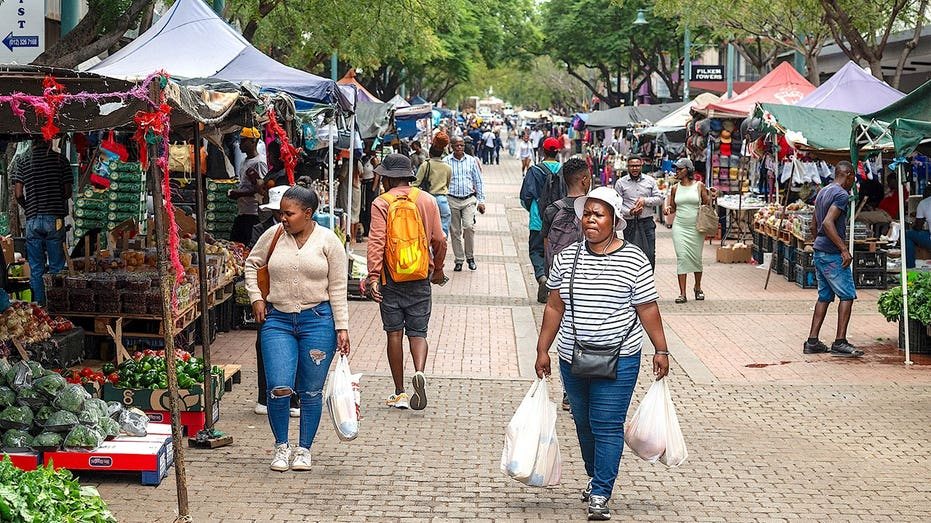
The Trump administration's pivot from foreign aid to trade-driven partnerships is fueling an economic boom across Africa, with nine of the world's 20 fastest-growing economies now located on the continent, a senior State Department official told Fox News Digital. Assistant Secretary for the Bureau of African Affairs Frank Garcia credited the Commercial Diplomacy Strategy, introduced at the start of President Donald Trump's second term, for the unprecedented growth. «African economies are responding positively to the shift from aid to trade,» Garcia said, noting that U.S. exports to sub-Saharan Africa increased by 23% in 2025, reaching $22.6 billion, with continued growth this year.
The policy change, which included an 83% cut to USAID funding early last year, initially sparked dire predictions from critics who warned of economic collapse in aid-dependent nations such as Ethiopia, South Sudan, and Malawi. However, Anna Mahjar-Barducci, project director at the Middle East Media Research Institute (MEMRI), observed that the continent proved far more resilient than expected. «The predictions were catastrophic,» she said. «Instead, something quite different happened.» Ethiopia, for instance, revised its 2026 growth forecasts upward despite the funding cuts, driven by massive hydroelectric investments, construction, mining, and expanding coffee exports.
According to International Monetary Fund (IMF) projections, Sub-Saharan Africa is expected to grow between 4.3% and 4.6% in 2026, outpacing Asia, which is forecast to grow at around 4.1%. Mahjar-Barducci argued that this growth challenges the long-held belief that international aid is essential for Africa's survival. «For decades, we were told that without international aid Africa would collapse,» she said. «Now that aid is genuinely drying up, much of the continent is not only avoiding collapse – it is accelerating.» She added that a school of African economic thought has long contended that aid is not the solution but often part of the problem.
Garcia explained that the Commercial Diplomacy Strategy involves U.S. embassies in Africa working directly with the private sector to identify policies, laws, and regulations that constrain trade and investment. The embassies then collaborate with partner governments to develop practical reforms and provide technical assistance. «We see this economic acceleration in Africa,» Garcia said. «In order to best capitalize on it, the United States is focused on driving private investment, sustainable growth in terms of partnership and treating African nations not as aid recipients, but as capable commercial partners.»
The results have been tangible: the Bureau of African Affairs has facilitated 37 commercial transactions since the start of the Trump administration, representing $25.67 billion in total value, with hundreds more in the pipeline. Top sectors include energy (24%), information and communications technology (19%), critical minerals and mining (11%), aerospace (8%), agriculture (8%), and infrastructure (8%). Garcia noted that these deals are a direct outcome of the shift from aid to trade, emphasizing that the strategy is «working.»
Mahjar-Barducci criticized the traditional aid model, arguing that unconditional transfers often entrench poverty by financing projects designed in foreign capitals that do not address local needs. «Poverty cannot be overcome by treating people as permanent recipients of charity,» she said. «Poverty can be reduced by recognizing people as entrepreneurs, workers and economic partners capable of building their own prosperity.» She defended the Trump administration's more transactional approach, which ties aid to access to critical minerals or health data, as a necessary reform to incentivize recipient governments to implement reforms.
The administration has also introduced the America First Global Health Strategy, which has signed 34 bilateral global health memoranda of understanding (MOUs) representing over $24 billion in new health funding, including more than $14.3 billion in U.S. assistance and over $9.6 billion in co-investment from recipient countries. Of these, 24 MOUs were signed with sub-Saharan African nations. The strategy aims to continue life-saving care, build resilient healthcare systems, reduce dependency on American taxpayers, and strengthen country ownership. Meanwhile, the administration has decided to phase out funding for the U.S. anti-AIDS program PEPFAR, which has been critical in Africa, where South Africa has the highest HIV infection rate globally. A State Department official said South Africa must take responsibility for its own healthcare challenges, noting that the phased approach is designed to transition responsibility to local governments.
72