4 minBusiness
VC Hans Tung: AI Race Hinges on Infrastructure, Not Just Better Models
Notable Capital managing partner Hans Tung argues that the AI era will be defined by physical infrastructure — data centers, compute capacity, and industrial buildout — drawing parallels to steel ships, railroads, and Britain's rise to global dominance.
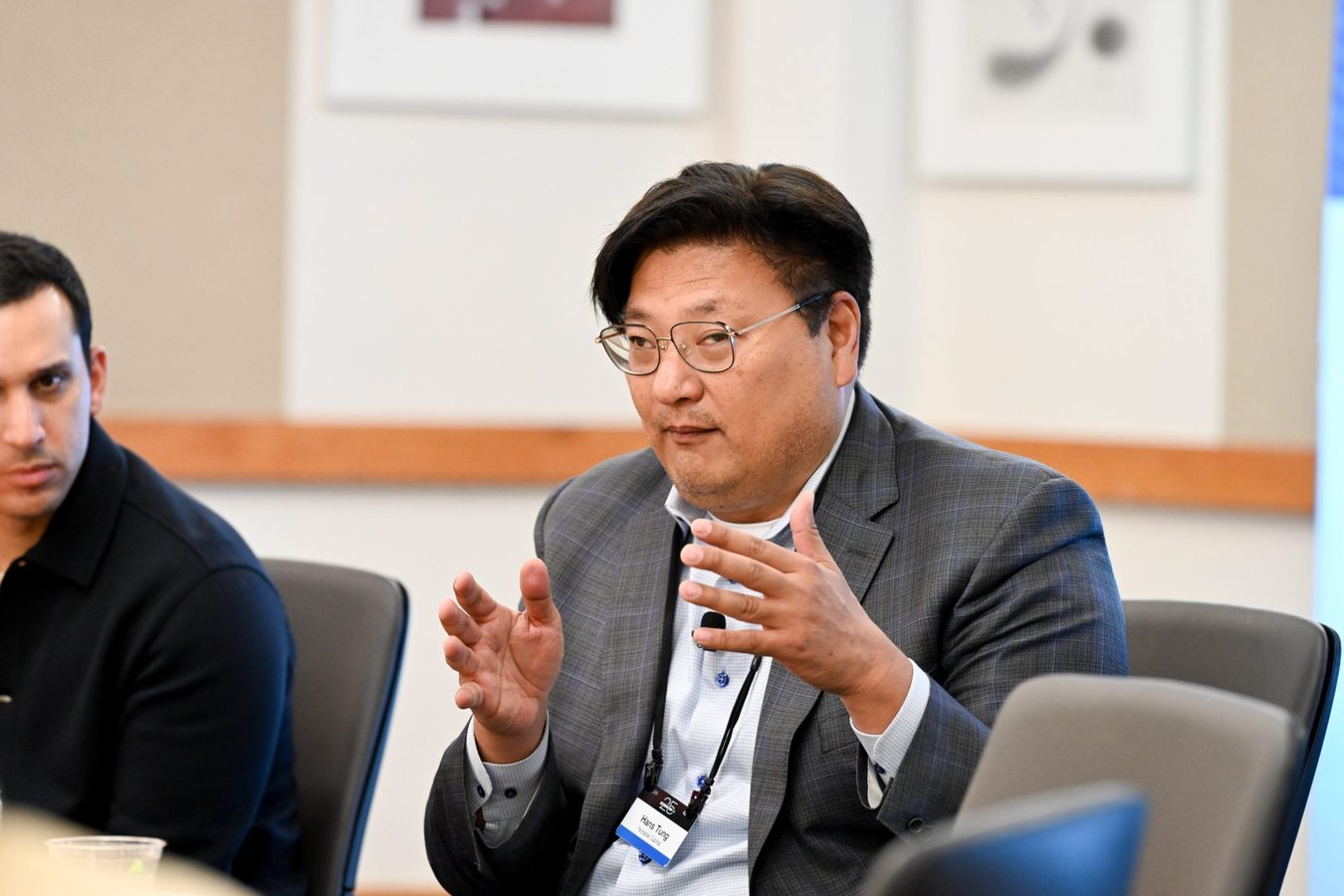
The global race to lead in artificial intelligence will not be decided by which company builds the most sophisticated model, according to Hans Tung, managing partner at Notable Capital and an early backer of Airbnb, Coinbase, and Anthropic. In a conversation with Fortune, Tung argued that the decisive factor is infrastructure — the physical capacity to deploy AI at scale — and he reached back to the 19th century to explain why.
Tung's first mental model is the steel ship. The Dutch, Spanish, and Portuguese sailed the world in wooden wind-powered vessels, he noted, but the British were the first to scale ships using the steam engine and steel hulls. That combination, he said, made the British Navy stronger than the rest of the world combined. By 1890, 80% of the world's ships came from British shipyards. The lesson, in Tung's view, is that major technological change only produces geopolitical dominance when the supporting infrastructure exists to back it up.
«The need for steel ships with steam engines was important to be able to go around the world,» Tung said. «The British end up doing this because they invest in technology that allows them to leverage the benefits of the Industrial Revolution. They end up dominating the world for more than 100 years.»
That historical throughline leads Tung to a question increasingly asked across the technology industry: Are data centers the railroads of the 21st century? His answer is essentially yes. «If you don't have enough compute to meet demand, it doesn't matter if you have a better model,» he told Fortune. «The models that win are the ones that are available.»
Tung pointed to the American Civil War as an example. The North's railroad infrastructure was far more developed than the South's, which helped determine the outcome. Most major battles occurred within 24 miles of a railroad, he said. «It doesn't matter if you have the resources if you don't have the means to move them,» Tung said. «If you don't have a railroad — or compute — it doesn't matter if you have better engineers, better politicians, or better thinkers.»
The comparison carries direct geopolitical weight. China has spent nearly two decades outbuilding the United States in physical infrastructure. «Over the last almost 20 years, the amount of subway and high-speed rail built in China was unprecedented,» said Tung, who is Taiwanese-American. «Now, China has more high-speed rail than the rest of the world combined, kind of like the North in the Civil War. They executed very, very well. It's mind-boggling.»
Shipbuilding tells a similar story. More than 80% of new shipbuilding orders worldwide go through China, according to some estimates. Each year, a single state-owned Chinese conglomerate — the China State Shipbuilding Corporation — builds more commercial ships than the entire U.S. shipbuilding industry has built in the 81 years since World War II ended.
In data centers, the picture is more layered. China currently controls about 24 gigawatts of working data center compute capacity, while the United States has at minimum 47 gigawatts by conservative estimates. But the U.S. faces the challenge of executing a historic building boom. A Columbia Business School professor has estimated that the AI infrastructure buildout could account for an average of 3.6% of U.S. GDP every year until 2032. That buildout brings concerns ranging from community pushback to questions about the electric grid's capacity.
Tung's broader case is that ideas and talent alone are not enough. Amid a sweeping socioeconomic shift driven by technology, invention matters less than having the infrastructure to use AI effectively and at scale. «We're not going to just win,» he said. «We have to work hard and make sure we win.»
7