6 minBusiness
Trump's Quiet China Wins Outweigh Xi's Light State Visit
A state visit by Chinese President Xi Jinping produced few concrete deliverables, but the Trump administration is claiming progress on trade deficits and technology competition that it says matters more for the long term.
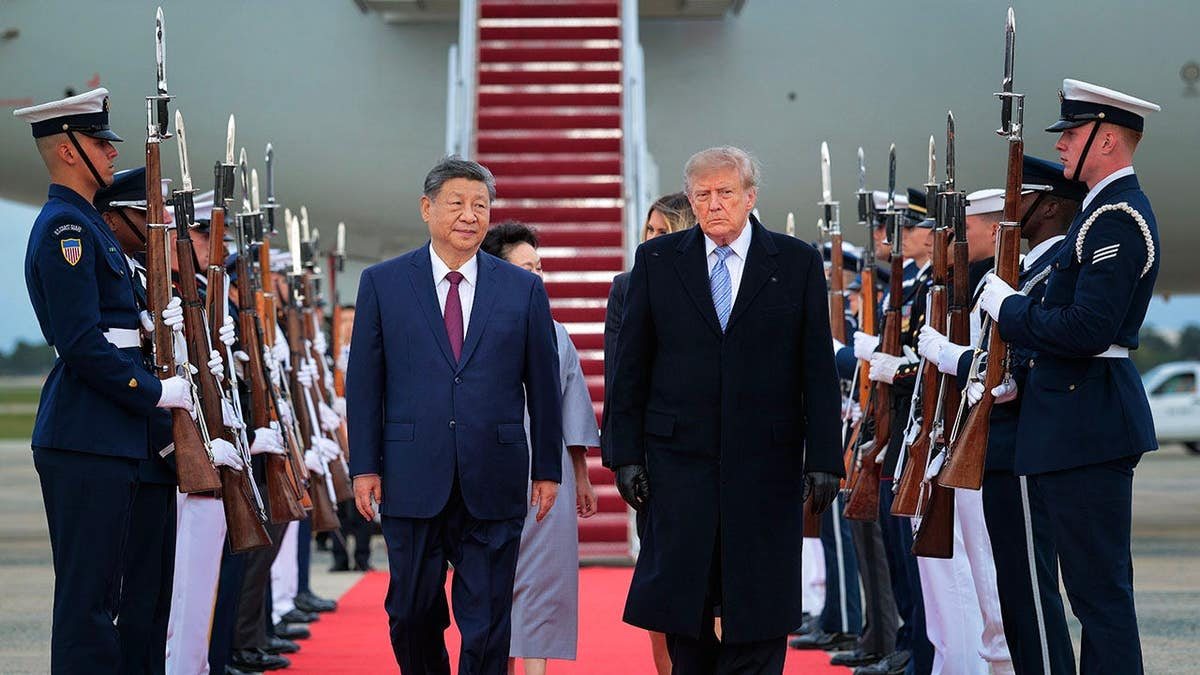
Chinese President Xi Jinping's state visit to Washington produced little in the way of concrete agreements, but the Trump administration is pointing to quieter gains that it argues will matter far more in the long competition between the world's two largest economies.
The visit, which was a state visit rather than a formal summit, yielded few measurable outcomes. China's state-owned People's Daily struggled to fill its coverage, running a story titled «Bonded by Ping-Pong: China-U.S. friendship writes a new chapter.» U.S. Ambassador to China David Perdue said the old standard of deliverables does not capture the relationship's value. «The old adage of deliverables in a relationship that we have with China is really not measurable in many ways,» Perdue said, describing the priority as «continuing the conversation.»
The most significant long-term metric for Washington is the trade deficit, and it is falling sharply. The gap between U.S. exports and imports from China has dropped from $297 billion in 2024 to $202 billion in 2025. U.S. Trade Representative Jamieson Greer said the deficit is on track to fall to $140 billion in 2026. If that target is met, it would mark a historic reversal of globalization trends, with the gap reaching its lowest level in more than two decades.
Greer credited what the administration calls «managed» trade, focusing on specific, non-sensitive goods such as agricultural products and medical devices. «All those export controls that are national security issues, we take those off the table,» Greer told CNBC. He promised more trade details in the coming week.
Still, the picture is not complete. China has purchased only half the volume of soybeans it agreed to buy, according to American Soybean Association President Scott Metzger, leaving room for further progress on balancing trade.
The diplomatic work has been painstaking. Treasury Secretary Scott Bessent held a 12-hour meeting on Sunday with Chinese Vice Premier He Lifeng. The two sides ultimately agreed only to extend the 2025 truce for two more months. That truce followed a sharp escalation last year, when China stopped licensing rare earth material exports and Trump responded with massive tariffs. «I don't know whether a bigger deal can be done. I don't know whether we will just roll the current deal,» Bessent said Wednesday.
The Bessent-He meeting was also meant to lay groundwork for an agreement on artificial intelligence safety between Trump and Xi. Afterward, Bessent maintained an optimistic tone, saying China was eager to engage and discussing at least a hotline to manage cross-border incidents. But expectations for a substantive AI accord remain low. China does not participate in nuclear arms control, and any AI agreement is likely to be long on talk and short on enforcement, much like the existing U.S.-China fentanyl working group.
What matters more, in the administration's view, is keeping the U.S. AI technology stack ahead of China's. At the White House state dinner on Thursday, Trump assembled leaders from Nvidia, Apple, Microsoft, Google, Dell, OpenAI, Citigroup and other firms. These companies, the argument goes, have the capital and expertise to preserve American leadership in artificial intelligence. SpaceX and Amazon Leo are launching satellites to maintain U.S. dominance in the low earth orbit market, and Google's Project Suncatcher aims to run tensor processing units on solar power in orbit. Innovation, officials say, is America's edge.
China has been slower to buy advanced chips even where they are permitted. Nvidia is cleared to sell its H200 chips to China, though not its most advanced products, but only small batches have been purchased by Tencent and ByteDance. China is cutting imports under Xi's policy of semiconductor self-reliance, a sign that Beijing is preparing for long-term conflict.
The Trump administration has taken a series of steps to strengthen America's position, including a Greenland agreement, investment in Venezuela's oil sector, removing Chinese operators from the Panama Canal Zone, a hefty defense budget aimed at countering China, expanding the Space Force, and a U.S. Navy blockade of the Strait of Hormuz. Officials describe these as boundary-setting moves that protect American interests.
By contrast, Xi's contributions to the visit were largely symbolic. He announced the loan of two pandas to the Atlanta Zoo and an initiative for 100,000 Americans to study in China over five years. The offer struck critics as cynical given China's nuclear weapons buildup, its harassment of U.S. satellites, its oil purchases and defense electronics backing Russia, and what Perdue called «intel and parts» supplied to Iran. Fewer than 2,000 American students currently study in China, compared with 265,919 Chinese students in the United States. Harvard alone enrolled 1,452 students from China last fall, most of them graduate students.
4