6 minBusiness
Steve Forbes: Chuck Schumer’s Beef Industry Plan Ignores Basic Economics
Steve Forbes argues that Senate Minority Leader Chuck Schumer’s proposal to restructure the beef industry misdiagnoses high prices as price gouging, ignoring supply-and-demand realities, drought, and regulatory costs.
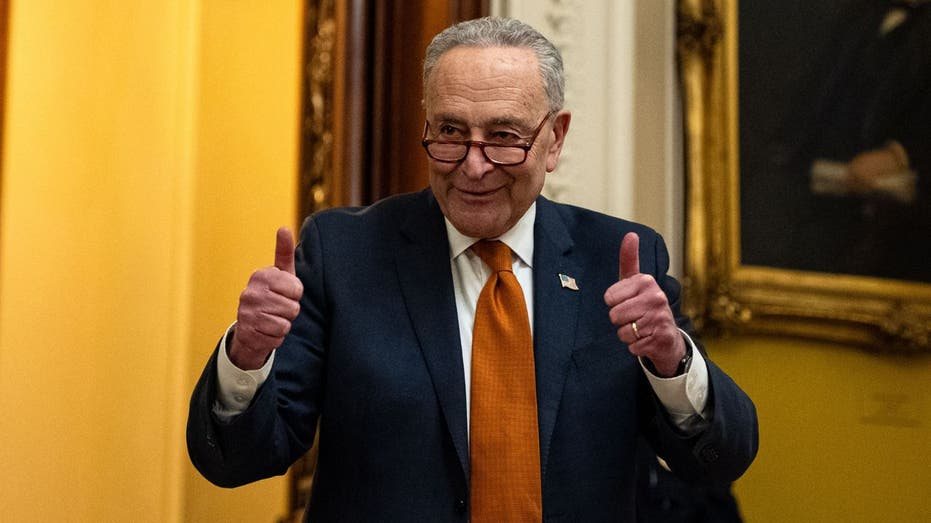
Senate Minority Leader Chuck Schumer has never worked a cattle ranch or run a meatpacking plant, and after a widely seen backyard grilling stunt, questions have arisen about his ability to properly cook a cheeseburger. Yet as Americans prepare to celebrate the 250th anniversary of the nation’s independence this July 4th, Schumer is pushing legislation that would insert Washington directly into the U.S. beef industry. His so-called «Family Grocer and Farmer Relief Act» aims to address high beef prices, but critics argue it misdiagnoses the problem and could make things worse.
Beef prices have risen sharply, and families feel the pinch at the grocery store. However, the cause is not a conspiracy by meatpackers, but basic economics: strong demand and tight supply. According to the U.S. Department of Agriculture, retail beef demand increased significantly from 2019 to 2025, while the nation’s cattle herd fell to its lowest level in 75 years. As of January 1, 2026, total U.S. cattle and calves stood at just 86.2 million head, down from 94.8 million head in 2019 — a drop of roughly 9% in seven years. The 2025 calf crop was a record-low 32.9 million head, marking the second consecutive year a new record low was set.
Drought has battered major cattle-producing states for years, and ranchers have faced soaring costs for feed, energy, land, labor, and regulatory compliance. Inflationary policies during the Biden administration, backed by Schumer and his allies, made everything more expensive for farmers, processors, and consumers alike. Now Schumer wants to punish the very supply chain families depend on, rather than addressing the underlying cost pressures.
Cattle are not widgets that can be produced on demand. Congress cannot pass a bill and instantly generate more beef. While chickens can be raised for market in weeks, beef cattle take years. From the birth of a heifer to the point where her offspring can enter beef production, the process can take roughly three years. That long cycle depends on weather, feed, financing, land, labor, trade policy, and confidence that government will not suddenly change the rules. No Senate press conference can speed up biology.
The facts on meatpacking also undermine the Democratic narrative of price gouging. Beef packer margins in 2025 averaged a loss of roughly $138 per head. Tyson Foods reported an operating loss of more than $1 billion in its beef division that year. These are not the numbers of monopolists pocketing windfall profits; they reflect a capital-intensive industry squeezed by the tightest cattle supply in more than three generations. Schumer’s bill ignores this reality, as well as the damage done by years of anti-business policies imposed by the same politicians now claiming to champion consumers.
Instead of lowering costs, reducing regulatory barriers, encouraging investment, expanding processing capacity, and keeping trade channels open, Schumer wants Washington to politically restructure the beef industry in the middle of a supply crunch. Critics call this economic malpractice. Breaking up companies may make for good populist sound bites, but it is rarely clean, quick, or cheap. In meat processing, forced restructuring would mean duplicated infrastructure, higher financing costs, stalled investment, litigation, and uncertainty across the supply chain. The likely result: fewer efficiencies, less capacity, more risk, and higher prices at the meat counter. Wealthy shoppers buying prime cuts from boutique butchers may barely notice, but working families buying ground beef for burgers, tacos, meatloaf, and weeknight dinners will feel the impact.
There is a better approach, according to Steve Forbes. Washington should reduce the cost pressures that made beef more expensive in the first place. That means easing unnecessary regulatory burdens on farmers, ranchers, and processors; lowering energy and transportation costs; keeping import and export markets open during changing supply cycles; and reducing tariff and input-cost pressures that make herd rebuilding slower and more expensive. Most of all, it means letting markets work.
Schumer’s allies include Senators Elizabeth Warren and Bernie Sanders — the same wing of politics that has spent years demonizing beef, lecturing Americans about what they eat, and flirting with Green New Deal ideas that would make food, fuel, and electricity more expensive. One day they tell Americans to eat less beef to save the planet; the next day they pretend to be shocked that beef is more expensive. The contradiction is hard to miss.
America’s beef market will recover, but not if Washington turns a supply problem into a government-control problem. Herds can be rebuilt, investment can return, and prices can ease — but that requires stability, lower costs, and confidence, not politicians threatening to remake an entire industry for a campaign talking point. As the nation marks 250 years of independence, the lesson of prosperity remains: private enterprise, property rights, limited government, and free markets. Chuck Schumer may not know how to grill a cheeseburger, but he should know enough not to burn down the beef industry.
90